Sign In
 Free Newsletter

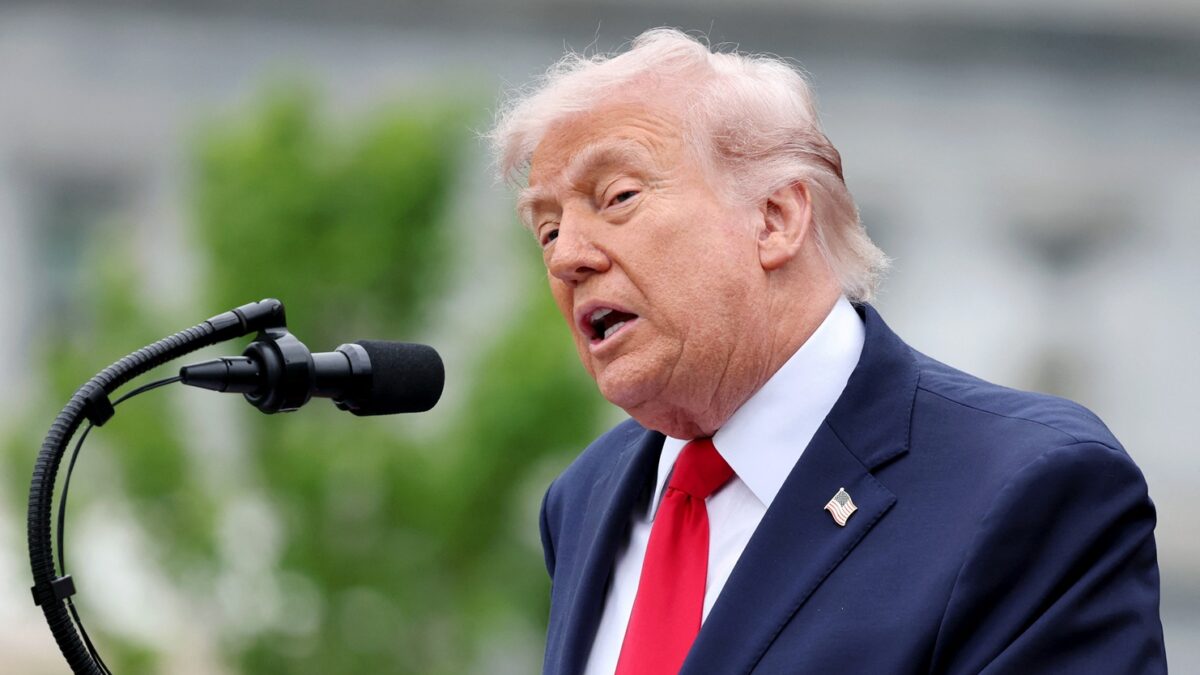
President Donald Trump gives a speech during the State Arrival Ceremony on the South Lawn on day two of the state visit of King Charles III and Queen Camilla on April 28, 2026, in Washington, D.C. (Chris Jackson/Pool via REUTERS)
Blind contractors win lawsuit against Trump administration in MD court


Key takeaways:
- Judge George Russell III reverses Trump administration decision
- Defense Secretary Pete Hegseth requested contract limitation for blind vendors
- Education Secretary Linda McMahon waived Randolph-Sheppard Act priority
- Baltimore law firm Brown, Goldstein & Levy represented plaintiffs
A group of blind business owners and advocacy groups won a lawsuit against the Trump administration last week as a judge blocked a decision that deprioritized them from food-service contracts on Army bases.
On July 31, Maryland U.S. District Court Chief Judge George Russell III reversed a decision that would have weakened the Randolph-Sheppard Act, a 1936 federal law aimed at supporting businesses owned by blind people.
In December, at the request of U.S. Defense Secretary Pete Hegseth, Education Secretary Linda McMahon issued a “limitation” on the law that waived the requirement to prioritize blind business owners for contracts on Army bases. No such limitation had ever been awarded under the law.
The administration argued the law raised costs, caused arbitration delays and otherwise impacted “the availability and quality of food options for the nation’s warfighters.”
Russell granted summary judgment to the plaintiffs and vacated McMahon’s decision, ruling that the administration hadn’t provided an opportunity for notice and comment required by the Administrative Procedure Act.
He wrote that he would have found the move to be “arbitrary and capricious” but didn’t reach that issue because of the failure to comply with the APA.
“Here, the Court finds that Secretary McMahon’s failure to engage in the notice and comment process was prejudicial error,” Russell wrote. He noted that “(t)he factual findings on which Secretary McMahon relied were, by Defendants’ admission, incorrect.”
For example, the government misstated some cost-comparison data about military food-service contracts, according to the ruling. Initially, the Army reportedly said some of the contracts were awarded noncompetitively, when some of them were.
The U.S. Department of Education did not immediately respond to a request for comment. The lawsuit was against that department, rather than the Department of Defense, because the former implements the law, designating the state agencies that license blind vendors.
One of the plaintiffs, Melba Taylor, lives in Bowie, with the others in California, Georgia and North Carolina. Taylor’s business, Encore Associates, operates the dining facility at the Fort Meade Army Base in Anne Arundel County.
The business owners and advocacy groups were represented by Baltimore law firm Brown, Goldstein & Levy.
“This decision is a victory for every blind entrepreneur who has invested years of hard work into building a successful business through the Randolph-Sheppard Act,” said Nicholas Gacos, president of the National Association of Blind Merchants, in a Friday news release from the law firm.
Mark Riccobono, president of the Baltimore-based American Federation of the Blind, added: “The Randolph-Sheppard Act is not a special favor; it is a proven pathway to competitive employment, entrepreneurship, and economic opportunity.”