Sign In
 Free Newsletter

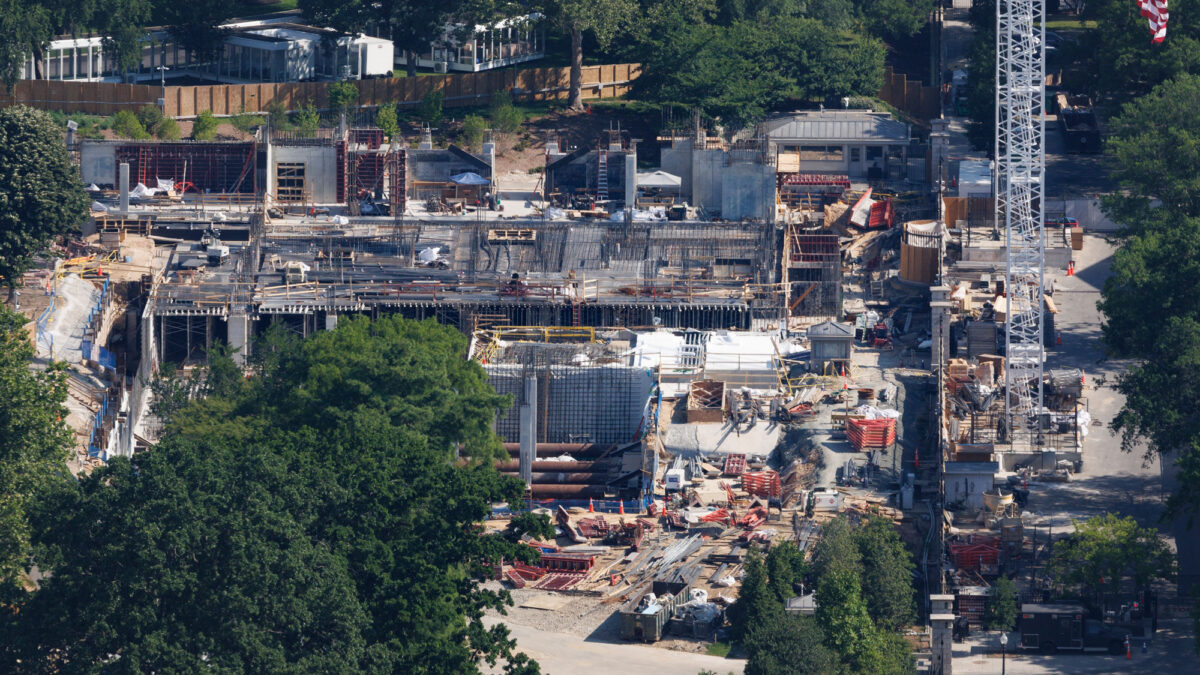
Construction for the ballroom project on the former site of the White House's East Wing, seen June 7. (Tom Brenner/For the Washington Post)
Trump says he’ll take ballroom fight to Supreme Court


“We will be immediately appealing to the United States Supreme Court,” Trump wrote on his Truth Social platform, reiterating his argument that the planned $400 million, privately funded addition is needed to protect him and future presidents. “This unjust decision must be overturned by the Supreme Court in its entirety.”
In a 2-1 decision earlier Friday, a three-judge panel at the U.S. Court of Appeals for the D.C. Circuit sided with a federal judge’s April ruling requiring construction to halt until Congress expressly authorizes the project.
“Each President is a temporary tenant, not the owner, of the White House and its Executive Residence,” Judges Patricia A. Millett and Bradley N. Garcia wrote in their majority opinion.
They stayed their ruling for 14 days to allow the White House to appeal to the Supreme Court.
Trump relied on private donations to begin the project without seeking an appropriation from Congress, touting the arrangement as a boon to taxpayers. But the courts have found that private financing did not allow him to bypass the separate requirement that Congress authorize major changes to the White House grounds.
Trump announced the 90,000-square-foot addition last year and swiftly demolished the White House’s East Wing without warning to make space for the project. He has said presidents have long needed a ballroom to host VIPs.
The project has drawn scrutiny from congressional Democrats, who have opened investigations into whether Trump has made promises to donors in exchange for their gifts. The ballroom has also been generally panned by the public, with polls finding that most Americans are against the project.
GOP leaders in Congress earlier this year said they supported the project, but they have not prioritized legislation to authorize it. Some Republicans have also questioned the need to fund the project.
Trump has sought private funding for several of his Washington-area projects, including a planned triumphal arch and a statuary garden, as part of an effort to rush their construction.
The National Trust for Historic Preservation, a nonprofit that is charged by Congress with helping preserve historic buildings, in December sued to block ballroom construction, saying that Trump had wrongly skipped required reviews before demolishing the East Wing and that only Congress could authorize significant changes to the White House grounds.
The Trump administration has moved ahead even as the court challenge has played out, with whirring cranes and teams of construction workers now a regular part of the White House backdrop. Trump has said he hopes to hold events in the ballroom before he is scheduled to leave office in January 2029.
The National Trust hailed Friday’s ruling.
“This is a great day for our country and for the American people’s right to voice their opinions about the historic places they cherish, including the White House,” Brent Leggs, the organization’s CEO, said in a statement. “The White House, a global landmark that symbolizes American identity and the ideals of democracy, belongs to the American people.”
Trump, who has been fixated on the ballroom project and frequently invokes it in speeches and on social media, has said that the facility is necessary to protect presidents. The military is also building a “vast complex” under the ballroom, Trump has said, although he and military officials have declined to offer many details about that part of the project.
“Like usual, everything I do, they get sued, but I win the suits,” Trump said in remarks in Las Vegas on Wednesday. “But it’s unbelievable what’s happening. It’s a tremendous military complex. And for 150 years at the White House, we don’t have a ballroom, we don’t have a big space.”
Millett, an appointee of President Barack Obama, and Garcia, an appointee of President Joe Biden, said that Trump is allowed to continue belowground work as well as construction on matters related to national security.
Judge Neomi Rao, a Trump appointee, dissented from Friday’s ruling.
“The equities in this case turn on complex architectural and security determinations best made by the Secret Service and the military-not judges,” Rao wrote.
Trump administration lawyers argued in June to the panel that federal courts should not have power to stop the ballroom’s construction and that Trump had authority to make changes to the White House grounds.