Sign In
 Free Newsletter

The economy shed 23,000 jobs in July as labor market weakened


Key takeaways:
- U.S. employers shed 23,000 jobs in July
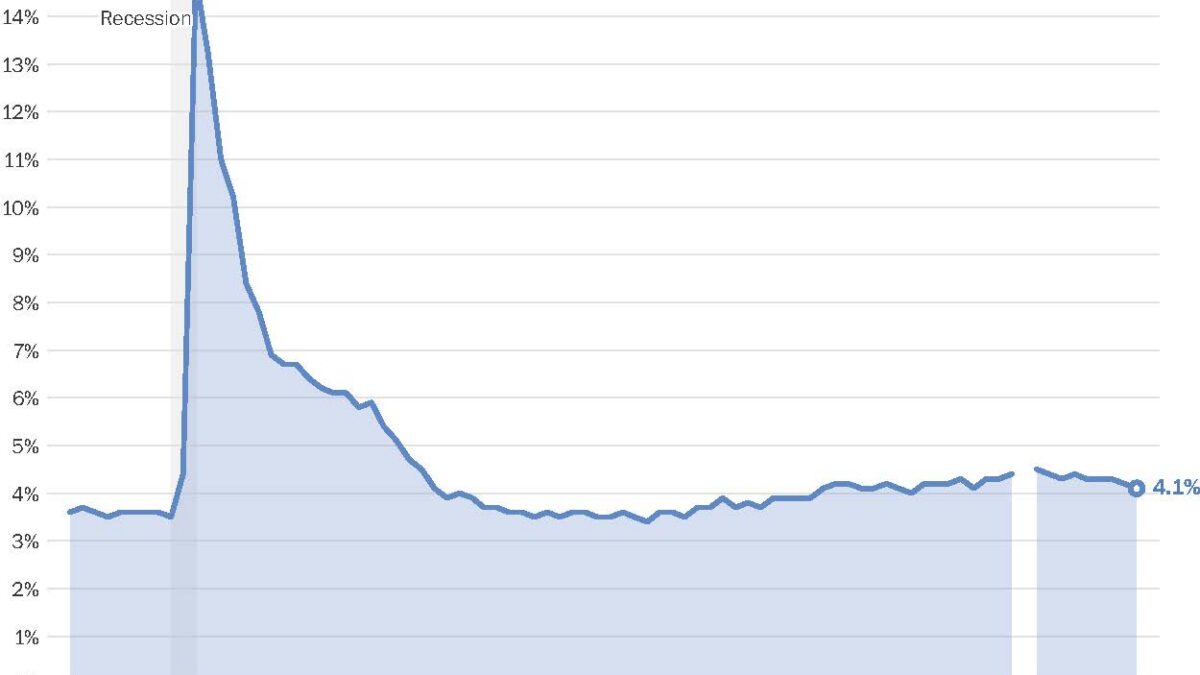
- Unemployment rate declined to 4.1 percent
- Forecasters expected 80,000 job gains
- Labor market affected by inflation and Iran war
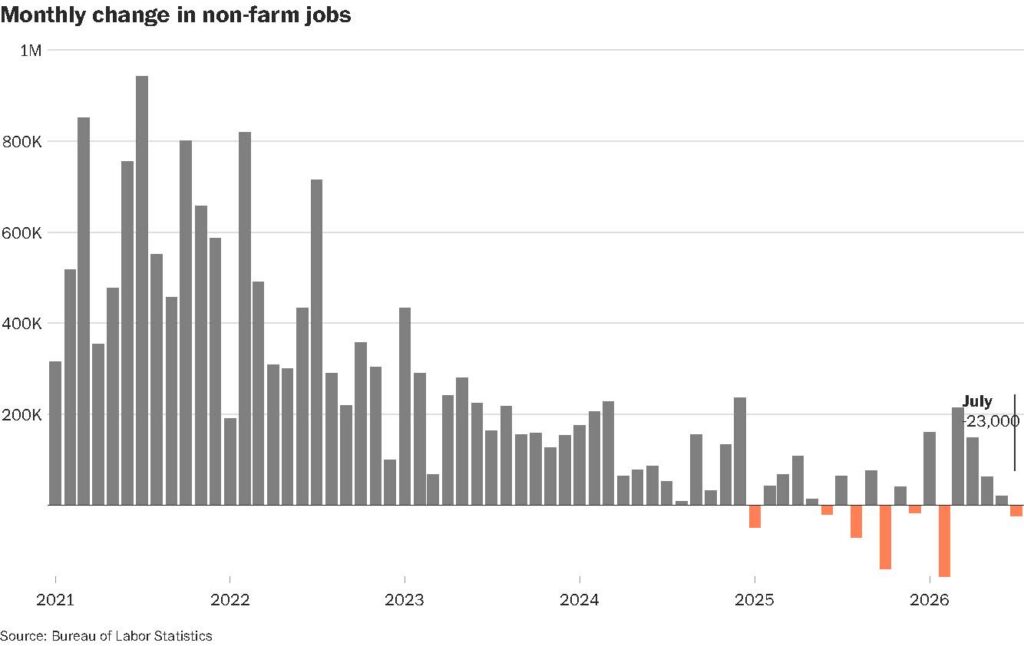
Hiring fell unexpectedly in July as U.S. employers shed 23,000 jobs, a surprising show of weakness in an economy battered by tariffs, elevated inflation and the ongoing war in Iran.
The unemployment rate ticked down to 4.1 last month, continuing a years-long streak of low joblessness, according to Labor Department data released Friday morning. But the decline was largely due to workers exiting the job market: The share of Americans working or looking for work fell again in July to the lowest level since February 2021, during the pandemic.
Job gains from June and May also were revised down by a combined 103,000, suggesting that the labor market has been weaker than previously thought. For July, forecasters had expected gains of about 80,000 jobs, but the war, high inflation, tariffs, immigration restrictions and advancements in artificial intelligence may be taking a toll.
In the first half of 2026, companies appeared to acclimate to uncertainty caused by policies from President Donald Trump’s administration that had caused employers to freeze hiring last year, when payroll growth fell to about 15,000 new positions per month. In the first six months of this year, hiring accelerated to about 75,000 per month, even as the war in Iran caused gas prices to spike.
Now that pocket of momentum could be ending, economists said.
The White House rushed to declare that the economy remains on solid footing.
“The Trump industrial resurgence is on schedule,” spokesman Kush Desai said in a statement, pointing to low unemployment claims and a small uptick in manufacturing jobs in July. “The Trump administration is focused on unleashing more private-sector job growth through President Trump’s proven economic agenda of tax cuts, deregulation, and energy abundance.”
But Friday’s report also showed growth in average hourly earnings slowing. Wages rose to $37.62 an hour, or by 3.2 percent in June. Inflation data expected next week could show prices again growing faster than wages, a blow to voters’ pocketbooks heading into the Nov. 3 midterm elections.
Health care continued to lead job gains, adding 22,000 positions. Construction, the information sector and professional and business services also added new positions, while other industries stagnated or shed positions.
Education funded by local government lost 50,000 positions in July. And leisure and hospitality shed 40,000 jobs. Retail and the finance sector also shrank.
The report was welcome news to Wall Street investors who are betting that it will lower chances that Federal Reserve policymakers will raise interest rates to fight inflation when they meet next in September.
Early this summer, the World Cup boosted hiring, but economists expect a late-summer hit from the Trump administration’s termination of temporary protected status for hundreds of thousands of immigrants from Haiti, a move that has triggered mass layoffs.
“Places like hospitality and health care and social assistance – particularly nursing homes – is where a lot of these workers were working and are expected to be let go,” said Diane Swonk, chief economist at KPMG. “The question is, what pockets of labor market shortages does that create?”
There are still many signs that the labor market is sturdy. New unemployment benefit claims last week came in at low levels, according to another Labor Department report released Thursday. And U.S.-based employers announced just 33,429 job cuts in July, the lowest monthly total in two years, according to a separate report published this week by the outplacement firm Challenger, Gray & Christmas.
The lack of churn in the labor market has puzzled economists, who typically expect layoffs to increase during periods of weak hiring. Many analysts say Trump’s immigration restrictions, including deportations and the U.S.-Mexico border closure, have reduced workforce growth, and so fewer jobs are needed to keep the unemployment rate steady.
“There’s just nothing that’s been typical about the post-pandemic economy,” said Swonk, the KPMG economist. “Any labor market that’s healthy has a healthy level of churn. But this labor market keeps defying the usual rules of economics.”