Sign In
 Free Newsletter


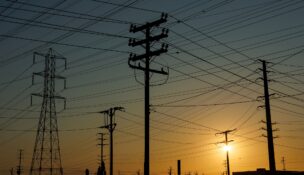
Maryland, which belongs to a regional grid comprising 13 states and Washington, D.C., imports roughly 40% of its electricity from other states. (AP File Photo)
Hoping to keep prices down and lights on, MD legislators push for more in-state power


 Listen to this article
Fearing further strain on Maryland’s already battered electric grid, lawmakers this session will look to decrease reliance on neighboring states for energy production and protect households and businesses from higher utility bills.
Demands on the grid are rising. Maryland’s population continues to increase, and the state has adopted goals to wean off of fossil fuels and use electricity to power vehicles, homes and buildings. There is also a desire among top government officials to attract data centers, which consume massive amounts of energy.
Maryland, which belongs to a regional grid comprising 13 states and Washington, D.C., already imports roughly 40% of its electricity from other states.
 “We are right now marching down a path to being held hostage, potentially, by our surrounding jurisdictions, who are the places that are generating the power,” Democratic Sen. Malcolm Augustine said during a December meeting of the Public Service Commission, which regulates utilities in the state. “I am very, very concerned about that.”
Some legislators are questioning whether to walk back or delay some of the state’s ambitious goals for reducing greenhouse gas emissions and electrifying vehicles, homes and buildings. Democrats also are worried that the incoming Trump administration will yank support for clean energy projects, like offshore wind farms.
The state may have to pause or end certain projects or services related to its goals if the Trump administration cuts funding for them.
“The state does not have the funds today to be able to backfill those costs,” Senate President Bill Ferguson, a Democrat, said during a recent interview with reporters. “We have to look at the programs in that changed circumstance and make tough decisions.”
Near-term solutions
Among the most pressing questions that legislators will face during the 90-day session will be: “What can we do in Maryland to incentivize in-state generation?” state Sen. Brian Feldman, a Democrat who chairs the state Senate’s committee on energy, said in a recent phone interview.
Feldman, who also helps lead a national task force of legislators focused on energy supply and policy, said energy costs have skyrocketed in Maryland, perhaps more so than anywhere else on the East Coast.
Maryland relies on private investments to build facilities that produce power, but policies from the General Assembly haven’t worked the way they were intended, Augustine said.

Republicans have offered a more pointed view.
“Policies put in place over recent years are unavoidably going to make this situation worse,” Republican Sen. Chris West wrote in a recent letter.
RELATED: As juvenile crime subsides, legislative debate continues over more reforms
In addition to ineffective policies, Maryland’s push for in-state energy production has been slowed by local land-use regulations and what many view as a molasses-like approval process at PJM, the private operator of the regional grid.
Requiring companies to build energy storage sites is among the alternative, relatively short-term solutions that legislators will consider.
The regional grid was built to generate and transmit energy for immediate use, and it undergoes the most strain during late afternoon/early evening hours in the summer and winter months, when some businesses remain open as people return home from work and school and turn on their air conditioners or heating systems and other appliances.
Energy costs are also highest during those peak use hours.
Del. Lorig Charkoudian, a Democrat who’s considered a top energy policy mind in the legislature, said that grid-scale battery storage sites—which can resemble rows or stacks of tractor trailer containers—would provide Maryland with energy reserves available for use during peak hours.
Building storage would keep prices in check, as energy would be purchased during non-peak hours, when it is cheapest, she said.
Charkoudian said that storage is part of a “no-regrets” solution for the state’s energy problem.
RELATED: As MD legislators prepare gun-related bills, Trump administration looms
She contends that it would keep the state moving toward its renewable energy goals by offsetting the potential need to build a gas plant to produce more power, and by increasing the amount of energy potentially available from solar and wind farms.
There’s been a growing tension between the state’s transition to renewable energy and the capacity of the regional electric grid to handle the shift.
While the state is moving toward electrifying homes, buildings, and vehicles and incentivizing the construction of data centers, all of which will further strain the grid, it is also closing coal-fired plants, prompting concerns about power disruptions and added costs for ratepayers.
The Moore administration has a goal for all electricity used in Maryland to be from clean energy — generally from renewable sources like wind, solar and nuclear generation — by 2035.
West says the self-imposed deadline is “a problem” that will lead to the shuttering of fossil-fuel power plants before the state is in a position to offset the energy loss.
He has called for the state to delay closing fossil-fuel plants and hopes that doing so will incentivize organizations looking to build or buy fossil fuel plants to come to Maryland, “because they won’t have to close down in 2035.”
RELATED: MD child care advocates seek to sustain funding, support expanded pre-K
Public pushback
Officials have said that there will have to be tradeoffs as Maryland tries to produce more power.

Perhaps the most controversial energy project in the state has been a 70-mile high-voltage electric transmission line through three Maryland counties. There is a private company overseeing the project, and legislators won’t have a vote on whether the project moves forward and in what form.
Residents of Baltimore, Carroll and Frederick counties, as well as state and local officials who represent the jurisdictions, have for months contended that the Piedmont Reliability Project will bring large transmission towers too close to residential areas, disrupt farmland, protected areas and businesses, increase costs for ratepayers, and potentially lead to people losing their land, among other concerns.
Opponents have called for Gov. Wes Moore to bring an end to the project. The Public Service Enterprise Group — which is building the transmission line — will eventually need to seek approval from agencies that Moore oversees, but he cannot unilaterally cancel it.
In a prepared statement, the governor sympathized with opponents, saying that he shared “grave concerns” about elements of the project and that it remained “wholly unclear” how the new transmission line would benefit Marylanders.
Opponents have said that the project will power data centers in Virginia, not expand Maryland’s grid.
RELATED: MD legislators face transportation challenges in 2025
PSEG spokespeople, meanwhile, have said the project is necessary to counteract a growing energy deficit in the regional grid.
As a net importer of energy, Maryland is heavily reliant on generation in neighboring states. It’s not yet clear when the demand for electricity will eclipse the amount available in the state; it could be a few years, or it could be more than a decade, said Paul Pinsky, who leads the Maryland Energy Administration, which oversees the state’s push to produce clean energy and reduce greenhouse gas emissions.
“We do not take reliability lightly,” Pinsky said during a recent meeting. “People expect to turn on their lights.”
The governor and his team have prioritized expanding wind energy as part of the push toward renewable sources.
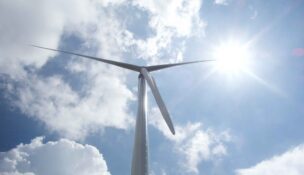
Plans for more than 100 wind turbines roughly 10 miles off the Ocean City shoreline have progressed through the federal approval process. US Wind, the Baltimore company responsible for the project, is hoping to begin onshore construction in 2026, with offshore work beginning in 2028.
But with President-elect Donald Trump promising to kill offshore wind projects on the first day of his second term and a coalition from Ocean City suing the federal government to block the project, US Wind will be swimming against strong political currents as project managers try to maintain the timeline.
US Wind received a direct blow on Thursday, when the Sussex County Council in Delaware voted to reject a much-needed permit. The company is expected to appeal the decision, and it can likely find a workaround, though the development is sure to delay the project, according to a report from Spotlight Delaware.
Maryland Democrats are also looking to expand solar energy. The state is behind on its solar goals, and while projects are continuing, it’s unclear whether the Trump administration will stop funding them.
RELATED: MD public defender pushing for substantial staff boost as state faces budget deficit
Residential solar has the potential to take a great deal of demand off of the energy grid, but the lack of regulation in Maryland has deterred people — including some of the top Democrats in the legislature — from having them installed at home.
Establishing regulations for companies and individuals who install solar panels, ensuring that they’ve been vetted and are certified, may be among the policies that legislators consider.
“It’s not that I don’t believe in the solar,” Del. C.T. Wilson, who chairs the House committee responsible for energy policies, said this summer. “I don’t trust someone to stand on my roof — and my investment — and possibly destroy it.”