Sign In
 Free Newsletter

MD bill would lower standard for punitive damages, add surcharge to fund schools


Key takeaways:
- Maryland bill reduces punitive damages standard to gross negligence from actual malice.
- A 50% surcharge on punitive damages would fund the Blueprint for Maryland’s Future education program.
- The bill exempts state and local governments protected under Maryland Tort Claims Acts.
- Opponents warn the bill could lead to higher insurance rates and harm small businesses.
Plaintiffs could more easily win punitive damages under a General Assembly bill that seeks to increase education funding.
The bill would lower the standard for punitive damages, requiring plaintiffs to prove gross negligence, rather than actual malice. Some of those damages would help pay for the Blueprint for Maryland’s Future, the landmark 2021 education law that required increased school funding — and contributed to a state budget deficit.
Punitive damages are rarely assessed against defendants in Maryland, which has a stricter standard than the vast majority of states, according to Bruce Plaxen, of Plaxen Adler Muncy in Columbia. The higher bar, he argued, means “corporations can take chances, cut costs, engage in outrageous conduct.”
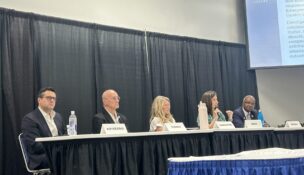
“The standard we have in Maryland, which is essentially evil intent, makes it practically impossible to get punitive damages,” Plaxen, who is also president of the American Association for Justice, a trial lawyers’ group, told the House Judiciary Committee at a hearing in Annapolis last week.
Punitive damages are meant to punish the defendant and deter them from committing the conduct for which they were sued. They are distinct from compensatory damages, which are meant to repay a plaintiff for the harm they suffered.
The bill as written would place a 50% surcharge on top of the total amount of punitive damages awarded by the jury, with the fee going to the Blueprint for Maryland’s Future Fund. Juries would not be informed of the surcharge.
That surcharge could be changed to split the jury award between the plaintiff and the state, said the bill’s sponsor, Del. David Moon, D-Montgomery. Plaxen told The Daily Record that he was comfortable with plaintiffs sharing punitive damages with the state, because they are meant to punish the defendant, not repay the plaintiff.
Plaxen noted that while Maryland maintains the “actual malice” standard in its own courts, the state is able to seek punitive damages under the lower standard in the case about the Key Bridge collapse, because that case is proceeding in federal court under maritime law.
Under the bill, plaintiffs would have to prove with clear and convincing evidence that defendants acted with gross negligence. The bill defines gross negligence as “disregard for the health and safety of others,” that the actor knows or should know is likely to cause harm. The defendant must have shown “a failure to exercise even slight care” or “willful, wanton, or outrageous misconduct.”
Citing Maryland Supreme Court decisions from the 1990s, the bill’s fiscal note defines actual malice as “evil motive, intent to injure, ill will, or fraud.” Plaintiffs must prove “actual knowledge of a defect and a deliberate disregard of the consequences.”
There is no cap on punitive damages, but juries are instructed to consider the defendant’s ability to pay, to assess damages proportionate to the harm, and to decide an amount “not designed to financially destroy a defendant,” according to the fiscal note.
“It’s still a pretty high bar,” Plaxen said. “It has to be really really bad behavior.”
While punitive damages are rare, they aren’t impossible. In a housing case recently won by Maryland Legal Aid, the defendants were ordered to pay $500,000 in punitive damages.
The bill is unlikely to have a significant impact on medical malpractice cases. In such cases, the doctor is rarely accused of deliberately harming a patient; usually they are accused of failing to meet the standard of care.
It is also unlikely to affect state and local governments, which are protected from most lawsuits under the Maryland Tort Claims Act and the Local Government Tort Claims Act. Still, the Office of the Attorney General, according to the fiscal note, would need to hire four attorneys and three paralegals in order to defend claims or pursue them in consumer protection or civil rights cases.
Opponents of the bill warn against “nuclear verdicts,” arguing it will harm small businesses and cause insurance rates to increase. Representatives from Allstate, the American Property Casualty Insurance Association and the Maryland Hospital Association testified in opposition last week.
“Punitive damages are there to punish and deter truly reprehensible conduct,” said Cary Silverman, of the American Tort Reform Association. “It’s not there to punish carelessness, and it’s not there to fund our schools.”