Sign In
 Free Newsletter


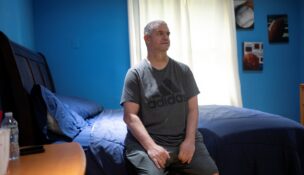
Area senior living communities weave technology into resident’s daily lives as a way to help support their care as well as their ability to connect with others. (Submitted photo)
Senior living communities use AI, tech to help with care, engagement


Key takeaways:
- Erickson Senior Living‘s My Erickson app is used by 90-95% of residents for dining, events and medical access.
- Lorien Health Services employs telemedicine and real-time digital monitoring to improve coordinated care.
- Edenwald Senior Living offers safety pendants with GPS and a computer lab with dedicated tech support for residents.
- AARP reports AI usage among older adults rose from 18% in 2024 to 30% in 2025, with 58% using AI for health monitoring.
Across Maryland, retirement communities are weaving technology into residents’ daily lives as a tool that supports health and safety while increasing the ability to connect to one another. A Pew Research Center survey from 2017 noted that four-in-10 (42%) adults ages 65 and older now report owning smartphones, and 67% of seniors use the internet.
Retirement communities have seen the benefits of incorporating multiple forms of technology into their everyday operations, from telemedicine and digital monitoring to resident apps and artificial intelligence-focused learning. Providers such as Lorien Health Services, Erickson Senior Living and Edenwald Senior Living are taking steps to evolve senior living into the digital age.
Erickson Senior Living, which operates multiple communities across the state, along with facilities across the country, highlights technology as a core part of its model. In fact, the core of Erickson’s social, medical and financial communities can be found at the swipe of a finger. The My Erickson app allows for a convenient way for residents to view meals, make reservations, sign up for community events, view the community calendar, and even contact medical professionals.
RELATED: Why more seniors are being asked to care for their partners — alone
Hans Keller, Chief Information Officer at Erickson Senior Living, said that about 90-95% of their residents use the app.
“Across our network of communities, we run about 8,000-9,000 restaurant reservations a day through the app,” Keller said. “Residents also use it to not only view the activity calendar, but to sign up for a class. They also have access to their medical records.”
Lorien Health Services is one of the many retirement communities using electronic medical records and telehealth platforms to support coordinated care. The organization offers telemedicine services that allow residents to connect virtually with doctors and specialists without leaving home. Lorien has also invested in digital clinical systems. Its tablet-based “Lorien Link” platform enables staff to collect and monitor patient data, such as blood pressure, in real time. The organization also uses software to track clinical alerts and changes in residents’ health status. These tools help staff respond more quickly and potentially reduce unnecessary hospital visits.
Edenwald Senior Living is another community that has added technologically advanced medical safety measures for its residents. Safety pendants are distributed and worn by all residents so if there is any type of emergency, they can alert security. Currently, they are also implementing fall pendants, which will have GPS tracking, allowing employees to immediately get to the residents to assist them.
RELATED: New partnership brings onsite rehab therapy to Baltimore senior campus
The community also provides computer centers to support residents. David Brown, Edenwald Vice President, Chief Information Officer, spoke to the use and additional resources the computer lab provides. He mentioned that while many residents have personal computers in their rooms, the computer lab creates a social hub of sorts and allows a communal space for residents to do research, print materials or ask questions.
“We have a dedicated employee who supports resident technology and is at the lab to train the residents, set up personal computers, and teach them how to use specific programs or apps,” David said.
Edenwald is also a huge proponent of lifelong learning and has a Faculty in Residence program. This year, Dr. Mohammad Dehkordi, Associate Professor of Computer Science at Goucher College, is teaching a course titled AI Made Simple.
RELATED: Project integrating higher education and senior living gets underway in MD
Dr. Dehkordi wants to make AI approachable, practical and empowering for older adults.
“AI is becoming part of everyday life, and it is important that seniors feel confident engaging with these technologies rather than feeling left behind by them,” Dehkordi said. “In the course, residents learn how AI can assist with everyday tasks, creativity, communication, and digital safety. What has been most rewarding is seeing residents move from curiosity and skepticism to confidence and independent exploration.”
When referring to this resident-run AI class and partnership with neighboring Goucher College, David commented, “programs like this show that learning and technological engagement truly have no age limit. When given the right support and context, older adults are not only capable of understanding new technologies but can also enjoy and benefit from them in meaningful ways.”
Older adults are, in fact, using more AI platforms, according to a 2025 AARP report. AI usage has increased from 18% of older adults in 2024 to 30% in 2025. Of those who use AI, 58% interact with specific AI platforms or apps for health monitoring purposes, such as answering health questions or providing health or nutritional guidance, according to the report. This trend shows an increase of the boomer generation being interested in taking advantage of new technologies; and retirement communities are listening and adapting.
Keller commented, “Seniors are adapting to technology and using it on a regular basis. They’re just like teenagers! That might not have been the case a decade ago, but it is now.”
These and many other facilities have realized the benefits of incorporating technology into their retirement communities. It helps residents maintain independence, participate in a social life and stay connected to families, while also providing immediate health information and services.