Sign In
 Free Newsletter

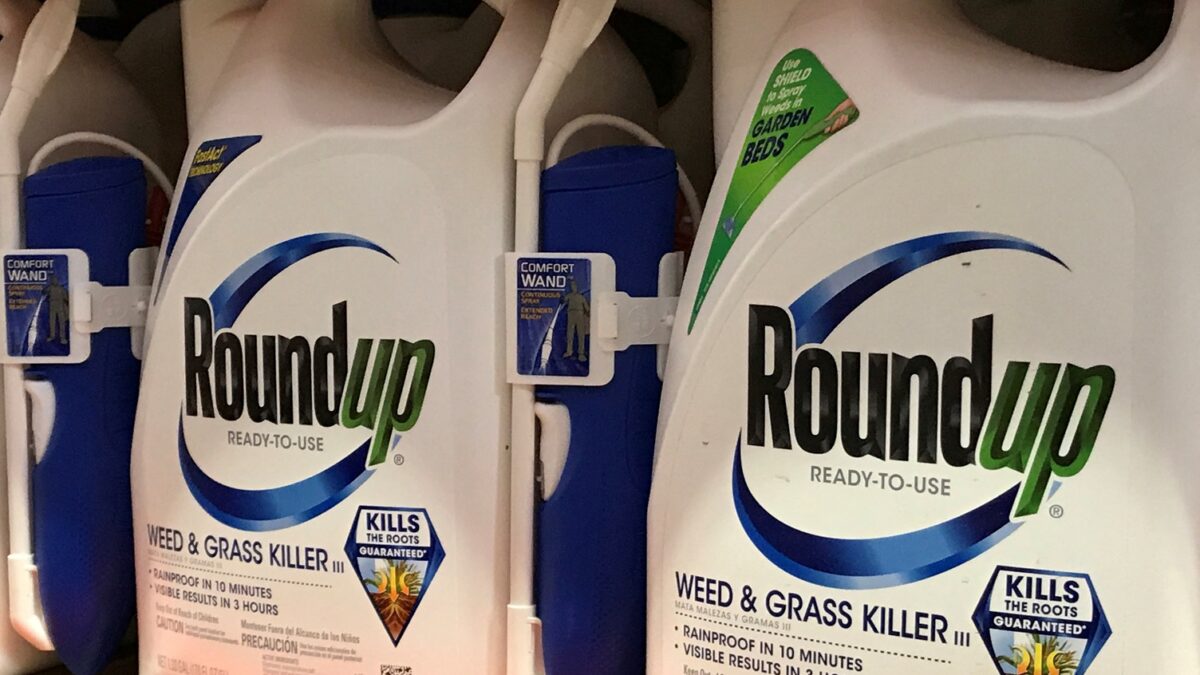
Monsanto Co's Roundup is shown for sale in Encinitas, California, on June 26, 2017. (REUTERS/Mike Blake/File Photo)
Supreme Court split over Bayer’s fight against Roundup lawsuits


 Listen to this article
WASHINGTON – The U.S. Supreme Court appeared divided on Monday over Bayer AG’s effort to shut down thousands of lawsuits accusing the company of failing to warn users that the active ingredient in its Roundup weedkiller causes cancer.
The justices heard arguments in the German drugmaking and crop science company’s appeal of a jury verdict in Missouri state court awarding $1.25 million to a man named John Durnell who said he was diagnosed with non-Hodgkin lymphoma after years of exposure to glyphosate in Roundup.
Paul Clement, arguing for Bayer, told the justices that federal law governing pesticides should prevent failure-to-warn claims like Durnell’s that are brought under state law from moving forward in court.
Bayer has said that the U.S. Environmental Protection Agency has repeatedly found that glyphosate does not cause cancer and approved its product labels without a warning.
“A Missouri jury imposed a cancer-warning requirement that (the) EPA does not require. That additional requirement is preempted,” Clement said.
‘Crippling liability’
Clement warned against allowing a patchwork of standards across the United States.
“Congress plainly wanted uniformity when it came to the safety warnings on a pesticide’s label. Ignoring Congress’ clear direction here would open the door for crippling liability and undermine the interests of farmers who depend on federally registered pesticides for their livelihood,” Clement said.
More than 100,000 plaintiffs have filed cases in U.S. state and federal courts alleging a cancer link, according to Bayer. It has said a Supreme Court ruling in its favor should largely bring the Roundup litigation to an end.
A U.S. law called the Federal Insecticide, Fungicide and Rodenticide Act, or FIFRA, governs the sale and labeling of pesticides and bars states from imposing differing or additional requirements. It prohibits pesticides that are “misbranded” with labels that lack an adequate warning to protect health and the environment.
Conservative Justice Neil Gorsuch pressed Clement on why state court lawsuits are necessarily at odds with the federal regulatory scheme.
“If supposing that (the) EPA can bring a claim against you for misbranding and seek criminal and civil penalties despite a properly registered item, how would it be inconsistent with FIFRA to allow state tort suits to do the same thing?” Gorsuch asked.
Republican President Donald Trump’s administration sided with Bayer in the case.
Conservative Chief Justice John Roberts asked Sarah Harris, a Justice Department lawyer arguing for the administration, whether states have any legal recourse if new information of harm comes to light while federal regulators weigh whether to provide new guidance.
“Throughout that long process, in response to information that suggests there is a risk that’s not on the label, the states cannot do anything?” Roberts asked.
Harris underscored the problem with departing from a national standard.
“If you had 50 different states that are just like jumping the gun – Iowa says maybe this causes cancer, California says (it) absolutely causes cancer, some other state says this doesn’t cause cancer at all, so put that on your label too – it completely undermines the uniformity of the labeling,” Harris said.
“I appreciate that,” Roberts responded. “On the other hand, if it turns out that they were right, it might have been good if they had an opportunity to do something to call this danger to the attention of the people while the federal government was going through its process.”
Conservative Justice Brett Kavanaugh and liberal Justice Elena Kagan appeared concerned about the problem of a patchwork system.
Kagan pressed Ashley Keller, a lawyer for Durnell, to explain how allowing state lawsuits would comport with the congressional aim for uniformity in how labeling is handled.
Bayer acquired Roundup as part of its $63 billion purchase of agrochemical company Monsanto in 2018. The torrent of litigation prompted Bayer to remove glyphosate from its consumer version of Roundup, and the company said that the lawsuits could threaten its ability to supply the herbicide to farmers.
A proposed settlement
Facing billions of dollars in potential liability, Bayer announced in February a proposed $7.25 billion settlement to resolve tens of thousands of current and future lawsuits. The settlement would not affect claims that stem from pending appeals or that fall outside the deal, according to the company. Those amount to nearly $1 billion, it said.
Durnell was diagnosed with a rare and often aggressive form of non-Hodgkin lymphoma, a cancer that starts in the white blood cells, and attributed the disease to his exposure to Roundup starting in 1996. For about 20 years he was the “spray guy” for a neighborhood association in St. Louis, killing weeds at local parks without protective equipment, according to court papers.
A jury sided with Durnell in 2023, and in 2025 a state appeals court upheld that verdict.
A Supreme Court ruling is expected by the end of June.
Reporting by Andrew Chung; additional reporting by Diana Novak Jones, Leah Douglas and Jason Lange; editing by Will Dunham.