Sign In
 Free Newsletter

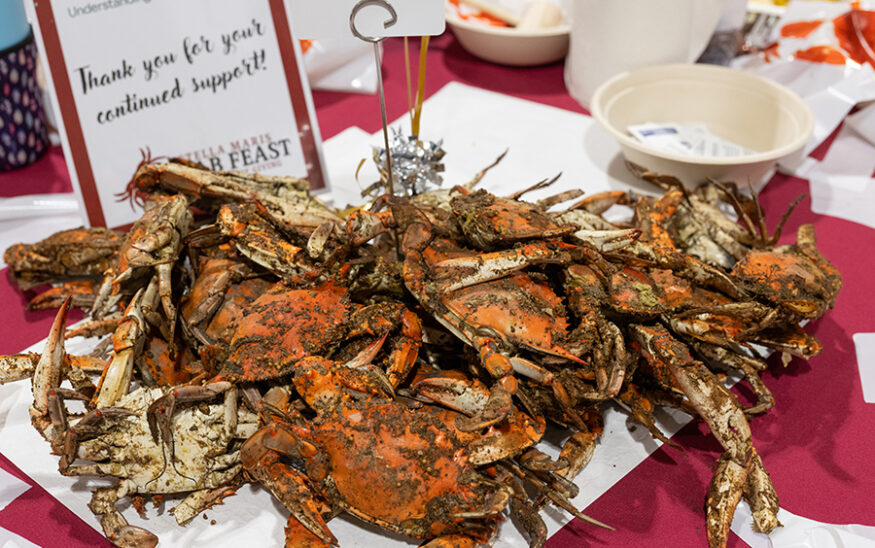
Freshly steamed crabs serve as the main attraction and main course at the 40th annual Stella Maris Crab Feast at the Maryland State Fairgrounds in 2024. (File photo by Jennifer McMenamin Photography LLC)
Can MD remain the ‘crab capital’ if consumers can’t buy crabmeat?


 Listen to this article
Maryland diners love to eat blue crabs, crustaceans native to the Chesapeake Bay that have been a culinary favorite in the region for centuries. But a federal effort to restrict imported crabmeat has sparked a legal fight that could disrupt supply, drive up prices and reshape the seafood industry.
The fight has also exposed a little-known fact to anyone outside of the seafood industry: Almost all “pasteurized” crabmeat purchased in grocery stores and consumed in restaurants in Maryland and beyond is imported from Indonesia, the Philippines, Vietnam, and other countries in Southeast Asia and Latin America.
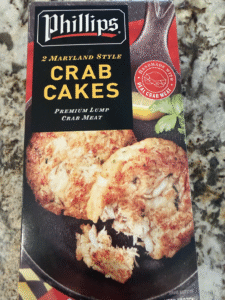
Pasteurized crabmeat refers to crab that has been cooked to a specific temperature to extend its shelf life, allowing it to be shipped long distances and stored for longer periods. It’s typically sold in cans and used in products like crab cakes.
“There’s certainly nowhere near enough domestic Maryland blue crab,” to meet the large and growing demand, said Brice Phillips, an executive at Phillips Seafood, one of Maryland’s best-known seafood businesses and the company that helped popularize Maryland-style crab cakes. The company, founded in 1914, is now in its fourth generation of family ownership.
If the federal government bans most imported crabmeat, “It would absolutely impact availability and cost,” Phillips said. “At the end of the day, that’s going to affect the consumer.” Not to mention seafood businesses.
The problems between the seafood industry and the federal government began last October when the National Oceanic and Atmospheric Administration announced it would ban imports of blue swimming crabs (very similar to, but not exactly the same as, domestic blue crabs) from more than 200 fisheries in Asia starting in January 2026. NOAA determined that the fishers failed to meet U.S. environmental standards under the Marine Mammal Protection Act, according to the National Fisheries Institute. Fisheries in other parts of the world were also banned, but it’s not clear exactly how many. NOAA didn’t respond to numerous requests for comment, although information about the ban appears on the agency’s website.
Fishing methods such as gillnets and traps can accidentally catch marine mammals, even in fisheries targeting species like crab. The law requires countries exporting seafood to the U.S. to demonstrate that their fishing practices limit harm to dolphins, whales, and other marine mammals at levels comparable to those required of American fishermen.
According to the Institute, which represents seafood companies across the U.S. supply chain, the NOAA rule covers all seafood imports, not just crabmeat. However, its impact is most visible in the crab industry because it relies so heavily on foreign supply.
The Institute, along with three major companies, including Phillips, filed a lawsuit to block the ban. After the lawsuit was filed, both sides reached a temporary agreement, pausing the ban while regulators reconsider their decision and review additional information from the foreign fisheries. Federal officials are expected to make a final decision in May. (Crabmeat from Venezuela, a major supplier, was also banned, but that country’s fishers have not asked for reconsideration.)
For the seafood industry, the stakes are high. “You simply cannot replace imported crab with domestic supply,” said Gavin Gibbons, chief strategy officer for the Institute.
He said that 98% of the 62 million pounds of pasteurized crabmeat consumed in U.S. restaurants or purchased in grocery stores is imported. In comparison, about 16 million pounds of edible crabmeat from live crabs is consumed annually in the U.S., mainly harvested from Louisiana, North Carolina and Maryland, according to the Institute. All live blue crabs are domestic.
While Maryland blue crabs dominated the crab market before imports became widespread, many things have changed. Domestic crab harvesting is seasonal, but demand from consumers is year-round. Even during the domestic crab harvesting season, tighter immigration policies have made it difficult for domestic seafood companies to hire workers to “pick” crabmeat from the shells for pasteurization. Meanwhile, strict environmental conservation laws restrict how many crabs can be harvested domestically.
“They’re fished to what’s called maximum sustainable yield, which means you can take this many crabs, but you can’t take more or else you have a sustainability problem,” said Gibbons. “All of the blue crab stocks, whether it’s the Chesapeake Bay, North Carolina, or Louisiana, are fished to their maximum sustainable yield.”
Because those limits cap how much domestic crab can be harvested, Gibbons said imports are essential. “If you take that supply out of the market, you’re going to see shortages, and you’re going to see prices go up,” he said. “That’s just the reality of how the market works.”
Gibbons emphasized that the seafood industry is not opposed to environmental regulations that protect mammals. But he believes the current approach may not be the most effective. “There are ways to work with these fisheries, to improve monitoring and practices,” he said, pointing to efforts such as increased data collection, oversight, and changes to fishing methods that reduce accidental harm to marine mammals. “A blanket restriction doesn’t necessarily get you the outcome you’re looking for.”
If the restrictions move forward, companies like Phillips Seafood will need to find alternative sources, reduce supply or raise prices. Phillips said the company has already begun exploring potential new sources of crab in regions like the Mediterranean, including Spain and the Northern Adriatic Sea, while also diversifying its broader seafood portfolio, an effort that predates the ban, through investments in Canada focused on products such as snow crab and lobster. Those products, however, are not direct substitutes for blue swimming crab.
For now, the case is shaping up as a test of how far U.S. environmental regulations can reach beyond its borders, and what that means for businesses, consumers and the future of the seafood supply chain, according to industry leaders.
Even if the import bans are lifted for now, and the industry avoids immediate disruption, the underlying tension between environmental policy and global trade is likely to remain.
Ellen Isaacson reports for Capital News Service.