Sign In
 Free Newsletter

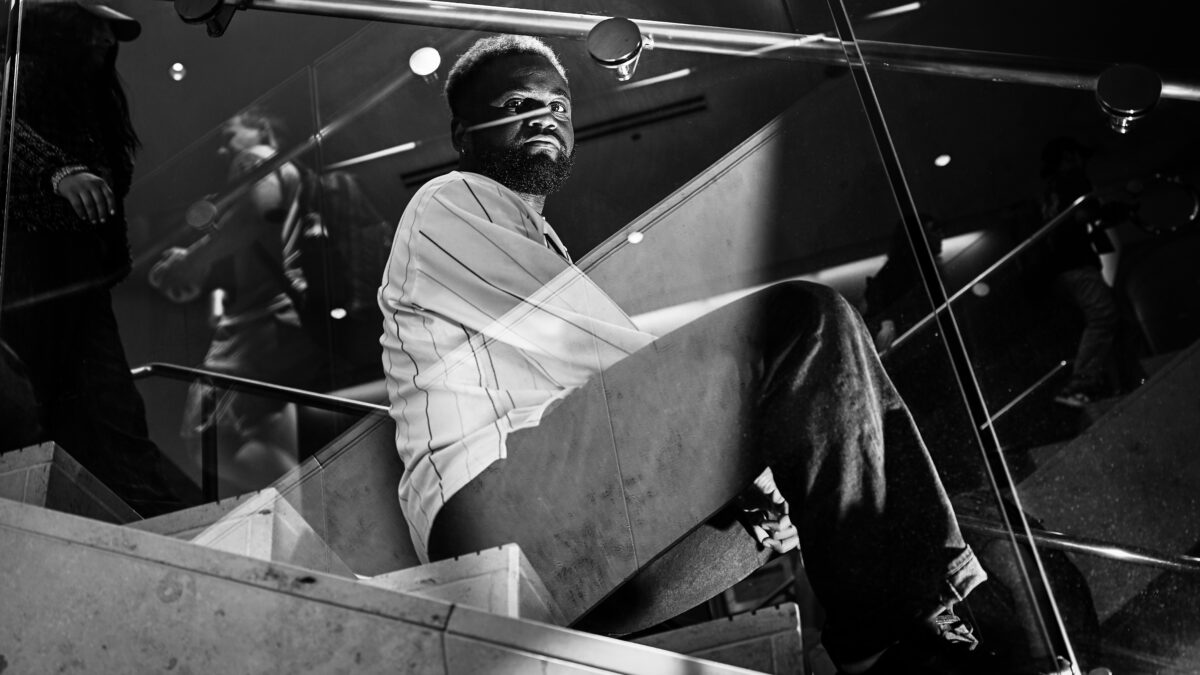
After a highly publicized period in ICE detention, Ludovic Mbock competed at the annual Combo Breaker game festival in Schaumburg, Illinois. (Joshua Lott/For The Washington Post)
How fighting-game community rallied around MD player detained by ICE


It was May in Maryland, nice and toasty outside. Ludovic Mbock would have loved to wear shorts, but he did not because people would stare.
The ankle monitor under his pant leg has been the first thing he thinks about every morning now since March, when he was released on a $4,000 bond after six weeks in immigration detention.
“When I wake up, I think, ‘Oh, let me charge it,’ ” Mbock, 39, said from his Oxon Hill apartment. “Before I go out, let me not forget the battery. It’s not fun. I like wearing shorts when it’s hot out.”
Mbock was detained on Feb. 17 during a check-in at the U.S. Citizenship and Immigration Services office in Baltimore, a routine appointment he said he has kept for 20 years since his mother’s marriage dissolved and complicated his immigration status.
He was moved across different centers in different states. But his friends and a network of video game players who specialize in the fighting genre located him and raised an initial $10,000 to retain an immigration attorney, who was able to keep the case in Maryland and have him released.
Last week, a judge set December 2028 for Mbock’s final asylum hearing. His attorney, Edward Neufville, said he will file a motion to advance the hearing date as well as work to get an exemption for the ankle monitor.
Mbock came to the U.S. from Cameroon on a green card through his mother’s marriage. He is gay, which is criminalized in his country of birth. He is, Neufville said, also the kind of person the U.S. government once said it would not pursue. The next move is gaining asylum.
“A lot of people talk about how you should be deported, you’re here illegally, but the law also put in place these orders of supervision to take into account different factors of human life,” Neufville said in an interview. “The administration talked about how we’re going to deport the criminals. We thought they were going to take care of the dangers to society, and then figure out a way on how to manage and deal with those who are here contributing to society, especially those who need our protection.”
Mbock’s case is part of a broader regional surge. Immigration and Customs Enforcement made nearly 20,000 arrests in D.C., Maryland and Virginia between Jan. 20, 2025, and March 10, 2026 – roughly five times the rate during the last full year of the Biden administration, according to a Washington Post analysis of federal data published in April. About 60% of those arrested had no prior criminal record. Many of the arrests took place at scheduled immigration check-ins.
“You arrest them, you detain them,” Neufville said. “And then the lawyers get to figure out whether or not the detention is lawful or legal.”
In Cameroon, Mbock was a quiet kid. When he was 10, he walked into an arcade that just opened near his home. The first fighting game he ever played was “Art of Fighting.” He picked Yuri Sakazaki because she was a girl. It was a choice in how he expressed himself.
“Some people didn’t like that I would play girls’ games. I played them anyway,” he said.
Mbock came to the U.S. as a teenager, attending high school in Silver Spring, where he learned English and maintained a 4.0 grade point average, he said. He listened only to global top hits in Cameroon, but in the U.S. he fell in love with rock bands like Switchfoot and 3 Doors Down. ICE first detained him in 2008, he said, when he was 20 and attending college.
His green card was revoked after his mother separated from his stepfather, according to Mbock and Neufville, and an order of removal followed. He and family members were detained for five months before they were released, he said. Mbock was then placed on an order of supervision, which required him to check in to renew a work permit. (In a statement, a Department of Homeland Security spokesperson said Mbock is an “illegal alien” who “was granted a voluntary departure in 2005 but failed to depart in violation of the law. Following his failure to depart, the voluntary departure became a final order of removal.”)
He missed half a year of college and he did not go back. Mbock felt defeated.
“Being an emo kid, I was already going through a lot mentally. I’m 20, and I can’t believe I’m going to spend my 21st birthday in here,” he said of detention at the time. “… I just kind of gave up because I just saw I can’t do anything. I just knew I was stuck in limbo.”
Fighting games — and the feeling of power and belonging they created — helped pull him back. He became a mall rat after his release, hanging out at arcades and practicing across several games like “Marvel vs. Capcom 2” and the Tekken series.
He thinks back to when his friend first brought him to a local tournament at the now-closed Xanadu Games center in Laurel.
“It felt great seeing a lot of different people playing games. I thought, ‘I like this a lot,’” he said. He ended up beating established pros at the local tournament, which surprised everyone. Despite being new blood, he felt welcome.
By the mid-2010s, Mbock became one of the world’s top players of Chun-Li, the “strongest woman in the world” from the Street Fighter series. He’s so good that he’s actually beaten gaming legend Daigo Umehara, a Japanese player whose comeback against U.S. player Justin Wong became the most iconic moment in competitive-gaming history.
Fighting-game enthusiasts call themselves the FGC, or fighting-game community. The community is created through friendly and fierce competition in which players motivate one another to perform better.
In 2013 at an Atlanta tournament, Mbock met a player named Nikhil DeLaHaye. They were wearing the same Chun-Li shirt. DeLaHaye, 30, of Washington, D.C., said he was studying Mbock’s matches to learn the character.
“Lud’s been someone who has made the lives of everyone he’s interacted with better,” DeLaHaye said, and he recalled that Mbock would often appear out of nowhere to loudly cheer him on. Mbock was no longer a quiet boy on the sidelines. He was a champion who lifted up others.
Mbock has pushed himself to be more social. He loves clubbing on his own to meet new friends.
“I have no shame in doing that,” he said. “When I’m out there, I can be very social. I wasn’t quiet. I wish I would’ve done it a lot earlier.”
The strength of those friendships became apparent after his latest detention. Mbock’s sister quickly called his friends. They didn’t have a plan, and DeLaHaye knew they needed one fast.
“We had to cold-call like 50 lawyers,” DeLaHaye said. The gamers reached Neufville that night, and he filed a habeas petition Feb. 19, which kept the case in Maryland even as ICE moved Mbock to Louisiana.
Will Petty, one of Mbock’s closest friends of 10 years, also leaped into action. He got into Mbock’s accounts and made sure his bills were paid. He called detention facilities up and down the coast.
“I was just definitely calling everyone, some nice people, some not-so-nice people who didn’t really want to help at all,” Petty said.
A fundraiser paid for the lawyer. People who cheered Mbock at tournaments wrote threads on Bluesky, and tournament organizers hosted events to raise money. Local news and gaming outlets picked up the story. Donations came from fans from all over the world. The Evolution Championship Series, the world’s largest fighting-game tournament, donated thousands of dollars to the fundraiser that eventually reached more than $100,000.
Inside detention, Mbock barely slept for weeks, he said. The lights were on all night. The shower was open, and there was barely any privacy. Some of the men in his unit sat him down and gave lectures on how he should live his life.
“They’ll be like, you need to have children, you should have a family,” Mbock said. “I just listened, but I was just mad the entire time.”
Even inside, Mbock was still helping others, DeLaHaye said. He met men who had been there longer than him, men without Bluesky threads or fundraisers. He took their names and relayed the information to DeLaHaye so the team could find them legal support too.
“Even in the midst of that, he is still in there actively trying to help other people,” DeLaHaye said.
At his bond hearing in March, about 25 members of the fighting-game community came from different states to pack a Hyattsville courtroom and testify to Mbock’s character. The bond was set, ICE did not appeal and he was later released.
Since then, Mbock and his friends have been hosting community workshops to tell their story and explain how people can help friends and family who are similarly detained. Petty is among these friends, and his takeaway is simple: Find your people.
“If Lud was not as popular as he was and we didn’t have as many friends as we had that were ready to fight, then I don’t know what he would do or what we would do,” he said at a workshop held at Bol Coop Bookstore in D.C. earlier in May.
“He got out relatively quickly. There were people that were in there for way longer than that, eight months, almost a year. These guys don’t have anybody in their corner,” he said.
When asked how he would describe the United States to someone who hasn’t lived here, especially after his experience, Mbock expressed only gratitude.
“I was a quiet kid for a long time, shy, timid,” he said. “If you put yourself out there, you have more confidence. Put yourself out there. Build community. There’s so many ways to build communities, that’s what I like about America. Don’t think you’re stuck here or you have no one in your corner. Someone’s going to find you.”
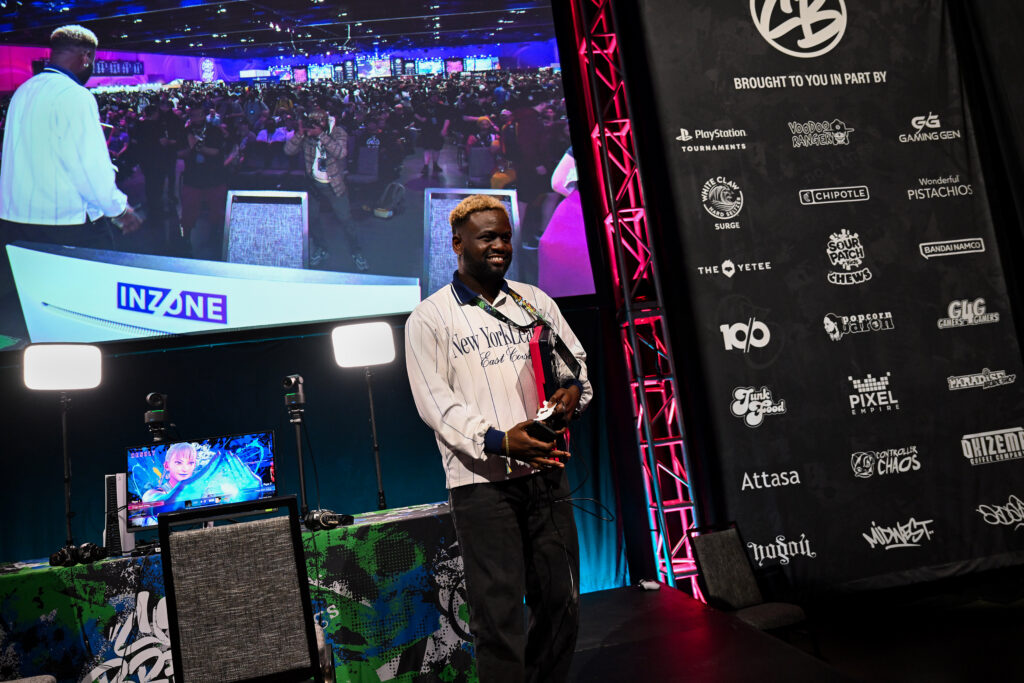
Over Memorial Day weekend, Mbock traveled to Combo Breaker, an annual fighting-game festival in Illinois. He expects to keep attending events like it.
For now, he will wear the monitor, able to move and travel but always watched. He’ll charge it in the morning. He will not wear shorts outside.
“I do believe it’s going to go well,” he said. “I don’t want to feel like I’m stuck in limbo again.”
Gene Park reports for The Washington Post.