Sign In
 Free Newsletter

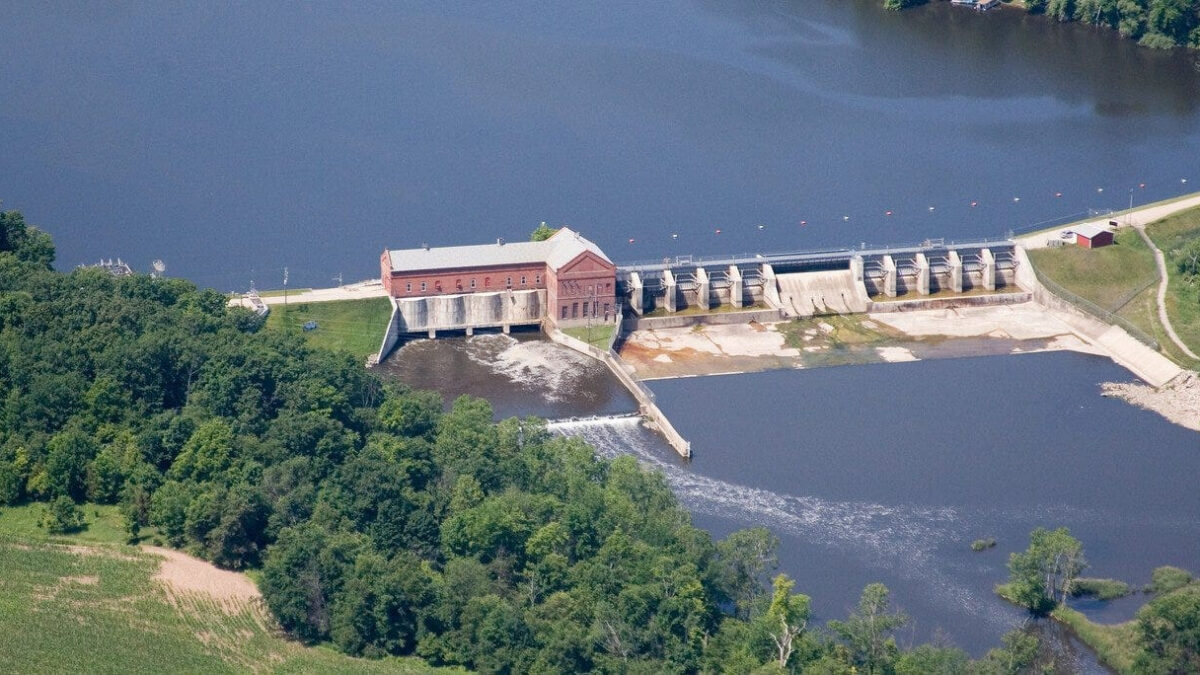
The Webber Dam, on the Grand River in Ionia County, is one of 13 hydroelectric dams Consumers Energy is seeking to sell to Confluence Hydro LLC, a subsidiary of Maryland-based private equity firm Hull Street Energy LLC. (USA TODAY Network via Reuters Connect)
Judge recommends Michigan PSC reject dam sales to Bethesda-based firm


Key takeaways:
- Consumers Energy seeks to sell 13 dams to Bethesda-based Hull Street Energy LLC
- Proposed power purchase agreement doubles market rate for hydropower
- Environmental Law and Policy Center opposes sale citing energy and flood risks
An administrative law judge is recommending the Michigan Public Service Commission reject Consumers Energy’s attempt to sell its 13 hydropower dams to a Maryland-based private equity firm, the judge concluding “the proposed transaction is inconsistent with public policy and public interest.”
Michigan Administrative Law Judge James Varchetti’s “proposed final decision” actually isn’t the final word. The three-member, governor-appointed board of the public service commission, the state’s utilities regulator, can accept the judge’s recommendation, reject it or make modifications.
But Varchetti, in a more than 300-page decision, lays out what critics of the proposed dam sales call a comprehensive case against them.
“The Michigan PSC’s administrative law judge got it right in the proposed final decision,” said Howard Learner, lead attorney and executive director of the nonprofit Environmental Law and Policy Center, which represented a number of anglers and conservation groups in the MPSC case.
The proposed dam transaction is not in the public interest and should be rejected by the commission, Learner said.
“Michigan is facing two crises: energy affordability and flooding risks due to dam safety,” he said. “Consumers Energy’s proposed dam sale to a private equity firm would make both worse.”
Consumers Energy seeks to sell the 13 dams to Hull Street Energy LLC, a private equity firm based in Bethesda, and its wholly owned subsidiary, Confluence Hydro LLC, for $13. The sale would include a power purchasing agreement by which Consumers would commit to buy back power from Confluence at a starting rate of $160 per megawatt-hour — approximately double the going market rate for comparable hydropower. The 30-year agreement includes a 2.5% annual price increase.
The dams proposed for sale include:
- The Allegan Hydro Dam on the Kalamazoo River in Allegan County
- The Webber Dam on the Grand River in Ionia County
- The Rogers Dam on the Muskegon River in Mecosta County
- The Hardy and Croton dams on the Muskegon River in Newaygo County
- The Hodenpyl Dam on the Manistee River in Manistee and Wexford counties
- The Tippy Dam on the Manistee River in Manistee County
- Six dams on the Au Sable River: the Mio Dam in Oscoda County; the Alcona Dam in Alcona County; the Loud Dam in Iosco and Oscoda counties; and the Five Channels, Cooke and Foote dams in Iosco County.
Consumers Energy spokeswoman Katie Carey, in a statement, emphasized that the judge’s recommendation is not legally binding.
“We believe the judge did not appropriately recognize the major benefits of the sale starting with the significant cost savings for Consumers Energy customers and protecting the 13 communities and tens of thousands of people who depend on the dams,” she said. “We will continue to remind the commission of the strong evidence supporting approval of the tranaction and advocate that this sale is the best choice for our state and should be approved.”
Consumers officials earlier stated that they will proceed with decommissioning the dams and removing them if the sales fail to materialize — a move some fishermen would welcome as it would restore more natural flows and habitat in prized fishing rivers such as the Au Sable and Manistee. But many who live in communities around the dams and their water impoundments say it would be damaging to local economies and culture.
Judge: Dams could be sold to others or go into bankruptcy post-sale
Varchetti concurred with a major point of contention by groups opposed to the dam sales, that the move shifts financial and other responsibilities from a regulated utility to a less publicly accountable private company whose long-term commitment motives and financial wherewithal can’t be guaranteed.
“The evidence indicates that Confluence faces meaningful financial and operational risks that call into question its financial ability to safely own and operate these facilities over the long term,” he stated, adding the state of Michigan and its taxpayers could end up bearing future costs of owning and operating the dams if Confluence ever declared bankruptcy on any or all of the 13 dams it intends to place into 13 separate LLCs. Confluence also provided no assurances that it could be prevented from selling the dams to another owner if it chose to, Varchetti noted.
The judge also labeled as “highly problematic” the proposed purchase power agreement between Consumers and Confluence, which he called “the cornerstone of the proposed transaction.”
It “would set a negative precedent such that it should be rejected as unreasonable and imprudent,” he said.
Considering the overall record, Varchetti concluded, “the proposed transaction has an inconclusive effect on rates compared to alternatives … has an adverse impact on the safe provision of energy service, and is inconsistent with the public interest.”
The judge further noted that proposed terms and conditions to alleviate particular concerns, proposed by MPSC staff and state Attorney General Dana Nessel’s Office, were “preemptively rejected” by Consumers.
“This (proposed final decision) therefore concludes that it would be futile to condition the transaction on terms and conditions that Consumers has already rejected,” he stated.
Confluence Hydro spokeswoman Natalie Joubert said that while company officials are disappointed with the judge’s recommendation, they recognize it is not a binding ruling.
“Confluence Hydro looks forward to continuing to demonstrate to the Michigan Public Service Commission our proven track record of success, owning and operating dozens of hydroelectric power facilities, improving their safety, increasing their sustainability, and generating clean, reliable energy for the communities we proudly serve. We remain committed to investing in the facilities, relicensing all 13 dams and ensuring they continue to provide safe, clean power, recreation, and economic benefits for local communities for decades to come.”
The MPSC board is expected to take up the dam sales proposal later this year.
Tom Baird, a board member with the nonprofit Anglers of the Au Sable, expressed pleasure with the administrative law judge’s order.
“The mighty Au Sable River is the crown jewel of Michigan’s cold-water resources and hosts six of the 13 dams,” he said. “(Varchetti’s) decision keeps those dams in safe hands and in a position for responsible stewardship going forward.”
Reporting by Keith Matheny, Detroit Free Press / USA TODAY Network via Reuters Connect.