Sign In
 Free Newsletter

Restaurants attack minimum-wage bill


 Listen to this article
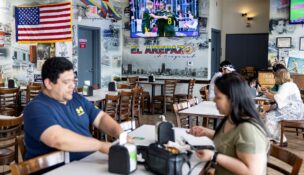
ANNAPOLIS – On a good day, waiters and waitresses at the Shanty Grille in Ellicott City earn more per hour than any other employee, including hosts, cooks and managers.

“And including the owner!” said Eric King, who has poured his life savings into the restaurant, once called the Crab Shanty. Servers there get just $3.63 an hour from King — the minimum wage for tipped employees — but can make up to $30 an hour from gratuities alone.
A bill sponsored by two General Assembly lawmakers would almost double the minimum wage for those waiters and waitresses by 2015 — a totally unnecessary increase, in King’s opinion, and one he said would imperil the restaurant’s thin profit margin.
“They might not make much in the paycheck, but they’re making a ton of money off gratuities,” King said. “And I think that’s the part the legislature doesn’t understand.”
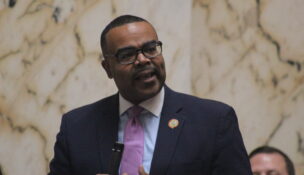
Sen. Robert J. Garagiola, a Montgomery County Democrat and the Senate’s majority leader, and Del. Aisha N. Braveboy, a Prince George’s Democrat who chairs the Legislative Black Caucus, are sponsoring legislation that would raise the minimum wage to $10 an hour over the next two years.
That increase alone would raise the wage of waiters and waitresses, who are guaranteed 50 percent of the state’s minimum wage. But the bill also requires the minimum wage for tipped employees to increase to 70 percent of the minimum wage, putting $7 in the pocket of servers every hour.
Nineteen states and the District of Columbia have minimum wages above Maryland’s — in the District, it’s $8.25 an hour — and Garagiola and Braveboy say the change is meant to put more money into the hands of workers who live in one of the most expensive states in the union. But King said the lawmakers are misguided.

Independent restaurants like the Shanty Grille — which makes all of its food from scratch — generally have a profit margin between 2 and 3 percent. The restaurant operates at a loss during some months, King said, and then tries to make up those losses in December and during the summer, when business picks up.
Raising the minimum wage for tipped workers — already the highest-paid employees — just prevents him from offering higher hourly wages to cooks and managers, who he said tend to be older and in need of more money.
“Restaurants don’t make as much as everybody thinks they do,” King said. “Chains can get up to 4 percent, because of economies of scale.”
Anthony Clarke, who is co-owner of three restaurants in Anne Arundel County — including Galway Bay Irish Pub in the shadow of the State House, where lawmakers are frequent patrons — said it’s only the large national chains that can reach that level.
“One thing particular for Maryland: If you decide to increase the minimum wage, you hurt the small independents even more because it’s such a tight margin for them,” Clarke said. The restaurateur opened Galway Bay in 1998, and he said he’s never once had a waiter or waitress ask for more money.
Among the Killarney House in Davidsonville, Brian Boru Restaurant and Pub in Severna Park and Galway Bay, Clarke guessed he had about 40 to 50 servers, all making between $15 and $20 per hour in tips.
“It’s up to us as owners to make sure we’re a successful business and keep business coming in to them,” Clarke said. “It doesn’t really solve that problem; it just puts pressure on the independent operator, which in turn will end up with increased prices, which when you put them against larger national chains, will put them at a disadvantage.”
These arguments arose last year, when Garagiola also tried to advance a bill to raise the minimum wage. Then, he called for a much more rapid increase — the bill would have raised the wage to $9.75 by this summer — and also called for tipped workers to earn 75 percent of the minimum. The bill failed last year, forcing slight changes to this legislation.
But House of Delegates Minority Leader Anthony J. O’Donnell, R-Calvert and St. Mary’s, said the bill is still bad for business — especially for restaurants, which get hit doubly hard because the increase in the percentage they must pay their waiters and waitresses comes on top of the basic increase in the minimum wage.
O’Donnell said the minimum-wage bill would wind up hurting the same low-income people Garagiola and Braveboy are trying to help.
“Business is struggling,” O’Donnell said. “Small businesses around the state have let employees go, and many are closing their doors. People get booted.
“You’ve got to balance the interest.”
King, owner of the Shanty Grille, said there does come a point when employees have to be let go. The only way to cut costs in his business, he said, is to cut staff.
“You can’t shrink food costs, which continue to rise, insurance costs, which continue to rise … something’s got to give,” King said. “If you’re paying $27 for a crab cake, no one’s going to say ‘OK, I’ll pay $35.’”
What Marylanders earn per hour
Wondering how much people make in Maryland? Here is a sample of median hourly wages for selected job categories, drawn from the federal Bureau of Labor Statistics’ latest Occupational Employment and Wage Estimates (May 2011).
General/operations managers $51.13
Financial managers $50.44
HR/training specialists $29.49
Management analysts $42.34
Accountants/auditors $33.00
Computer systems analysts $39.63
Lawyers $48.24
Dentists (general) $63.88
Waiters/waitresses $8.90
Police/sheriff’s officers $26.19
Funeral directors $28.45
Tractor-trailer drivers $19.14
Hairdressers $11.96
Ambulance drivers (non-EMT) $12.08
Reporters $14.74
Meat cutters $9.81
Farmworkers $10.49