Sign In
 Free Newsletter

Area higher education institutions hold expungement clinics to help clear records


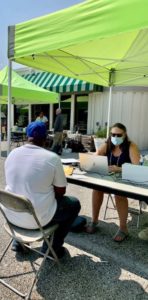
Whether applying for a job, public benefits, licensure or renting an apartment, a criminal record can hinder residents in achieving these and a number of other goals. For some individuals, their record dates back several decades with no reoccurrences since that time. But the record still influences their life today.
As a way to help people, a number of free expungement clinics have been hosted in the Baltimore area recently including Johns Hopkins University and Loyola University Maryland. Records that can be expunged in the state include Motor Vehicle Administration files as well as police and criminal files. Some of the cases they help to remove from records include charges and convictions for drug and traffic offenses, assaults, thefts and others.
“We wanted to be active in helping to ensure everyone has a chance to live a fully productive life and not be judged by something that may have happened in their past and no longer reflects who they are today,” said Alicia Wilson, Johns Hopkins University and Johns Hopkins Health System vice president for economic development.
Johns Hopkins has hosted five expungement clinics since February 2020 as a way to give back to the community. They have served 493 clients with 88.2% being Black individuals.
“I think over the past 10 years, the data has shown there was a systematic over-incarceration, over-policing of certain communities,” Wilson said. “The expungement clinics really tell that tale of individuals, some of them without a conviction, just over and over and over again being arrested and ultimately (there) being no proof that they committed any crime. We just see people that have unfortunately been victims of over-policing, over-incarceration in certain neighborhoods. We also tried to take this to areas where we know people have higher unemployment. There may have something in their background that is preventing them from reaching their fullest potential.”
Of the 493 clients, 1,543 cases were filed for expungement with an average of 3.1 cases per client. Johns Hopkins estimates the free clinic saved participants a combined $20,100 in legal fees. The university states 11% increased the likelihood of employment within the first year with a cleared record while 22% saw higher wages within the first year with a cleared record. The average increase to their yearly income was $6,190.
The university plans to have another expungement clinic in the spring. “Your record should reflect who you are today and not the worst thing you have done in your life,” Wilson said. “I think people deserve to have an accurate reflection of who they are be a part of their record.”
Loyola, in partnership with Maryland Legal Aid, hosted two expungement clinics this year — one in March and the other in September. Matt Beverlin, Ph.D., visiting assistant professor of political science, notes the clinic is “a way for our students to interact with members of the community in a beneficial way. A lot of them want to be attorneys or they are at least exploring being attorneys so it is a chance for them to sit with that idea for a day at least and see what kind of good you can do as a lawyer.” Many of the attorneys who do the clinics are Loyola alumni.
“The lawyers clearly find this to be really satisfying work to help people,” Beverlin said. “I think it is neat from my perspective as an educator to see the college students who are considering — Do I want to be a lawyer? What good does a lawyer do? How can they help? This is an instance where you can do a lot of good as an attorney by just giving a day.”
The Loyola expungement clinics helped a total of 76 clients combined with 135 petitions prepared in total. More than 50 student volunteers combined took part in the clinics.
Dozens of lawyers from across the area work these clinics on a pro bono basis. “It is really nice to see our legal community step up in that way to do expungements and do pro bono work that really matters in the lives of residents,” Wilson said.
Wilson wants participants to take away hope from the experience. She will see people come into a clinic and then come to the next one bringing a friend or family member to get their record expunged as well.
Beverlin also wants participants to be hopeful after a clinic visit and having a positive experience with a lawyer to see they have an advocate. “Hopefully they can walk away with what could be a really transformational moment to have this record removed so they can feel like they have a burden lifted and that they don’t have to carry this weight any longer,” he said.