Sign In
 Free Newsletter

Moore, Democrats at odds over proposed cuts to education reform plan


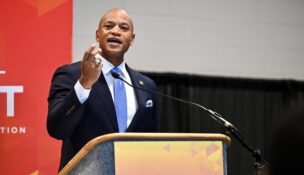
ANNAPOLIS — As the legislature reshapes some of his proposals, including his plan for cuts and delays to education reforms, Gov. Wes Moore said Wednesday that “the only thing that’s going to get my signature at the end of this process is something I believe in.”
Moore proposed several changes to the Blueprint for Maryland’s Future education plan that he said would save costs and help local school systems attract teachers, but top Democrats in the legislature have said that some of the governor’s proposals went too far and would counter progress the state’s schools have made under the plan.
The governor has said that Maryland is facing a crisis-level shortage of teachers, which he said is “the biggest issue that our education system is facing right now.” Roughly 4% of classroom positions are unfilled, and thousands of educators are teaching under a provisional certification, meaning they aren’t fully trained or licensed.
“When I’m looking at tens of thousands of shortages for educators inside of our classroom, if you don’t fix that problem, I don’t care what other problem you’re trying to solve for, it’s not going to get fixed,” Moore said to reporters Wednesday.
House Democrats have voted to remove spending cuts from the governor’s bill to change the Blueprint, appearing to mark their initial stance in negotiations with Senate Democrats and the governor’s team.
The Blueprint — a plan to improve public schooling that calls for starting childhood education at an earlier age, increasing pay for teachers and bolstering career and technical education opportunities, among other measures — drives up education spending by about $3.8 billion every year and lacks a permanent funding stream.
Legislators have set aside enough money to cover Blueprint program costs through at least fiscal year 2027, but it’s expected to be a major driver of multibillion-dollar budget deficits in the coming years.
Moore has said that changes are needed for the plan to be successful and sustainable.
Top Democrats have taken issue with several of the governor’s proposed changes, including a four-year pause in the state’s adoption of “collaborative time,” during which teachers have time and space to plan their curriculums, grade students’ work and seek professional development opportunities outside the classroom.
Moore has made it clear that he wants teachers to have this professional breathing room, but he said that some local school systems aren’t prepared for such a policy considering their number of unfilled classroom positions.
He and his team have said the state needs another 12,000 to 15,000 teachers to properly implement collaborative time, which would eventually allow for teachers to spend up to 40% of their day on planning and professional development.
House Appropriations Committee Chair Ben Barnes has said that while his committee and the governor have agreed there needs to be a pause on collaborative time, they’ve had different views about how long the freeze should be.
Barnes and other top House Democrats have opted to instead delay the policy for one year to gauge whether the governor’s plans for teacher recruitment will have their intended effect.
Under the House’s proposal, schools can use state funding they receive for collaborative time for other programs or services if they’re short on teachers.
They’ve also fully restored a temporary freeze on funding increases for community schools with concentrated poverty, which has been seen as perhaps the most controversial part of the governor’s plan.
“His policy ideas are innovative in this bill and I think will certainly strengthen the Blueprint and the intent of the original Blueprint,” Barnes said during a committee meeting Friday. “This committee has done those policy ideas justice by bolstering them with some amendments that I think make them even stronger.”