Sign In
 Free Newsletter


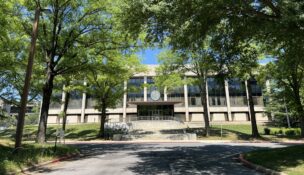
The Edward A. Garmatz United States District Courthouse in Baltimore is shown in October 2024. (Ian Round/The Daily Record)
Courts run out of money amid shutdown, but business continues mostly as usual


Key Takeaways:
- Maryland federal courts continue operations despite federal shutdown.
- All court employees work without pay or may face furloughs if needed.
- Criminal and bankruptcy cases proceed; DOJ civil lawsuits largely paused.
- Federal public defenders work unpaid, highlighting strain on indigent defense.
The United States judiciary ran out of money to pay its employees this weekend amid the government shutdown, but business is continuing mostly as usual in Maryland’s federal courts.
As of Monday, all employees of the federal judiciary are working without pay or furloughed, according to a statement by the judiciary.
In Maryland, federal courts “will remain open and operating notwithstanding the lapse in appropriations,” according to David Ciambruschini, chief deputy clerk of the Maryland U.S. District Court, who serves as a court spokesman.
No court employees in Maryland have been furloughed, although Ciambruschini said that may happen “as needed.”
“Even in the absence of funding by Congress, the Court will continue to receive new cases and hear and dispose of pending cases,” he stated in an email to The Daily Record. “Accordingly, nearly all aspects of the Court’s public facing functions will continue as normal including document filing, resolution of motions, settlement conference, hearings, and trials.”
According to the statement by the federal judiciary, all judges are still working, but staff are only allowed to perform duties allowed by the Anti-Deficiency Act, a federal law that prohibits agencies from performing work not funded by Congress.
Court employees’ first day without pay, Oct. 20, was later than that of most other federal employees. From the beginning of the month until Oct. 17, the judiciary continued paid operations using court fee balances and other funds not dependent on a new appropriation.
The U.S. Bankruptcy Court for Maryland is open, too, according to its website. But the shutdown has slowed down the office of the U.S. Trustee, a branch of the Justice Department that oversees bankruptcy cases.
According to the DOJ’s fiscal year 2026 contingency plan, Trustee employees not subject to furlough are working without pay and are “limited to performing only those functions in which there is a definite risk of substantial property loss or violation of law.”
While criminal cases keep going, the DOJ has moved to pause many of its ongoing civil lawsuits — both those where it sued and those where it is the defendant — but judges have the final say on whether they have to work.
The Maryland U.S. Attorney’s Office claimed it couldn’t answer questions from the media due to the shutdown.
“During the current lapse in appropriations, DOJ operations are directed toward national security, violations of federal law, and essential public safety functions,” the office stated in an auto-reply to an email. “Inquiries outside of these functions will be considered when the lapse in appropriations ends.”
Public defenders ‘paying to do their job’
The shutdown has intensified pressure on the criminal defense system, the vast majority of which is funded directly or indirectly by the federal government.
More than 90% of criminal defendants in federal court cannot afford their own lawyer and are represented either by the federal public defender’s office or private defense lawyers appointed by the court.
Court-appointed criminal defense lawyers haven’t been paid since at least July, when the judiciary ran out of money to pay them for fiscal year 2025. When the government is funded, the oldest invoices will have to be paid first, which means the same thing may happen next year.
Maryland Federal Public Defender Jim Wyda said his staff, which has faced a nearly two-year hiring freeze, is required to work without pay. He noted that his staffers routinely incur expenses for investigations and travel, but are not getting reimbursed.
“So our people are now paying to do their job,” Wyda wrote in an email.
“It feels like this extraordinary indigent defense structure, that is performing an essential constitutional function, is at risk of being broken. And that maybe that’s the point.”