Sign In
 Free Newsletter

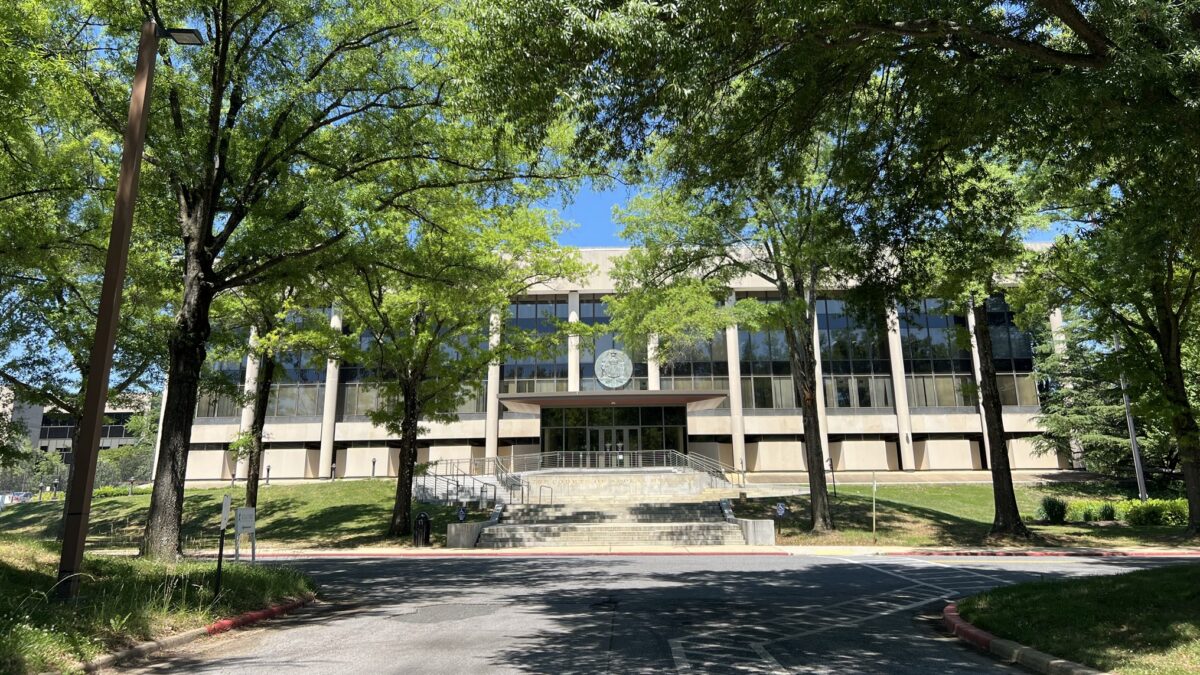
The Maryland Supreme Court building is shown in Annapolis on June 4, 2026. (Ian Round/The Daily Record)
Anne Arundel politician residency case: Court explains disqualifying Dove


The Maryland Supreme Court released its reasoning for disqualifying a candidate for a legislature seat from the election in a residency dispute.
On April 13, the court sided against John Dove Jr., who sought to challenge incumbent Del. Gary Simmons in the Democratic primary for an Anne Arundel County district, because he made a “materially false statement” about his address on his certificate of candidacy, according to the Monday opinion.
In making the decision, the state’s high court avoided resolving a conflict between state law and the Maryland constitution. State election law requires candidates to list “the address on the statewide voter registration list or a current address” when they file to run. The constitution, meanwhile, requires candidates to live in the district they aim to represent for just six months before the November general election. This year, the date was May 3.
The two laws came into conflict in 2014, when the General Assembly moved the primary up from September, thereby making the registration deadline earlier.
“In providing that a candidate specify the individual’s voter registration address or current address, by its plain language, (election law) directs that a candidate provide a current address,” Justice Shirley Watts wrote.
“Regardless of the validity of Mr. Dove’s argument that he did not need to meet the residency and primary place of abode requirements of (the constitution) until May 3, 2026, he was required to put truthful information about his address on the certificate of candidacy at the time that he filed the certificate,” she wrote.
Watts wrote that the court, whenever possible, should avoid addressing constitutional questions “unless absolutely necessary.”
The Maryland Supreme Court heard arguments and issued per curiam decisions in the case twice in two weeks.
The first time, the lower court dismissed the case, ruling it wouldn’t be ripe for review until May 3, but the Supreme Court ordered an evidentiary hearing. The lower court then found Dove did not live in the district.
Dove lived in Gambrills and in February changed his voter registration to an address in Pasadena, in Simmons’ district. Dove’s wife grew up in the house, and they were planning renovations to accommodate her aging father.
Robbie Leonard, Simmons’ attorney, said the court got it right.
“The evidence at trial was clear that he simply used the address in an attempt to become eligible in a district where he didn’t live,” Leonard stated in an email. “Since the original ruling, many individuals have contacted me to look into the residence of several candidates and elected officials. This case is not a one-off. When people decide they want to run for office, they should read this opinion and get their houses in order.”
Former Maryland U.S. Attorney Erek Barron, one of Dove’s lawyers, said the state legislature might need to step in to clarify the rules.
“Regardless of where one comes out on the court’s decision, the opinions collectively highlight uncertainty in the current statutory scheme,” Barron stated in an email. “If the General Assembly believes a clearer rule is appropriate, it can provide that direction through legislation. Greater clarity here might benefit courts, government agencies, regulated entities, and the public alike.”

He pointed to the concurrence by Justice Peter Killough, who wrote that he disagreed with the majority’s reasoning but acknowledged that there was no relief available to Dove, as the primary election already occurred.
Killough argued that Dove might have been legally wrong about his eligibility but that he hadn’t taken any action in bad faith because the law seemed to allow him to list the address on his voter registration when he filed to run.
“What Mr. Dove may have had wrong was the law: when he was obliged to be a District 12B resident,” Killough wrote. “What he stated was the truth. The Court has converted a mistake about a legal deadline into a misstatement of fact, and a candidate’s accurate answer into a false one. A litigant who is wrong about the law is wrong. He is not a liar.”
Killough argued that the majority should not have avoided the legal conflict between the six-month requirement in the state constitution and the statutory requirements for filing a certificate of candidacy.
The majority “misapplies” the doctrine of constitutional avoidance, Killough wrote, and in so doing “creates a constitutional issue by necessarily implying that (election law) requires more than the Constitution.”
“The only relief I can afford Mr. Dove is this record: should he choose to seek office in the future, it is now established that at least one member of this Court found no evidence of a material misrepresentation on his certificate of candidacy,” Killough wrote.
“Residency challenges of this kind recur in every election cycle, and they evade review because the calendar overtakes them before this Court can rule. The Court had the question squarely before it. It should have answered it.”
Simmons won the Democratic primary with 100% of the vote, according to the Maryland State Board of Elections‘ online returns, and will face Republican Blair L. Brannock in November.