Sign In
 Free Newsletter

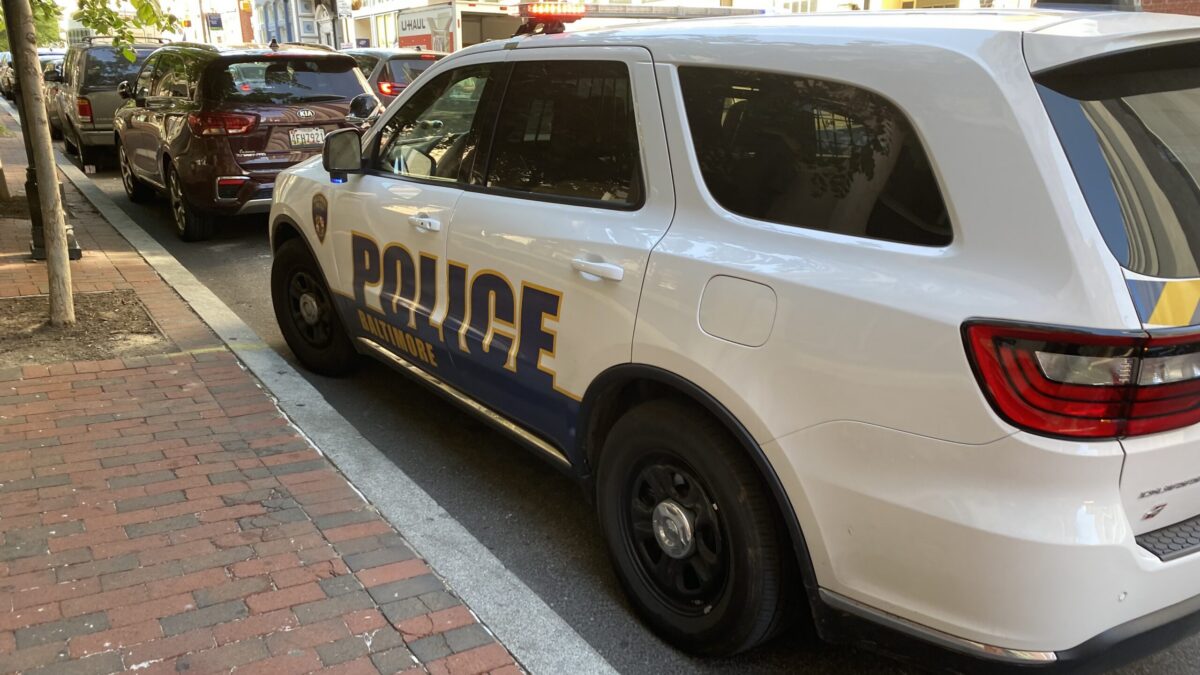
File photo of a Baltimore Police car. (Kendyl Kearly/The Daily Record)
Police can’t make stops based solely on gun possession, MD court says


Key takeaways:
- Maryland appellate court rules handgun possession presumptively legal
- Judge Kathryn Graeff cites 2022 U.S. Supreme Court gun rights ruling
- Police stop of Steven Hicks deemed unconstitutional by court
- Maryland public defender Natasha Dartigue praises decision protecting communities of color
- Attorney general’s office weighs next steps
Maryland police can no longer stop people based solely on the suspicion that they are carrying a handgun, the Appellate Court of Maryland ruled last week.
In a Thursday opinion, all 14 judges of the state’s intermediate appellate court ruled that the possession of a handgun is presumptively legal and that a stop must be justified by reasonable suspicion of other crimes. The opinion marked the first time in 14 years that the Maryland Appellate Court heard a case en banc.
Appellate Judge Kathryn Graeff wrote that a 2022 U.S. Supreme Court opinion expanding gun rights had the effect of significantly restraining police from conducting stop-and-frisks. Graeff wrote that the decision was “compelled” by the Supreme Court ruling in New York State Rifle & Pistol Association v. Bruen.
“Without a presumption of illegality, mere possession of a handgun is not, by itself, indicative of criminal activity that justifies an investigatory stop,” Graeff wrote. “To be sure, this holding is a big change in the law. Arguably, it is not a positive change, to the extent that it limits the ability of the police to thwart danger to the public.”
In making the decision, the court ruled that the Baltimore City Circuit Court was wrong to deny a motion to suppress the evidence obtained during the unconstitutional police stop.
In July 2023, Baltimore Police officers saw a large group at an intersection in Northwest Baltimore and stopped Steven Hicks, who started to walk away from the group when he noticed the unmarked police car. The officers saw a gun in his waistband and stopped him, though he told them multiple times that he had a valid permit. Officers frisked him and rummaged through his pockets and bag, and found drugs and another gun.
After his motion to suppress was denied, Hicks pleaded guilty to possession of a firearm with a nexus to a drug trafficking crime. He was sentenced to five years then appealed.
The Maryland Office of the Attorney General is reviewing the opinion to determine next steps, according to spokesperson Kelsey Hartman.
Maryland Public Defender Natasha Dartigue, whose office represented Hicks, celebrated the appellate court’s decision.
“The Appellate Court of Maryland has made clear that exercising a constitutional right is not grounds for a police stop,” Dartigue stated. “This court decision protects all Marylanders, but it matters most to communities of color that have long borne the weight of over-policing. Constitutional rights do not depend on where you live, who you are, or how heavily your community is policed.”
The court held that even if the police had reasonable suspicion to stop Hicks, the frisk was improper, as officers only have permission during such stops to pat the outside of pockets, not to remove objects from suspects’ pockets, bags or clothing.
“Our holding does not, however, leave the police powerless,” Graeff wrote. “As indicated, the police are permitted to engage in a consensual encounter with an individual; they can approach someone and ask if they have a license.”
“The mere possibility, however, that a person with a gun might not have a valid license, or may otherwise be restricted from possessing a gun, is not enough, by itself, to justify a seizure,” she wrote. “To justify a stop based on possession of a gun, the police must have reasonable suspicion that the person is possessing the gun illegally.”
There were no dissents, but several judges filed concurring opinions. Because the frisk “went too far,” three judges filed a concurrence saying the court didn’t need to address the Fourth Amendment question.
“Whatever justified the stop, the search that followed exceeded the limits the Fourth Amendment imposes,” wrote Judge Stuart Berger, who was joined by judges Daniel Friedman and Melanie Shaw. “That conclusion was available at the outset, without any of the analysis the majority undertakes. We would have stopped there.”