Sign In
 Free Newsletter

(wlad74 / Depositphotos.com)
100% clean electricity by 2035: Can MD meet climate goals?


 Listen to this article
Key takeaways:
- Gov. Wes Moore sets goal of 100% clean electricity by 2035
- Maryland Climate Solutions Now Act mandates emissions cut to 60% of 2006 levels by 2031
- Calvert Cliffs nuclear plant provides over one-third of state power
- Moore signs Utility RELIEF Act to reduce utility bills by at least $150
Gov. Wes Moore has set an ambitious goal: By 2035, 100% of Maryland’s electricity will come from clean energy.
In the Climate Solutions Now Act of 2022, the Maryland General Assembly set its own timeline: By 2031, a reduction of greenhouse gas emissions to 60% of 2006 levels. By 2045, net zero emissions.
But the road to climate sustainability won’t be easy. A December 2023 version of Maryland’s Climate Pollution Reduction Plan notes that achieving the state’s goals “will require significant new investment in challenging fiscal times.” The plan calls for a slate of new climate policies in the years to come. That includes incentive programs for individuals and businesses to transition to cleaner sources of power.
The Maryland Department of the Environment prepares an annual progress report on climate change, department spokesperson Aimena Lipscomb said in an email. The most recent report lists progress made during the 2025 fiscal year: updates to heating standards, participation in a multi-state emissions program, $3 million in grants for electrification of school buses, and reaching 1 million trees planted under a state initiative targeting 5 million new trees by 2031.
RELATED: Utility rate-setting is ‘Catch-22,’ MD lawmakers, advocates say
Meanwhile, Maryland has struggled to balance its finances. In April, Moore signed into law a $70.8 billion budget for fiscal year 2027, which begins July 1. The budget maintains a $250 million surplus, made possible with controversial cuts to state programs. Most notably, that includes a $127 million reduction for the Development Disability Administration.
Despite the surplus, Maryland continues to face a long-term structural deficit, exacerbated by a decline in federal jobs, grants, and direct spending. A January analysis by the Maryland Department of Legislative Services, published prior to finalization of the fiscal year 2027 budget, projected a $2.3 billion shortfall for fiscal year 2028. The estimated deficit rose to more than $3 billion for fiscal year 2029 and more than $3.8 billion for fiscal year 2030.
The gloomy fiscal and economic outlook has led some to doubt the propriety of the state’s current climate goals.
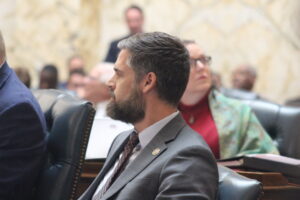
For decades, Maryland focused on providing energy that was reliable and affordable, said Del. Jesse R. Pippy, R-Frederick County. But in recent years, he said, political leaders have added a third goal: providing green, or environmentally friendly, energy. According to Pippy, this tilts the balance away from reliability and affordability to the detriment of consumers and fiscal responsibility.
“What we have now is a contradiction in energy policy,” he said. “When you close down affordable and efficient energy producing systems, like coal power plants and others, to address the green portion of the energy policy, it now makes it unreliable and unaffordable.”
RELATED: Piedmont power line sparks preliminary eminent domain questions
This month, President Donald Trump announced millions in federal funding to reopen Allegany County’s AES Warrior Run coal plant.
The Moore administration, on the other hand, doesn’t think that green energy must come at the expense of reliability and affordability. Nor is it incompatible with a responsible budget. To the contrary, the administration has sought to blend these goals.
Amid Moore’s pursuit of cleaner energy, he touts efforts to reduce the long-term deficit. The administration has also taken steps to address rising energy costs. In May, the governor signed into law the Utility RELIEF Act, which shaves at least $150 from Marylanders’ annual utility bills. The savings, however, were made possible through cuts to the EmPOWER Maryland program. That program, established in 2008, incentivized environmentally friendly energy usage but added a surcharge to utility bills to support the program’s costs.
The governor’s office did not respond to a request for comment before the initial publication of this story. However, in public statements, Moore has promoted a multipronged effort to achieve climate goals.
“I believe that an all-of-the-above approach to energy works,” he said at an April news conference. “We should support what is fastest and cheapest for the people of Maryland.”
An “all-of-the-above approach” implies diversity in energy sources. To what extent does that include nuclear energy?
RELATED: Maryland’s new energy law intertwines with data center boom
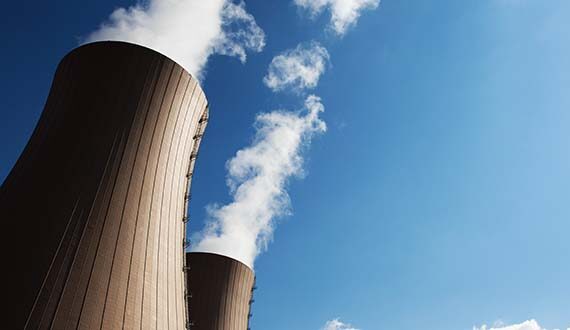
Maryland has only one nuclear power plant. Located at Calvert Cliffs in the southern part of the state, it produces a sizeable output: more than one-third of the state’s total usage. Last year, the plant celebrated its 50th anniversary. It has been derided by some and celebrated by others. For decades, its energy production has held steady.
It’s possible that Maryland could see an increase in nuclear energy. Last year, the owners of the Calvert Cliffs site announced a $100 million update to the plant’s electrical systems. They are also exploring plans to double the plant’s output. The governor has expressed support for an expansion of nuclear energy. In May 2025, he signed into law the Next Generation Energy Act. Among other things, the act solicits applications for proposed nuclear generation projects, including those “to upgrade the generation capabilities” of the Calvert Cliffs plant.
Nuclear power has certain benefits when it comes to producing energy that is environmentally friendly and reliable, said Steve Fetter, a professor at the University of Maryland who researches climate change and nuclear energy. The main detriment is cost, he said. Building an additional nuclear reactor, at Calvert Cliffs or elsewhere, would come at great time and expense.
“Until someone can demonstrate that nuclear plants can be built at a much lower price,” Fetter said, “renewables are the way to go.”
Despite the difficulties of expansion, nuclear energy is one area where Democrats and Republicans have sometimes found common ground.
Pippy criticized what he viewed as Democratic lawmakers’ past reluctance to embrace nuclear energy but noted that things are starting to change. He expressed cautious optimism about moves to increase nuclear output at Calvert Cliffs.
Last year, the General Assembly recognized nuclear as a clean form of energy. “That was actually a decent thing,” Pippy said. “The infrastructure for nuclear is already there. It’s just a matter of additional generation.”
“But it costs money,” he added.
Hannah Gaskill contributed to this story.