Sign In
 Free Newsletter

Panel: New energy law won’t fix soaring electric bills alone


 Listen to this article
Key takeaways:
- Utility RELIEF Act aims to lower customer bills in Maryland
- Maryland imports roughly 40% of its electricity from other states
- BGE prepares for potential rolling blackouts due to capacity issues
- Small modular reactors and energy storage seen as future solutions
Higher electricity bills are top of mind for many Marylanders as rates keep climbing.

But just how the state can address the higher bills, while also satisfying residents’ concerns about the environment, data centers or building new solar, wind, natural gas or nuclear generation, remains a critical challenge for experts and business leaders alike.
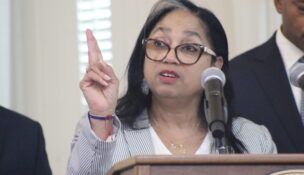
During a Daily Record Virtual Panel Discussion on June 18, the future of energy and utilities in the rapidly evolving regulatory and business landscape was discussed. The webinar featured three experts: Michael C. Powell, an attorney and member of Gordon Feinblatt LLC’s Energy & Environmental practice; Steven Singh, Vice President of Customer Operations at BGE, an Exelon Company; and Eric Wachsman, professor at the University of Maryland’s Department of Materials Science and Engineering, and Director of the Maryland Energy Innovation Institute.
The event was sponsored by BGE, an Exelon Company, and was moderated by The Daily Record’s editor, Kendyl Kearly.
WATCH A FREE REPLAY OF THE VIRTUAL PANEL DISCUSSION
Addressing the Utility RELIEF Act
Last month, the General Assembly passed the Utility RELIEF Act that will bring about a slew of changes to the state’s energy markets.
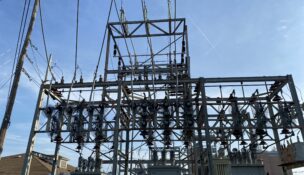
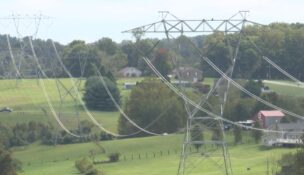
The bipartisan law looks to lower customers’ bills going forward with a variety of measures, from how utilities get paid to placing more scrutiny on some transmission line projects to cutting the state’s EmPOWER efficiency program.
Powell said he thinks the law is a step in the right direction, but it doesn’t go far enough. “Our biggest problem is an imbalance in supply and demand,” he said, one that’s been developing for years.
And while the RELIEF Act calls for supply increases, the state needs more than is called for, he said.
Wachsman agreed, saying: “The big issue we have is we don’t really generate in this state. We need to do more of that. At the same time, we need to keep our climate concerns as part of that.”
He noted that Maryland currently imports roughly 40% of its electricity from other states, so we don’t have control of how that energy is generated – doing so in-state means Maryland could better control how power generation is done.
Singh noted that while customers are happy with any measure that will lower bills, “… as we come to realize this is a much bigger problem, that’s going to need additional steps in the future for sure.”
More and multiple types of generation, and easier permitting, would help support the increase in demand the company is seeing and could help bring down prices over the longer term.
Wachsman said creating more energy storage is also crucial to a healthy energy marketplace, as it can help with the reliability of wind and solar generation in peak use hours.
Offshore wind fight
“If you’re a proponent of offshore wind, it’s not a good message,” Powell said about the legal and political wranglings surrounding the proposed wind farms off the coast of Ocean City.
The Trump Administration is not just stopping permitting of new wind power projects, it’s rolling back agreements that were already in place.
Meanwhile, Powell said he’s seeing local opposition to just about every generation project … From battery projects in Prince George’s County that were cancelled in Oxon Hill, to opposition to solar projects in rural areas because of loss of farmland, to natural gas projects.
Powell said he understands people don’t want to see these projects in their backyard. “But at the same time, if you’re going to have additional supply built in Maryland, they have to build it somewhere.”
Re-starting coal
This month, President Donald Trump announced millions in federal funding to reopen Allegany County’s AES Warrior Run coal plant.
Wachsman said the project doesn’t make any more sense than offshore wind, for instance, as the coal plant wasn’t making money. “Why force a technology that’s already been determined to not be economical to keep running, when the other one could be and would be doing so with much less (environmental) impact?”
Powell said he agrees, but we need coal because we haven’t built replacements for it.
Singh noted that this past summer and winter, BGE was preparing for the threat of rolling blackouts. “That’s how bad the situation is. So we support all forms of generation and storage.”
That’s because PJM Interconnection, the regional body that coordinates wholesale electricity in Maryland and 12 other states, predicts we’re not going to have enough capacity to meet the energy demands we have.
“So all of the above for affordability reasons for sure, and also to make sure that we can maintain service to our customers,” Singh said.
Going nuclear
Powell said nuclear is something we desperately need. About a third of Maryland’s power already comes from nuclear. It’s carbon-free, safe and always running, which is good for establishing a consistent baseload.
A firm in Maryland is working on a new tech called Small Modular Reactors, which are much smaller and cheaper than legacy reactors. The tech is still in development, though, and could take years to bring online. Nuclear fusion is another technology that’s still on the horizon.
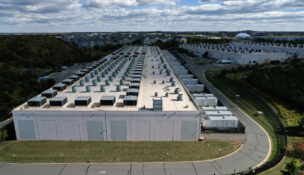
Both will take a lot of time and investment. Who will invest in and pay for these infrastructure upgrades, including those needed for artificial intelligence data centers that are popping up across the country, is the question.
Powell said those running the data centers, who can also create excess power for the grid, are an option that could help keep costs under control.
AI data centers
Public opposition to AI data center construction is on the rise in Maryland and across the country.
Also, data centers are one of the largest contributors to price increases recently, Powell said.
One way to address residents’ concerns is to place them in brownfields locations or have them BYOG (bring your own generation) to the grid, he said.
Unfortunately, Powell said, there’s something like 10 Maryland counties that have already proposed or passed moratoriums on data centers.
Meanwhile, plans to electrify buildings and transportation, among many other uses, keep driving up energy demand.
Whether data centers are built in Baltimore County or York County in Pennsylvania, the impact on our electric grid is the same, Powell said. “The difference is who gets the property taxes that go with it. Who gets control of the data center.”
Wachsman added that imported electricity also tends to come from states with less stringent environmental regulations.
Also, states like New Jersey that generate excess supply for the grid have the temptation to just sell that excess to data centers instead of Maryland.
Singh said another factor to consider: importing electricity like Maryland does also means building new powerlines, which local communities also tend to oppose.
“We have to get really serious about solving this problem together,” he said.
Economic development
Whether it’s developing the latest AI chatbot, advanced solar panels, new fuel cells, SMR, or battery storage technologies, it all requires new investment and entrepreneurship.
And that brings new jobs and taxes to the state, Wachsman said.
He said he’d like to see more investment going into the types of research that brings about new technologies – like solid-state batteries, which are seeing their first commercial sales from a Maryland business, ION Storage Systems.
Tax incentives could be one way to bring more of these types of businesses to the state, Powell said.
Singh said that building new energy infrastructure on the backs of customers clearly won’t work.
“Unless we get tax incentives, or grants or different access or streams of dollars or BYOG for the people who are trying to build things, we have to think about funding sources outside of just rolling it into the bill and telling our customers and ratepayers to pay for it,” he said.