Sign In
 Free Newsletter

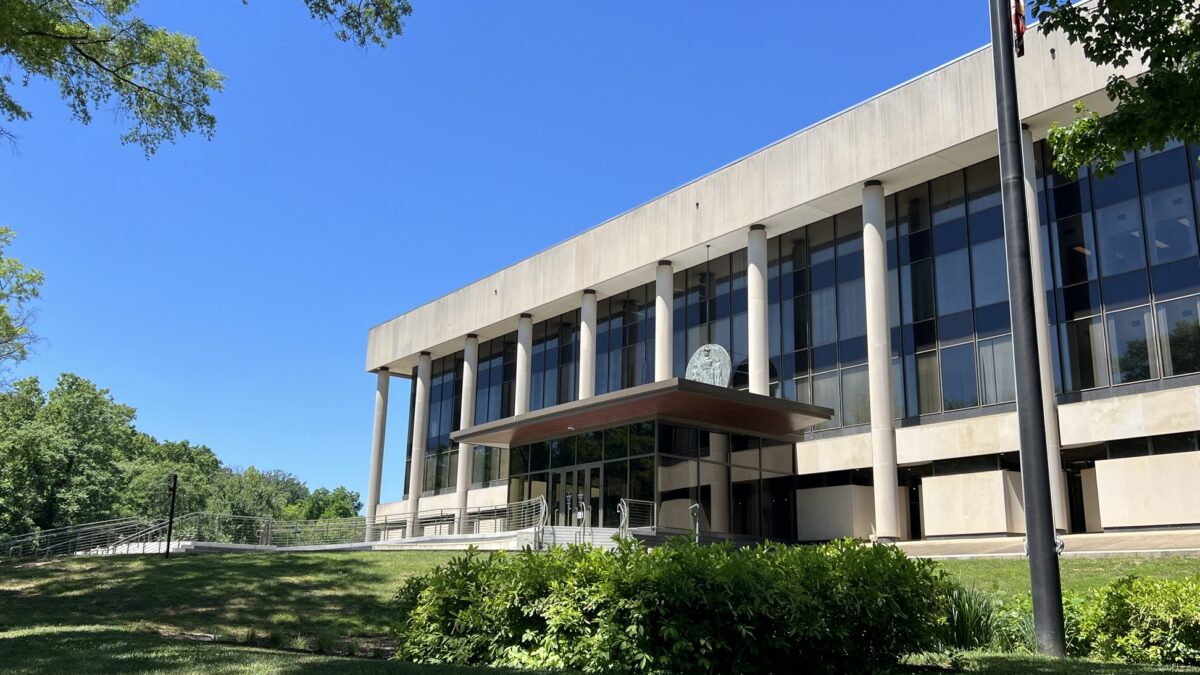
The Maryland Supreme Court building is shown in Annapolis on June 4, 2026. (Ian Round/The Daily Record)
Woman could lose home after paying debt, MD court rules; dissenters call out potential impact on people of color


A Bowie resident could lose her home through a sheriff’s sale despite having paid all of the overdue fees she owed to her homeowners association, the Maryland Supreme Court ruled Tuesday.
In a 4-3 opinion, the court ruled that Wendy Carrington made her payments too late to stop the sale of her interest in the property to an investment company.
Carrington could not afford $3,289 in HOA assessments, plus $493 in attorneys’ fees, while she was undergoing chemotherapy. The HOA obtained a judgment against her, and the home went to the sheriff’s sale, similar to a tax sale. Carrington paid everything she owed after the sale but before it was ratified by the court.
The Newsteps’ Choice North Homeowners Association moved to vacate the sale to Baltimore XV Properties, which paid $6,000 for the lien. Two lower courts agreed to block the transaction. The company objected, and the Maryland Supreme Court agreed that the sale shouldn’t have been blocked.
The ruling paves the way for the investor to obtain the title to the house and to sell it for hundreds of thousands of dollars.
Carrington can only object to “irregularities in the sale” before the court ratifies it, Justice Jonathan Biran wrote. It was “unfortunate” that she might lose her home despite having no debt, he wrote, but the full payment of her debts does not count as one of those “irregularities.”
“In sum, Ms. Carrington’s satisfaction of the Judgment after the sale does not provide a basis to vacate the sale,” Biran wrote.
Attorneys for the HOA and the investment company did not respond to requests for comment. Carrington declined to comment.
In a concurring opinion, Chief Justice Matthew Fader agreed with Biran that the satisfaction of debts doesn’t count as an “irregularity” worthy of an objection.
Fader wrote separately to take issue with a dissent by Justice Peter Killough, who noted Baltimore XV Properties could win substantial profits through a minor investment. Fader, joined by justices Brynja Booth and Steven Gould, argued Killough’s analysis was “wrong or overstated.”
Fader also wrote that “the fate of the sale is far from settled” and that Carrington could still object to irregularities. Noting that “the proceedings following the sale were quite unusual and troubling,” he wrote that the Prince George’s County District Court should not be a “rubber stamp.”
“(I)f it turns out to be true that Baltimore XV purchased an interest worth hundreds of thousands of dollars for $6,000 at a sheriff’s sale, I would have no hesitation in concluding that the sale should be set aside for unconscionability,” Fader wrote.
Along with Killough, justices Shirley Watts and Angela Eaves, the court’s three Black justices, dissented. Killough and Watts both wrote dissents and joined in the other’s; Eaves joined both.
Killough wrote that the ruling would have a disproportionate impact on Black and brown families.
The majority, he wrote, “glosses over (the case’s) most consequential fact: Ms. Carrington paid the judgment in full within approximately thirty days of the sheriff’s sale.”
“Ms. Carrington will lose her home despite having paid the judgment in full, with interest and fees, before ratification,” Killough wrote.
“She may lose her home despite the judgment creditor itself filing to vacate the sale and entering satisfaction of the judgment. She may lose her home despite being current on her mortgage. She may lose her home despite both the District Court and the Circuit Court for Prince George’s County ruling against the purchaser and closing the case.”
Killough wrote that the majority treats the payment of debts as an irregularity “on par with a defective advertisement or an improperly noticed auction.”
“It is not,” he wrote. “Satisfaction of the underlying debt is not an irregularity in the sale. Satisfaction of the judgment eliminates the reason for sale.”
This story has been updated.