Sign In
 Free Newsletter

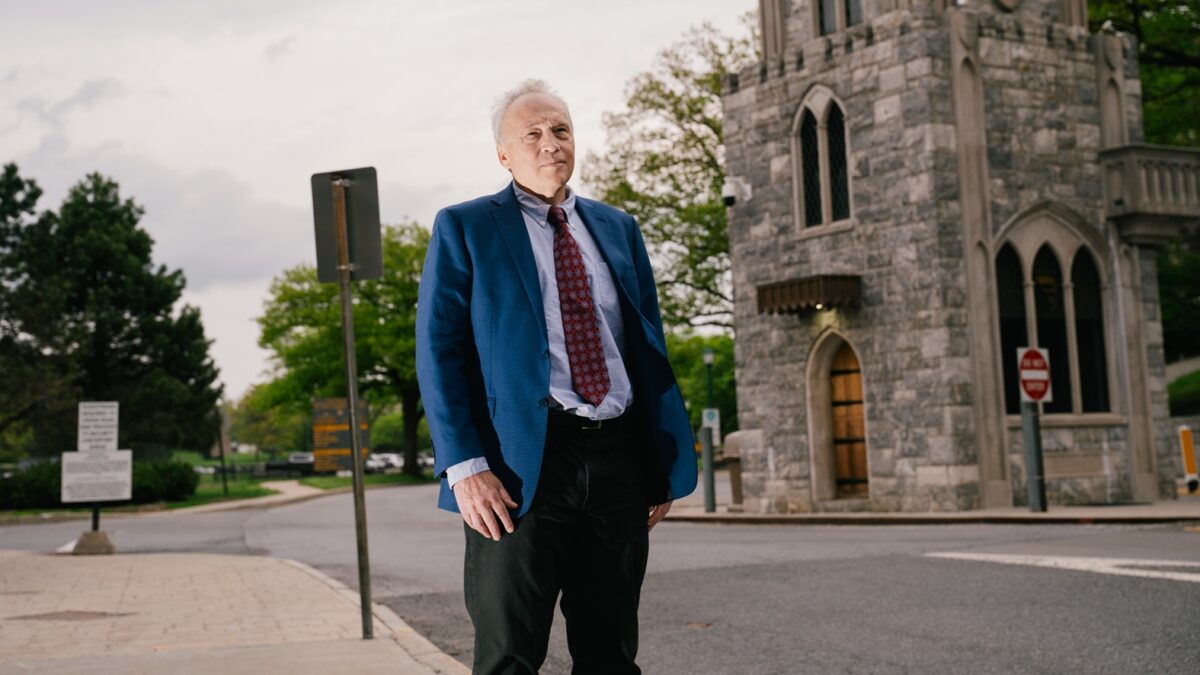
Tim Bakken, a civilian law professor, filed a suit last year challenging a policy that barred faculty members at the U.S. Military Academy at West Point from publishing papers or speaking publicly without first seeking approval from higher-ups in their department. (Paola Chapdelaine/For The Washington Post)
West Point won’t fight ban on school policy limiting professors’ speech


Key takeaways:
- West Point agrees to permanent ban on speech policy
- Tim Bakken challenges policy barring faculty speech
- Judge Cathy Seibel issues temporary ruling in spring
- Policy linked to Trump executive order on military academies
The U.S. Military Academy at West Point agreed Wednesday to a permanent legal ban on its controversial policy limiting what professors can say and write publicly, although an attorney for the academy left open the possibility of a later appeal.
At a conference held by telephone before U.S. District Judge Cathy Seibel, federal attorney Dana Walsh Kumar said West Point and the government did not wish to engage in discovery or a trial as part of a lawsuit filed last year by Tim Bakken, the school’s longest-serving law professor. Bakken had challenged a policy implemented in early 2025 that barred faculty members from publishing papers, speaking at conferences or even appearing on a podcast without first seeking approval from higher-ups in their department.
Instead, Kumar said, West Point believed “the best path forward” would be to proceed swiftly to judgment. She said the government was at work drafting a final version of a temporary ruling Seibel had issued this spring in the case, which barred enforcement of the speech policy for civilian faculty and also decreed Bakken must not be limited in his ability to address students in class while the professor’s case proceeded. She said the government planned to send the draft to Bakken’s attorneys before submitting it to Seibel for her final approval.
“The government has agreed to stipulate a judgment in order to facilitate an appellate review, potentially,” Kumar said, suggesting that West Point may eventually appeal in the case.
Bakken’s attorney Jonathan Goldman, in an interview with The Washington Post, characterized Wednesday’s development as a victory for his client, given that the academic engagement policy will remain unenforceable for the foreseeable future. “We’re certainly happy with the outcome to date,” Goldman told The Post.
Neither West Point nor the Pentagon immediately responded to requests for comment Wednesday morning.
Officials at West Point announced the faculty speech rule a month after President Donald Trump issued an executive order that forbade the nation’s military service academies from “promoting, advancing or otherwise inculcating” ideas the administration dubbed “divisive,” “radical” or “un-American.”
In his lawsuit, Bakken argued that the policy violates the First Amendment by censoring viewpoints “that might be contrary” to opinions held by the academy, the Army, the Defense Department, Defense Secretary Pete Hegseth and Trump. Bakken brought the suit on behalf of all civilian professors, who today make up a third of West Point’s roughly 700-strong faculty.
Bakken often felt lonely and was castigated by some colleagues for the suit, The Washington Post previously reported. He also faced what he alleged were retaliatory disciplinary actions from West Point, including an attempt to punish him for an interaction he had with a mail clerk in March.
Bakken’s lawsuit is among a surge of legal challenges filed by private citizens in Trump’s second term, many of whom allege that the administration’s actions have undermined their foundational rights outlined in the Constitution and the Bill of Rights, according to a Post analysis of thousands of court records.
At Wednesday’s conference, the two parties agreed to submit a proposed final version of the order barring enforcement of West Point’s speech policy to Seibel by early September.
Hannah Natanson is a narrative enterprise reporter.