Sign In
 Free Newsletter

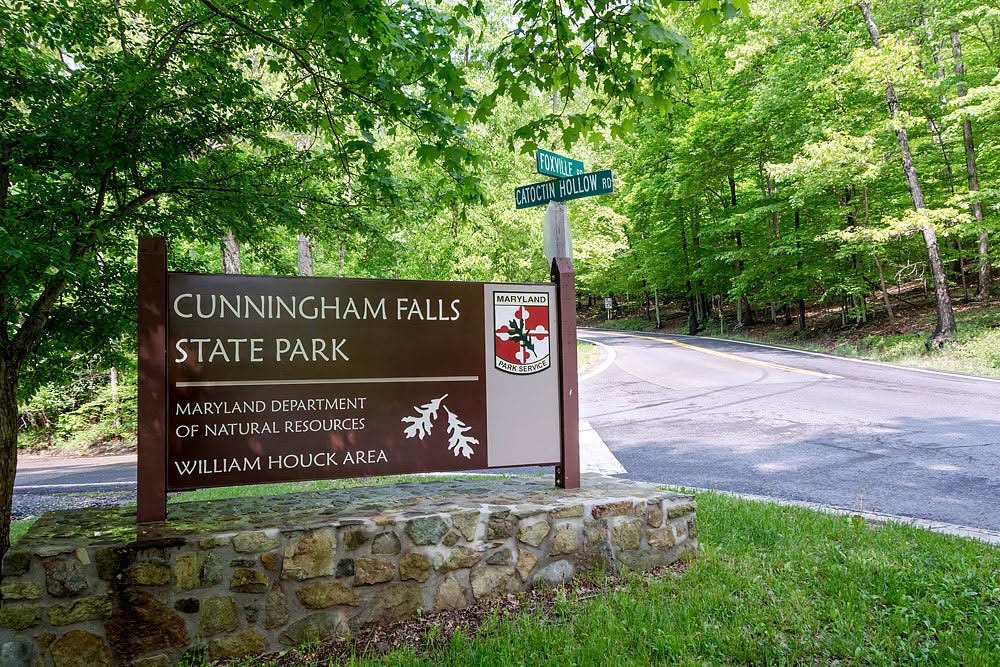
Cunningham Falls State Park is in northern Frederick County, Maryland. (USA TODAY Network)
Maryland park closure expands after second beaver bite


More areas at Cunningham Falls State Park were closed Wednesday, Aug. 5, after a second person was bit by a beaver in 11 days, according to the Maryland Department of Natural Resources.
DNR caught and euthanized the beaver that bit a fisherman and delivered it to the Frederick County Health Department for rabies testing, according to a DNR announcement late Wednesday afternoon.
The beaver from the first incident, on July 26, tested positive for rabies.
The most recent incident occurred around 9:30 a.m. Wednesday when a fisherman was bitten on a leg by a beaver in the South Beach day-use area at Hunting Creek Lake in the state park in northern Frederick County.
The fisherman, 19, went to Meritus Medical Center near Hagerstown for treatment of what appeared to be an ankle bite. Natural Resources Police will follow up with the man, to get more information about the incident, after his treatment.
On Sunday, July 26, a 13-year-old boy was bitten by a beaver while swimming in the designated swimming area in the North Beach area of Hunting Creek Lake.
The boy sustained injuries to his hands and chest, according to DNR spokesperson Gregg Bortz. The boy was flown to Johns Hopkins Hospital in Baltimore for treatment.
That beaver was caught, tested positive for rabies and was euthanized on July 27.
The swimming area is a popular destination, with the busiest months for day-use visitors being July and August, Bortz said.
After the first incident the swimming beach was closed immediately and state officials prohibited swimming there.
DNR announced that Natural Resources’ Wildlife and Heritage Service officials would investigate the possibility of other rabid beavers at the park, Bortz said July 28.
As a result of the second beaver bite incident, the Maryland Park Service has closed the Houck day-use area, the adjacent boat ramp and Big Hunting Creek above the lake. Officials will continue to investigate a possible rabies outbreak within the local beaver population, the Aug. 5 announcement states.
Swimming, fishing, boating and all water access are prohibited until officials can confirm the area is safe for visitors. Other areas of Cunningham Falls State Park, including the campground, remain open.
After the first incident, state officials dismantled a nearby beaver lodge. DNR staff and a wildlife damage control cooperator conducted daily surveillance at the lake for other beavers.
No other beavers had been observed until the Aug. 5 attack.
After the second incident, DNR Wildlife and Heritage Service will begin nighttime monitoring at the lake as well as daytime surveillance to remove any beavers found.
Catoctin Mountain Park, a federal park, is across the street to the north of Cunningham Falls State Park.
A National Park Service spokesperson, via email on Thursday, Aug. 6, said “The National Park Service is closely monitoring the situation at Cunningham Falls State Park. Catoctin Mountain Park does not have any known beaver populations, and suitable beaver habitat is very limited within the park. NPS staff are observing wildlife for any unusual behavior, and there are currently no park closures or public alerts in effect.”
“Beaver attacks on people are rare and are thought to primarily involve rabid animals. Before this year the last recorded instances of beaver bites in Maryland occurred in 2021 and 2015. Beavers are typically non-aggressive and avoid conflict with humans, but people should still maintain a safe minimum viewing distance of 25 yards,” the DNR announcement states.
Anyone who might have recently come into contact with a beaver at Cunningham Falls State Park should contact the Frederick County Health Department at 301-600-3342.
Reporting by Julie E. Greene, The Herald-Mail / USA TODAY Network.