Sign In
 Free Newsletter

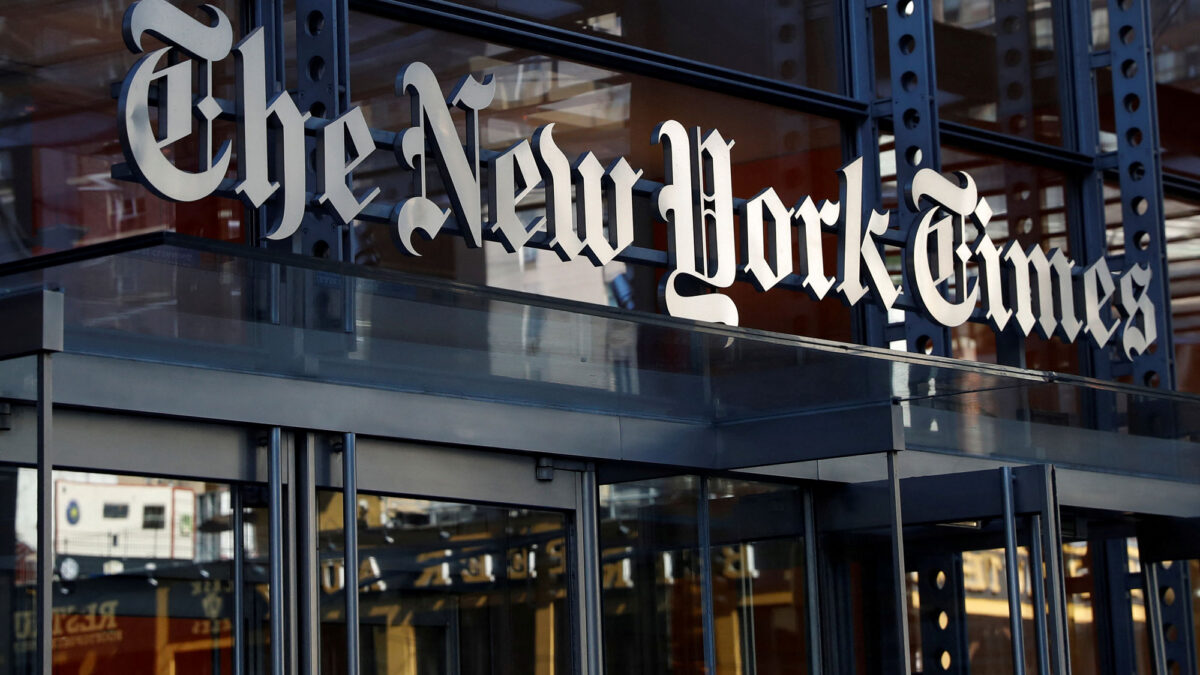
The New York Times building is seen in Manhattan, New York, August 3, 2020. (REUTERS/Shannon Stapleton/File Photo)
NY Times loses defamation suit brought by college basketball player


Key takeaways:
- Jury in Alabama finds New York Times liable for defamation
- Kai Spears awarded $9.25 million in damages
- New York Times misreported Spears at shooting scene
- Spears classified as private figure in defamation ruling
A jury in Alabama found the New York Times liable for defamation in a lawsuit brought by Kai Spears, a former University of Alabama men’s basketball player who the newspaper erroneously reported was present at the scene of a deadly shooting.
Spears sued the Times in 2023, alleging libel and false light, an invasion of privacy that his lawyers said caused him “severe emotional distress, mental anguish, and loss of enjoyment of life.”
After a nine-day federal trial in Tuscaloosa, a jury sided with Spears and ordered the Times to pay $9.25 million in damages.
The Times, which sent a reporter to cover the trial in Tuscaloosa, first reported the news of the verdict on Thursday.
“We’re disappointed the jury found The Times liable for an honest mistake,” Times spokesman Charlie Stadtlander wrote in a statement. “We thank the jury for its service, but believe the verdict and award of damages are contrary to law and not supported by the evidence. We are reviewing our legal options.”
Lawyers for Spears did not respond to a request for comment.
Billy Witz, a college sports reporter for the Times, published a March 15, 2023, article about a shooting involving members of the University of Alabama men’s basketball team, including Brandon Miller, a star player at the time.
Citing anonymous sources, Witz incorrectly reported that Spears was in a car with Miller at the time of the incident. Spears, who denied he was present, sued the Times on May 30, 2023. Days later, on June 2, the Times published an editor’s note atop its original article and noted that further reporting indicated that a student manager for the team, not Spears, was the person there.
In legal circles, the New York Times is synonymous with the standard for proving defamation. In the landmark Supreme Court case New York Times Co. v. Sullivan, a libel suit also brought in Alabama, the justices established that public-figure plaintiffs must prove “actual malice” – that false information was published knowingly or with reckless disregard for the truth.
Private figures, however, only have to prove that the information was false and published with negligence. The court deemed Spears, despite his stature as a college basketball player, a private figure.
The newspaper had not lost a defamation lawsuit in the United States about one of its articles in more than 50 years, according to its own report.
Scott Nover is a media reporter for The Washington Post.