Sign In
 Free Newsletter

Report: Red tape cost Maryland $19.5 billion


Red tape and not-in-my-backyard activism were called out Thursday as major impediments to six stalled and troubled energy projects in Maryland that could have had a $19.5 billion economic impact on the state if they had moved forward.
The findings were part of a report released by the U.S. Chamber of Commerce called “Project Denied” that looked at the economic impact of stalled energy projects nationwide.
“This study should serve as a wake-up call for legislative action to improve the permitting process,” said William Kovacs, the group’s senior vice president of environment, technology and regulatory affairs.
The study was conducted by TeleNomic Research and was authored by Steve Pociask, president of the American Consumer Institute, and Joseph Fuhr, professor of economics at Widener University and senior fellow at the American Consumer Institute. The study looked at stalled or dropped power projects across the country that have been affected by problems ranging from financing and permitting hold-ups to citizen activism.
Peter Morici, a professor at the Smith School of Business at the University of Maryland, College Park and former chief economist at the U.S. International Trade Commission who peer-reviewed the study, said the results were “startling.” He agreed that the permitting process needed to be streamlined so these projects could get off the ground and start generating jobs and pumping money into local economies.
“We’re shooting ourselves in the foot,” he said.
In Maryland, the economic impact amounts to a loss to the state’s economy of $19.5 billion in gross domestic product and 21,700 jobs a year, the report said. The study, a “snapshot in time,” looked at six projects in Maryland as they were in March 2010.
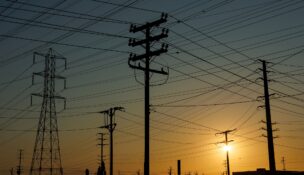
Among the six projects looked at were Pepco’s Mid-Atlantic Power Pathway and the Potomac-Appalachian Transmission Highline (PATH) line. The effort to build PATH, a $2.1 billion project that would run a high-voltage line from West Virginia to Maryland, went dormant at the end of February at the behest of PJM Interconnection, which regulates the power supply in Maryland and 12 other states and the District of Columbia.
The controversial 275-mile long line was to have connected the Amos Substation in West Virginia to a proposed Kemptown substation near Frederick. The board of directors of PJM said the outlook for a slower economic recovery led it to the decision to suspend efforts to build PATH.
The embattled Sparrows Point LNG project was also highlighted. Started in 2006, the AES Corp. project needs close to 100 permits at all levels of government.
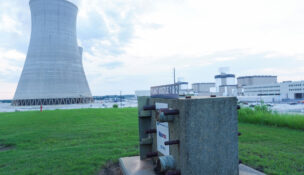
The stalled effort to build a new nuclear reactor at the Calvert Cliffs facility in Lusby was singled out as well. The project, which could take at least 10 years to complete, would cost nearly $10 billion through the addition of a 1,600-megawatt reactor to the site. The project was opposed by anti-nuclear power activists as well as local and environmental activists.
The project was also dealt a major blow when Constellation Energy Group Inc. pulled out of the project, leaving its partner French power company Electricite de France to go it alone. EDF must find a new U.S.-based partner for the project due to federal regulations regarding foreign corporate ownership of nuclear facilities.
Maryland Sens. Ben Cardin and Barbara Mikulski were cited in the report for their opposition to the LNG project. Cardin said in an e-mail response that the projects that were stalled were ones with legitimate issues, and, as an example pointed to the states moving ahead with a planned offshore wind project that has generated strong support.
“Marylanders have welcomed nuclear power plants, the Cove Point LNG facility and other energy projects with open arms,” he said. “Several of the Maryland projects described in this report are not being delayed for any reason except economics. Each of these projects needs to be evaluated on their own merits. They shouldn’t all be viewed as the same, because they are not.”
The study looked at two inland wind power facilities proposed for Garrett County — the Criterion and Dans Mountain projects. Criterion, a $160 million project that will produce 70 megawatts of energy from 28 wind turbines, is now owned by Constellation and has been completed since the study was done. The project was proposed in 2002 and faced “significant delays due to local opposition by area residents,” according to the study.
Dans Mountain, being developed by U.S. Windforce, is a $142 million project that would supply 70 megawatts through 25 wind turbines. According to the study, the project received approval from the Maryland Public Service Commission in 2009, but is now on hold and unlikely to happen after running into zoning ordinance changes made by the Board of Garrett County Commissioners.
The county is trying to get a bill passed by the General Assembly that would give it the power to draft ordinances determining setbacks for commercial wind turbines and establishing a fee for decommissioning them later.
“You are our last recourse,” Gregan T. Crawford, chairman of the board of commissioners, told members of the House Economic Matters Committee at a hearing on the bill on Wednesday. “We need your help.”