Sign In
 Free Newsletter

Md. Supreme Court upholds zoning amendment to allow PG County airport redevelopment


Maryland’s Supreme Court has upheld a text amendment to the Prince George’s County zoning ordinance that would allow a small, struggling airport there to be redeveloped into townhomes.
Many community members opposed the amendment, which singled out the Freeway Airport property to allow for higher-density housing than some surrounding areas. A group called the Concerned Citizens of Prince George’s County challenged the text amendment in court after it passed in 2019.
The high court found that the change was permissible because it “furthered a valid public purpose and did not discriminate between similarly situated properties.”
The Freeway Airport is a privately owned property at 3900 Church Road in Bowie. The small airport has experienced financial difficulties in recent years and has been seen as a safety concern for years because of its proximity to power lines, surrounding residential areas and a nearby highway.
According to the Supreme Court majority’s opinion, there have been 32 accidents at the airport since 1983, resulting in 10 deaths. Planes have landed on or near Route 50 and homes on multiple occasions, the majority wrote.
The property’s owners have said that because of financial troubles, they are considering increasing operations at the airport. Instead, Prince George’s County Council passed the zoning amendment, which was narrowly crafted to fit the specific airport property, to allow for more lucrative development options.
The airport is intended to be the only property affected by the amendment — which the Concerned Citizens group pointed to as evidence that the change violated the “uniformity requirement” by treating a single property favorably.
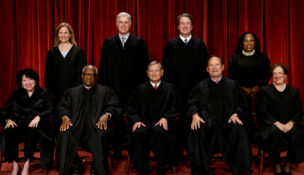
The 4-3 majority disagreed, finding that the amendment furthers a valid public purpose and does not discriminate against similarly situated properties because there are no similarly situated properties.
“Here, (the zoning amendment) furthers a public purpose by incentivizing the redevelopment of land currently used for a nonconforming and dangerous airport,” Justice Steven B. Gould wrote for the majority.
“Eliminating the risk of plane crashes, particularly in a residential area, without question furthers an interest in public safety, and Concerned Citizens has not argued otherwise. Moreover, some constituents and at least one local association supported (the amendment) because they expected townhouse development would benefit the local economy.”
After the Maryland Supreme Court agreed to hear the case, a newly elected County Council passed another bill that repealed the airport zoning amendment.
The Concerned Citizens group asked to dismiss the case because the new bill rendered the legal battle moot. But the Supreme Court agreed to hear the case anyway.
“The effect of our decision on the parties will be an issue for another day,” Gould wrote.
In a lengthy dissent, Justice Brynja M. Booth wrote that the bill was crafted to appear facially neutral, but the criteria used were actually pretextual and designed to benefit one specific property.
“Together, the criteria serve no purpose other than to identify an individual property,” Booth wrote. “In short, the text was drafted in a manner to ensure that it would apply only to Freeway Property, thereby singling it out.”
A lawyer for the Concerned Citizens of Prince George’s County did not immediately return a phone message seeking comment Friday.
Timothy Maloney, the lawyer for the airport, called the outcome “an extremely important decision for the future of land use development in Maryland.”
“If the decision had gone in a different direction, it might have jeopardized the future use of text amendments as a development tool,” Maloney said.
Prince George’s County Council Vice Chair Wala Blegay, whose district includes the airport, said in a statement that she was disappointed the Supreme Court upheld the amendment, which was passed by “certain members of the prior Council.”
“As I have previously stated, (the airport amendment) runs counter to the low-density single-family residential neighborhood surrounding Freeway Airport,” she said.
“Prior to the recent decision from the Court, the People’s Council passed CB-17-2023 and CB-50-2023, which prohibits development under (the amendment). In essence, the Court made a decision on a piece of legislation that is no longer in effect.”