Sign In
 Free Newsletter

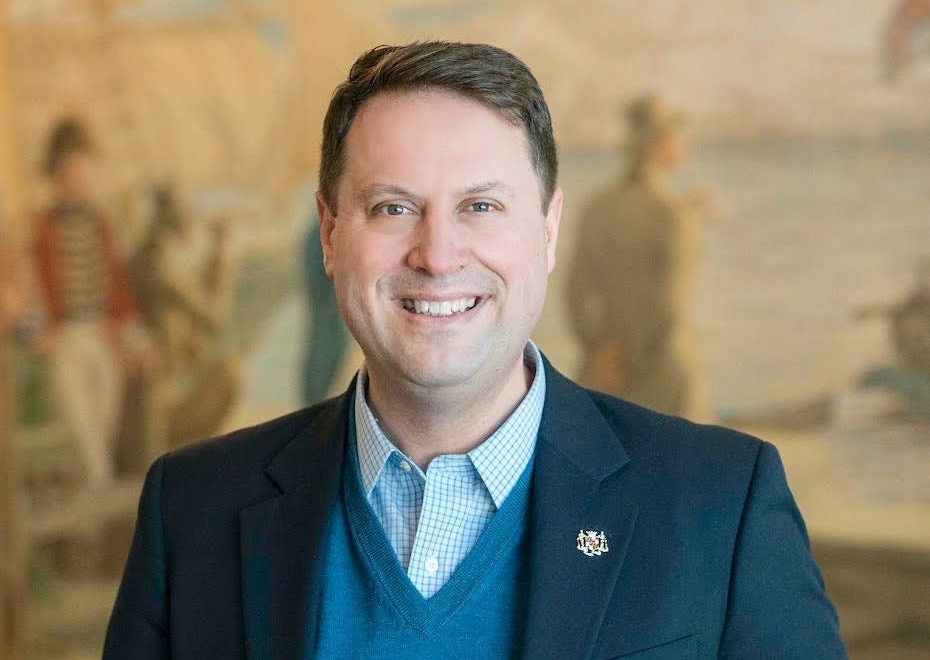
Former Maryland Del. Dan Cox won the Republican primary and will face Democratic Gov. Wes Moore in November. (USA TODAY Network)
Cox beat Hale in MD gubernatorial primary without Republican establishment. How?


Former Maryland Del. Dan Cox bested businessman Ed Hale last week in the race to go head-to-head against Democratic Gov. Wes Moore in November, setting up a rematch in the heavily blue state.
But ahead of the June 23 primary election, in the crowded field of nine Republicans, it was almost anyone’s game. Hale, a longtime Democrat who switched parties to increase his chances of facing Moore in the general election, netted a slew of establishment GOP endorsements.
Instead, the Republican electorate chose Cox, the “Make America Great Again” candidate who won President Donald Trump’s endorsement in the 2022 race but lost to Moore by over 30 points.
While some of Maryland’s top Republicans seemed to be moving strategically to influence their constituents toward a more electable candidate, the power of Trump’s influence prevailed in the more conservative counties.
The establishment
Over the course of his campaign, Hale boasted endorsements from Maryland Senate Minority Whip Justin Ready, R-Carroll and Frederick; Sen. J.B. Jennings, R-Baltimore County and Harford; Sen. Johnny Ray Salling, R-Baltimore County; Sen. Jack Bailey, R-Calvert and St. Mary’s; former House Minority Leader Del. Nic Kipke, R-Anne Arundel; former House Minority Whip and Maryland Freedom Caucus member Del. Kathy Szeliga and her fellow Freedom Caucus member Del. Ryan Nawrocki, both R-Baltimore County; Republican Baltimore County Councilman David Marks; and even Cox’s 2022 running mate, Gordana Schifanelli.
Noting the state’s high cost of living, Ready said he had supported Hale because the Republican Party needed “a real, credible campaign” against Moore. In a May statement, Szeliga pointed to Hale’s entrepreneurial background as proof that he “understands what it takes to grow businesses” and “create jobs.”
In an interview with The Daily Record, Jennings said that after knowing Hale for years, he believed him to be the right candidate to defeat Moore in November.
“We believed in the man. He’s a businessman,” Salling said. “We just wanted to support him at the time. We all know we need a change.”
The electorate
And yet Cox came out on top. The outcome tracks with trends in the 2024 presidential election.
Although former Vice President Kamala Harris won Maryland overall, Trump found corners of support in Southern and Western Maryland, along with the Eastern Shore — the same places that overwhelmingly voted for Cox last week.
“I think the Republican Party electorate in Maryland … is largely mirroring the Republican Party electorate nationally” in its support of Cox over Hale, said Flavio Hickel Jr., an assistant professor of political science at Washington College.
Political scientists weren’t shocked by the win — Cox has name recognition and solid voter bases in those Trump-leaning regions — but by how close the race was. Cox won by just eight points, according to the Maryland State Board of Elections unofficial primary election results.
“For being the prior nominee, coming in at 45% isn’t great,” said Todd Eberly, a professor of political science at St. Mary’s College of Maryland.
In Baltimore County, represented by Marks, Jennings, Nawrocki, Salling and Szeliga, Hale beat Cox by 36 points. Anne Arundel County voters — Kipke’s constituents — chose Hale over Cox by 5%. Ready’s area of Carroll County swung for Hale by 10 points, but Frederick County, which he also represents, swung Cox by 43. Bailey, who represents Calvert and St. Mary’s, diverged completely, with each choosing Cox over Hale by 35 and 36 points, respectively.
Asked if he thinks Hale’s supporters will be welcomed into the Cox fold, Hickel pointed to the retribution that congressional Republicans tend to face when they go against Trump.
“We’ve seen some very … conservative bona fide Republicans who have sort of toed the line of offering some criticism of Trump, and it’s really hit them,” he said. “You might apply that logic here at the state level.”
On the campaign trail, Hale said he is “not a Donald Trump guy” but that he had met the current president when the Miss USA pageant was held in Baltimore in the mid-2000s. Trump didn’t make an endorsement in the 2026 primary.
Roger Hartley, a professor of public and international affairs at the University of Baltimore, said the Hale endorsers’ constituents might not see backlash.
“One thing political science tells us is voters are kind of forgiving up to a point.” If you have one “tarnished vote” against your base, you can kind of survive against that, he said. “But then if you do a second or a third or a fourth, then you can kind of get branded as ‘not loyal.’ ”
The disconnect
In Eberly’s opinion, the choice by veteran Republicans to stand behind Hale was about choosing the winning horse.
“… these sort of establishment-type figures … I think they probably saw Hale as a more electable Republican,” while Cox has more liability, Hickel said.
Cox does have baggage other than the 2022 loss.
He helped organize buses to the Jan. 6, 2021, riots. During a House floor debate that year, he compared legislation to allow children to access mental healthcare without parental consent to the medical experimentation that Nazis performed on Jews. Cox did the latter on Holocaust Memorial Day, while wearing a cloth facemask depicting the post-World War II Nuremberg trials.
Former Gov. Larry Hogan, the popular Republican whom Cox attempted to impeach, called him a “QAnon whack job.”
But Hale wasn’t without his electability flaws, either. He founded 1st Mariner Bank in the ’90s and watched it sink nearly 20 years later. He’s been the subject of several lawsuits and once pled guilty to interfering with security at BWI Marshall Airport after a loaded handgun was found in his luggage at a checkpoint.
But Eberly said those Republicans who publicly stood behind Hale did so deliberately.
“They made a strategic calculation that he was the one who would do better and, even if he didn’t win, would help them down-ballot,” he said.
What’s next?
In interviews with The Daily Record, Jennings and Szeliga said they would coalesce around Cox. Salling was more opaque.
“I’m going to back somebody else than Moore; I’ll just put it that way,” he said. “I’m going to vote for somebody else than Gov. Moore because I don’t think he’s good for the state of Maryland.”
Hartley said if Cox focuses on budgetary issues — “the ones that Reagan and Bush used to care about” — he might get more votes than he did last time. However, “He’s going to have to defend the immigration record of the Republican Party. He’s going to have to defend a lot of things.”
And although the gubernatorial primary is telling of how much influence Trump has in Maryland’s red pockets, November is likely to be a show of Democrats’ power.
“… I don’t see any way [Cox] can win this race. I really don’t,” Hartley said. “I would put it at less than a 5% chance.”