Sign In
 Free Newsletter


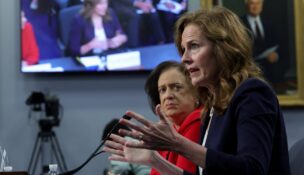
Senate Judicial Proceedings Committee Chair Senator William C. Smith Jr., a said the bill would make a small change but have a major impact on how juries function in Maryland. (The Daily Record/File Photo)
Md. Judiciary to resume canceled home detention program Monday


ANNAPOLIS — The Maryland Judiciary on Monday plans to resume and pay for a pretrial private home detention monitoring program that it had abruptly terminated in mid February after hitting a federal funding limit.
The restarted program will cover the $450-per-month private home detention monitoring cost for new defendants and for the roughly 650 people using the service when it ended on Feb. 16, judiciary spokesman Bradley Tanner wrote in an email Thursday.
The judiciary expects the program to run through fiscal year 2025, which ends June 30, 2025.
Senate Judicial Proceedings Committee Chair Will Smith said to reporters Thursday that the plan represents a “temporary stopgap” for the program.
The legislature is expected to backfill costs the judiciary accrues, though the judiciary will have to wait at least two months — until Gov. Wes Moore signs a budget into law — to receive assistance.
“I’m confident we’ll find a permanent fix,” said Smith, a Montgomery County Democrat.
Senate President Bill Ferguson said earlier in the week that he was “confident” the judiciary would be able to cover the program, though the legislature and the judiciary hadn’t agreed whether state law would permit the program to continue without federal funding.
As of Thursday, though, the “prior concern regarding a limitation to federal funding has been resolved with leadership in the legislature,” Tanner wrote.
It remains unclear whether the program will remain in the judiciary’s purview in the long term. A legislative workgroup is expected to recommend changes to the cost and availability of publicly and privately funded pretrial home detention monitoring programs.
Lawmakers in 2021 established the workgroup as part of requiring the judiciary to help defendants cover home detention monitoring fees that private companies charge, though the workgroup “was not fully appointed and never met,” according to the Department of Legislative Services.
The legislature in 2021 allocated $5 million in federal COVID relief money to the judiciary, but a recent barrage of invoices put the program beyond its funding limit.
Judiciary members told lawmakers last week that higher-than-expected program participation and the sudden influxes of invoices brought the program to its funding limit.
Top lawmakers, though, were displeased that the judiciary didn’t tell them sooner about a possible funding shortage for the program. A subcommittee chair overseeing the judiciary’s budget said she didn’t know about the issue until The Washington Post published a report about it days after the program ended.
Ferguson also said judiciary members sidestepped responsibility for the issue during a legislative hearing last week.
The judiciary didn’t publicly respond to Ferguson’s comments.
As of December, the judiciary had spent $4 million of its $5 million allocation, and it was spending between roughly $100,000 and $140,000 per month, District Court of Maryland Chief Judge John Morrissey said to lawmakers.
Then on Feb. 13, the Administrative Office of the Courts sent letters to home detention companies stating that money for the program was expected to run out “during the first quarter of 2024” because of a sudden influx of invoices totaling $600,000.
The judiciary subsequently received another chunk of invoices and three days later, on Feb. 16, the Administrative Office of the Courts sent another letter stating that the judiciary wouldn’t grant payments for individuals ordered to private home detention monitoring after the close of business that day.
Morrissey said the judiciary’s invoices through Feb. 16 likely total $300,000 to $400,000 beyond the $5 million allocation, though the exact amount the judiciary owes won’t be clear until after it audits the invoices, which aren’t always paid dollar-for-dollar.
The five home detention agencies licensed through the Department of Public Safety and Correctional Services haven’t complied with a requirement to submit invoices twice per month, and the judiciary didn’t have a way to enforce the rule.
Denying an invoice for someone on home detention could have resulted in them being put in jail.