Sign In
 Free Newsletter


Republican presidential nominee former President Donald Trump, left, with Republican vice presidential nominee Sen. JD Vance, R-Ohio, right, at an election night watch party at the Palm Beach Convention Center on Nov. 6, 2024. (AP Photo/Evan Vucci)
Democrats in MD, elsewhere prepare to fight Trump policies


Top Democrats in progressive states in the wake of Tuesday’s election portrayed themselves as protectors of rights and freedoms against infringement from Donald Trump’s policies and officials in Maryland and elsewhere appear to have ramped up contingency planning.
Perhaps the most aggressive stance has been in California, where Democratic Gov. Gavin Newsom on Thursday called for the legislature to convene a special session later in the year to protect — or “Trump-proof” — the state’s policies on climate change, reproductive rights and immigration, according to a report from The Associated Press.
In Maryland, Gov. Wes Moore, Attorney General Anthony Brown and others have maintained that their policy promises and overarching goals haven’t shifted because of the election results.
“The Moore-Miller Administration’s promise to leave no one behind remains steadfast, and we will continue to move forward as we always have in our state — together,” the governor said in a statement Wednesday.
Moore is scheduled to hold a Cabinet meeting in Annapolis on Friday to discuss the state’s plan for adapting to Trump’s return to the White House. State officials have been planning for a potential Trump presidency since at least the start of this year, and officials have prepared a roughly 50-page scenario plan for the governor, his chief of staff has said.
RELATED: Trump’s victory overshadows Democratic success and history in MD
The attorney general is expected to request from the governor and the General Assembly funding to form a federal litigation team that will respond to federal actions or policies that infringe upon Marylander’s rights, including reproductive freedoms and protection from discrimination based on immigration status, gender identity and sexual orientation.
The Office of the Attorney General has already begun seeking five attorneys and a paralegal for the team, Brown said during a virtual call with reporters on Thursday.
He declined to state the amount of funding his office will request, noting that agencies don’t typically disclose details about funding requests before the governor releases his budget proposal.
During Trump’s first term, then-Attorney General Brian Frosh, a Democrat, repeatedly battled the federal government. He joined other attorneys general to defend the Affordable Care Act, go after Trump’s travel ban from Muslim-majority countries and take action against mistreatment of children at the southern border, among other suits.
Brown said his office would likely join attorneys general in challenging a federal abortion ban if it were to be enacted in some form, whether through restricting federal funding for states that don’t enforce it, criminalizing abortion procedures or something else.
Responding to Trump’s plan for mass deportations would also depend on the manner in which the administration carries them out, whether by mobilizing the National Guard, deputizing local law enforcement, using state facilities or federal facilities within states as temporary detention centers, or by other means, Brown said.
The attorney general said that it’s difficult to plan a specific response when Trump still hasn’t outlined exactly how he’d carry out the mass deportation.
“I’m not suggesting that every action that President Trump takes is going to be met by resistance or some lawsuit or criticism,” Brown said. “What we’re talking about here is being prepared.”
Trump’s second term could present major disruptions for Moore’s agenda. Members of his Cabinet expressed fears before the election that the former president’s stated plans, and those in the Project 2025 document, would seriously harm the state’s economy and government services.
RELATED: Control of US House hangs in balance with enormous implications for Trump’s agenda
Fagan Harris, Moore’s chief of staff, said in an interview last week that it’s “hard to overstate how big of a change” a Trump presidency would be for Maryland after four years with a Democratic administration in the White House.
Funding for the state budget, approvals and money for major transportation projects, policies for slowing climate change, plans to boost renewable energy production and protections for Maryland’s foreign-born residents were among the issues about which Harris was most concerned.
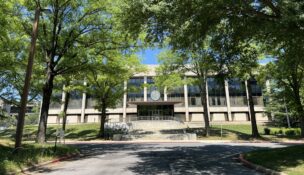
A new FBI headquarters in Prince George’s County and plans for an east-west Red Line light rail project in Baltimore are among the high-profile projects that officials fear would be in jeopardy. Trump has previously made clear his desire for the FBI to be based in Washington and Republicans have generally opposed paying for the Red Line.
Unlike in California, there have not been public calls from top officials for legislators to convene a special session.
But as Maryland legislators gather in Annapolis in January for the start of the state’s 90-day session, Trump’s win is sure to add uncertainty about the prospects of aid for transportation projects, of support for offshore wind turbines and other energy production projects, and of federal funding for a state budget that’s projected to have multibillion-dollar shortfalls in the coming years.
In the days since the election, though, Democrats, who hold a supermajority in both state legislative chambers, have publicly maintained a message of optimism.
“Maryland’s Democratic majority will lead boldly on the frontlines and do everything in our power to protect our state and every single resident,” Del. Jheanelle Wilkins, D-Montgomery, chair of the Legislative Black Caucus of Maryland, said in a statement Wednesday.
This story has been updated to include information about a Cabinet meeting that the governor scheduled for Friday.