Sign In
 Free Newsletter


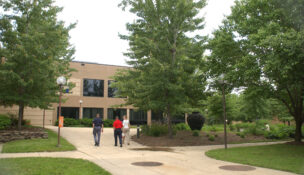
University of Maryland, Baltimore's M.S. in Trauma Sciences from the R Adams Cowley Shock Trauma Center (pictured above) is the first of its kind in the nation, according to school officials. (UMB)
UMB launches nation’s first Master’s in Trauma Science program


The University of Maryland School of Graduate Studies has partnered with the R Adams Cowley Shock Trauma Center at the University of Maryland Medical Center to launch the nation’s first graduate program focusing on the study of trauma systems, University of Maryland, Baltimore officials announced.
A two-year online program, the new M.S. in Trauma Science is designed to “reframe” trauma as a preventable disease, a UMB release says.
The program also seeks to help students understand their role in strengthening trauma systems through coordinated networks that connect prevention, response, treatment and recovery, UMB officials said. The master’s in trauma science – worth 30 credits – targets professionals in healthcare, public health, social work, emergency response and related fields as prospective students.
 Options for in-person rotations at Shock Trauma are available to interested students, the school said. Applications for the graduate program opened in September and the first cohort is scheduled to begin in fall 2026.
“Trauma care has traditionally been viewed as the domain of surgeons. But preventing injury and addressing its long-term impacts requires expanding who we consider trauma practitioners,” said Thomas M. Scalea, a professor of trauma surgery at the University of Maryland School of Medicine.
“At Shock Trauma, we know that to save more lives, we need stronger, organized systems that engage professionals at every level of prevention and care. This program will develop the interdisciplinary leaders who will design and sustain those systems in their communities.”
Faculty physicians at Shock Trauma developed the program which builds on “decades of systems leadership” at the Baltimore hospital as the curriculum is constructed to give students deeper perspectives on how trauma systems are designed, implemented and sustained, according to a release.
UMB cited research saying that trauma remains the leading cause of death worldwide as an overwhelming majority of “fragmented” trauma systems are under-resourced or reactive.
“Healthcare is evolving, and solutions demand collaboration across disciplines,” UMSGS dean Kenneth Wong said.
“This program reflects our commitment to interprofessional education, bringing together diverse professionals to improve outcomes and prepare for leadership in the future of trauma care.”