Sign In
 Free Newsletter


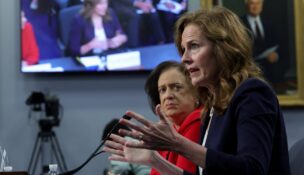
Juvenile justice is meant to be “restorative, not punitive,” said Sen. William C. “Will” Smith Jr., D-Montgomery and chair of the Senate Judicial Proceedings Committee. “Having youth start off in the youth system has better short- and long-term outcomes.” (AP File Photo)
Some Md. lawmakers considering adjustments to juvenile justice reform laws


Following a year when youth crime was top of mind for Marylanders, key state lawmakers are aligning around adjustments to recent juvenile justice reform laws rather than the far-reaching reversals that opponents are seeking.
“In terms of wholesale repeal? Not at all interested in that,” said Sen. William C. Smith Jr., who chairs the powerful Senate Judicial Proceedings Committee.
“I do believe the reforms that we passed in large part are going to create a more equitable justice system.”
The changes, which passed in 2022, came after several years of research and recommendations from the Juvenile Justice Reform Council, a bipartisan group that included lawmakers, law enforcement and crime victims’ representatives, public defenders and youth representatives.
The resulting legislation placed new guardrails around the juvenile justice system, including limiting the crimes for which children under age 13 can be criminally charged, restricting the use of detention and capping the maximum length of probation periods.
Lawmakers also passed the Child Interrogation Protection Act, which requires police to notify a parent or guardian when a child is taken into custody and mandates that the child consult with a lawyer before an interrogation can take place.
Both laws have come under fire amid a perceived spike in youth crime, though data from Maryland’s Department of Juvenile Services indicates that crimes committed by children remain below pre-pandemic levels.
Republican lawmakers have said they want to undo parts of the reform package, including protections for kids facing interrogation, which some prosecutors argue have made it more difficult to build cases.
And while key Democrats say they’re against repealing the legislation, they are coalescing around several possible “tweaks.” One area of agreement for the lawmakers is that the Department of Juvenile Services is in need of administrative changes that should come from the executive branch, not legislators.

“There are concentric circles of systemic breakdown,” Smith said. “They exist within the judiciary, with sentencing, state’s attorney’s offices, law enforcement not understanding the process, but most of it is within DJS.
“No one piece of legislation got us here and no one piece of legislation is going to get us out of here.”
Smith and his counterpart in the House, Del. Luke Clippinger, also both named probation as an area where changes are possible. Under the 2022 law, the initial period of probation is capped at 6 months for a child whose most serious crime is the juvenile equivalent of a misdemeanor, and one year for a child who committed a felony. Judges can still extend probation in three-month intervals up to a maximum of three years, and there are no time limits in cases that involve a crime of violence.
Howard County State’s Attorney Rich Gibson, who leads the Maryland State’s Attorney’s Association, supports extending probation periods in part because it can take a long time to find appropriate services for a child who needs help.
“The clock can run out, and frequently does run out, on our youth,” Gibson said. “Having a system in place that is focused on addressing the root cause, versus the clock, would be a huge step in the right direction.”
Clippinger, who chairs the House Judiciary Committee, said communication among the agencies that handle youth crime, as well as with the public, is also part of the juvenile justice problem.
“The silos don’t communicate very well with each other,” he said.
The juvenile justice system is opaque by design. Children who break the law often get the chance to keep their court proceedings out of the public eye so that they can go into adult life with a clean slate.
But that can also leave the public with little idea of how youth crime is being handled. In Maryland, the debate over juvenile justice has been dotted with anecdotes about frightening crime sprees and kids being returned home after committing serious offenses.
Data from the Department of Juvenile Services paints a different picture, though. In September, the department reported that overall juvenile complaints in fiscal year 2023 were slightly lower than pre-pandemic levels.
The dip wasn’t spread evenly across different types of offenses, though. According to the report, robberies and felony sex offenses fell but carjackings and handgun violations both increased dramatically.
“I think to be fair, the numbers don’t always reflect what people are seeing on the ground,” Clippinger said. “When people hear these anecdotal stories and see things happening to themselves or their neighbors, when they perceive that it’s happening a lot where they live, that may not be reflected in some of the stats that we have.”
Still, some talking points raised by opponents have been incorrect.
Even under the Child Interrogation Protection Act, for example, police can still question children under some circumstances, like when there is an active public safety risk.
“I represent a lot of criminal defendants, including juveniles, mostly in Baltimore County and city,” said Sen. Jill Carter, a Democrat who represents Baltimore City and sits on the Judicial Proceedings Committee. “There is no truth whatsoever to the fact that these kids can’t get arrested or charged.”
In some cases, Carter said, the problem is that law enforcement is not using the options that are available to them. If a child cannot be criminally charged under the new law, courts can still intervene through a Child in Need of Supervision, or CINS, complaint.
“The only children that it is not possible to bring charges on are children under the age of 10,” Carter said. The 2022 law allows for children under the age of 13 to be charged with a crime of violence, a category that includes carjacking and robbery.
Smith and Clippinger both said, however, that they may seek to revisit which crimes can generate charges against a child under age 13, including offenses involving firearms.
Gibson also said prosecutors want the General Assembly to revisit the Child Interrogation Protection Act.
“I think that we should be very thoughtful in crafting the solutions that give those children protections while also recognizing that children are involved in some very dangerous situations in our society,” he said.
Gibson suggested that children should have more agency to decide whether they want to consult with a lawyer before talking to law enforcement. Parents sometimes want their children to fess up if they’ve committed a crime, he said.
The law’s supporters note that it is the child, not the parents, who will face the consequences of talking to police. And committee leaders seem less inclined to make changes to the interrogation law, in part because there may be a legal challenge that could force additional changes.
“At the end of the day, consistent legislative change in this area can be counterproductive,” said Clippinger. Retraining the people who work within the juvenile justice system takes time and resources, he said.
“We need (DJS) to act consistently, we need it to be well staffed, we need it to be providing services for this group of children,” Clippinger said.