Sign In
 Free Newsletter


Senate Minority Leader Steve Hershey and Senate Minority Whip Justin Ready attempt to amend the fiscal year 2027 budget during a floor session on March 17, 2026. (Hannah Gaskill/The Daily Record)
MD Senate Republicans try — but fail — to repeal tech tax, amend budget


Key takeaways:
- Maryland Senate debated the fiscal year 2027 budget with no new taxes or fees.
- Republicans failed to repeal the 3% tech tax that has generated only $35 million of the projected $500 million.
- The budget includes increased funding for behavioral health, childcare scholarships, and energy assistance.
- Senate Minority Leader Steve Hershey criticized the tech tax’s impact on business relocation and contract restructuring.
After three hours of debate Tuesday and nearly a dozen Republican attempts to restructure it and the state tax code, the Maryland Senate moved the fiscal year 2027 budget closer to the House chamber.
When Senate Budget and Taxation Committee Chair Guy Guzzone, D-Howard, introduced the budget on the Senate floor Monday evening, he said it is poised to leave a surplus of $250 million — with $2.2 billion in the state’s Rainy Day Fund — reduces General Fund spending and limits budget growth to around 1%.
“And, it includes no tax or fee increases,” Guzzone said.
With the understanding that there will ultimately be a surplus at the end of the 2026 legislative session, Senate Minority Leader Steve Hershey, R-Upper Eastern Shore, asked Guzzone during Tuesday’s debate if the actions his committee had taken to balance this year’s budget and sew up the $1.4 billion shortfall have changed the fiscal outlook for the years to come — which are also forecast to have budgetary holes to fill.
“What is the message?” Hershey asked. “What are we saying this structural outlook looks like in the next few years? Is it unchanged?”
Guzzone said that the budget before them leaves the outyears “pretty much unchanged.”
“We would work through that like we do every single year,” said Guzzone. “As I look back over the course of time I’ve been around, I don’t recall too many years where we haven’t had some sort of issue.”
The lack of new or increased taxes and fees didn’t stop Republican questions on the more than 230 amendments his committee collectively tacked to both bills, including an inquiry from Sen. Chris West, R-Baltimore County, regarding the lack of an allotment for settlement payouts under the Child Victims Act.
“We’re not anticipating any money to be paid out in the next year?” West asked.
Guzzone replied that there is no money set aside for that in the fiscal 2027 budget, prompting West to ask, should some of those suits reach settlements, if the state would move forward with a supplemental appropriation.
“There’s always an action that can be taken this year,” Guzzone replied.
Though no money in the budget was allocated for Child Victims Act settlements, it does increase behavioral health spending for public schools to $100 million, seek to reduce the waitlist for Maryland’s childcare scholarship program by funding an additional 1,500 children through a $20 million allotment, provide $100 million in target assistance to lower energy bills for ratepayers, adjust cost containment measures for the Developmental Disabilities Administration by $23 million, give over $10 billion in state support for public school programming, offer a 1.5% cost of living adjustment for most state employees, fund Medicaid by more than $16 billion to cover 1.5 million residents and allocate $10 million in information technology, staffing and outreach efforts to limit the impact the federal government has on Marylanders who rely on social safety net programming like SNAP, among a series of other measures.
Republican senators lobbed four amendments specifically at the budget bill, including a measure to require executive agencies to commit to 5% cuts across-the-board.
“While this budget is balanced, it essentially just moves funds around — and really, it’s really just budget sorcery because while there are no tax or fee increases … there’s also no tax relief,” said Corderman. “We asked a lot from our citizens over the last couple of years — a whole lot last year, a lot more than 5%.”
Combatting the amendment, Budget and Taxation Committee member Sen. Craig Zucker, D-Montgomery County, said that he and his colleagues perform a lot of labor to review individual agency budgets and across-the-board cuts can put an end to important programs unintentionally, pointing to one at the Department of Aging that aids Holocaust survivors.
Republicans were unmoved in their support of the amendment.
“There’s all kinds of things you could say, ‘Hey, well this would cut this, this could cut that,’ ” said Senate Minority Whip Justin Ready, R-Carroll and Frederick. “But we’ve got to start making some tough choices.”
That amendment, introduced by Sen. Paul Corderman, R-Frederick and Washington, failed on a vote of 13-31.
The budget’s companion bill escaped seven attempted amendments Tuesday, accepting one brought forth by Sen. J.B. Jennings, R-Baltimore County, to expand the timeframe for what is considered a “historic vehicle” from 1999 models to cars that are at least 25 years old.
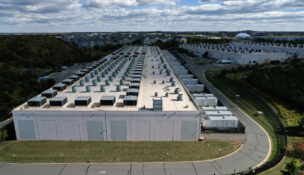
Of those that failed was a measure offered by Hershey to repeal the 3% tax on IT and tech services the legislature put into place to close the nearly $3 billion budget gap it tangled with last year.
The new tax was projected to bring in $500 million, but has fallen short. According to Hershey, it only raked in $35 million in the first half of fiscal year 2026.
“This was not a minor shortfall but actually a fundamental miss, and confirms what we had talked about very much during the debate — that the business community would not simply absorb this tax,” he said. “What they’ve done is they’ve essentially responded … by restructuring contracts. They’ve shifted procurement out of state. And they, in some cases, chose to locate elsewhere altogether.”
Guzzone said “it is correct” that the so-called “tech tax” has not yielded what was anticipated, but noted that it is a “structural” solution to projected budget shortfalls that, if repealed, could eventually cost “billions of dollars.”
Hershey’s amendment failed on a margin of 20-24.
The chamber is expected to pass both bills in the coming days. They will then be heard and debated in the House chamber.