Sign In
 Free Newsletter

Maryland’s nonprofits are more than service providers — They’re economic drivers


 When Maryland leaders talk about economic development, the conversation often focuses on attracting businesses, supporting industry growth and investing in major development projects. These efforts matter, but they don’t tell the full story of what keeps Maryland’s economy strong.
Across the state, nonprofit organizations fuel local economies every day, not only through the services they provide, but through the jobs they support, the dollars they circulate and the stability they create in communities.
Nonprofits aren’t just charities or social services. They’re purchasers. They’re workforce partners. They’re economic anchors. Fello’s 2025 Economic Impact Report illustrates this clearly. In a single year, Fello’s work generated $465.6 million in economic output and supported 2,602 jobs across Maryland.
Fello’s impact extended far beyond direct services with $177.9 million in labor income and $67.3 million in tax revenue flowing back into our communities, supporting economic activity throughout the state.
As Maryland’s largest Financial Management and Counseling Services provider, Fello administers payroll and payments for thousands of workers who support people with disabilities. Those dollars flow through households, local businesses, and neighborhood economies across Maryland.
Nonprofit organizations aren’t operating outside the economy. They’re part of the infrastructure that supports it.
And that infrastructure matters because strong economies depend on more than commercial development alone. People need access to housing, healthcare, employment support, transportation and community services to fully participate in the workforce and in civic life. Nonprofits help make those systems work.
For many Marylanders, these services aren’t optional. They’re essential.
Without nonprofit organizations providing these supports, the responsibility would fall elsewhere — often to government systems that are already stretched thin. In many cases, nonprofits deliver services with greater flexibility, specialization and responsiveness to community needs.
There’s also a long-term economic benefit to this work. When people have access to the right support, they’re more likely to remain connected to their communities, participate in the workforce and avoid more costly interventions later. That creates positive outcomes not only for people and families, but for Maryland’s economy as a whole.
Nonprofits also provide something increasingly valuable in today’s economy: stability. They remain embedded in communities during periods of economic uncertainty, transition and changing public needs. They are viewed as trustworthy and steady, known for building long-term relationships, maintaining local partnerships, and continuing investment in the people and places they serve.
As Maryland continues to plan for growth, nonprofits should be included more intentionally in conversations about economic development and public policy, not simply as recipients of funding, but as strategic partners with firsthand knowledge of what communities need to thrive.
A stronger economy depends on more than development projects and business recruitment. It depends on the systems and organizations that help people live, work and participate fully in their communities.
Nonprofits are already helping drive Maryland’s economy every day. The next step is making sure they have a seat at the table as partners in Maryland’s economic future.
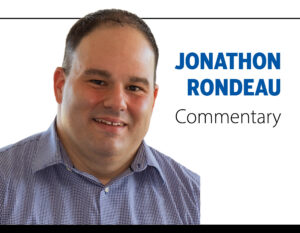
Jonathon Rondeau is President and CEO of Fello.