Sign In
 Free Newsletter

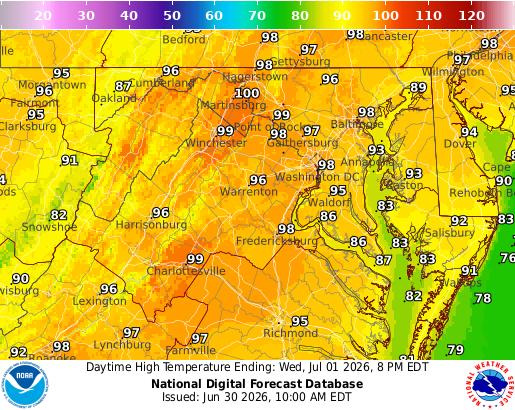
A graphical forecast for Maryland on Wednesday, July 1. (USA TODAY Network)
Moore declares State of Preparedness ahead of MD heat wave


 Listen to this article
Gov. Wes Moore declared a State of Preparedness Tuesday ahead of what state leaders expect to be a historic heat wave as forthcoming weather conditions could cause extreme heat risk across the state.
Extreme hot and humid conditions are forecasted for Wednesday to Sunday with the warmest days being Thursday through Saturday – necessitating increased awareness and preparedness from Maryland residents and visitors, the governor’s office said.
A State of Preparedness, as documented in an executive order signed by Moore and Secretary of State Susan Lee, enhances Maryland’s ability to respond quickly, effectively and proactively to potential hazards and disaster threats. In addition, the order directs the Department of Emergency Management to coordinate a thorough preparation of state government ahead of potentially hazardous impacts.
“The health and safety of Marylanders, and those visiting our state for this holiday week, is our top priority,” Moore said in a statement.
“This State of Preparedness will ensure that Maryland is ready to protect our people ahead of this extreme heat. We’re also asking Marylanders to do their part to stay cool, stay hydrated and to check in on their neighbors, particularly any vulnerable populations like the elderly, children or pets to make sure they’re staying cool, as well.”
The governor’s office cited observations from the National Weather Service, advising what Marylanders can expect over the next five days:
- Daytime temperatures in the mid-90s are expected for the state with highs reaching 100 or more; heat indexes are forecasted for 105 to 110 and a potential peak of 115.
- The hottest conditions are expected Thursday through Saturday (July 2 to 4).
- Overnight temperatures are expected to remain above 80 degrees across most of Maryland.
- Prolonged heat and humidity will increase the potential for heat-related illnesses, particularly for those working outdoors or participating in outdoor activities.
The Maryland Department of Health offers information about Maryland cooling centers and additional resources for extreme heat.
“While Marylanders begin enjoying summer days, we remind our communities to stay safe—many are at risk for heat-related illness during the extreme heat we are experiencing this week,” MDH Secretary Meena Seshamani said.
“Remember to check on those who are particularly vulnerable to this weather, including young children, senior citizens and people with chronic diseases. Be sure that they have the resources they need to stay comfortable and safe, or help them locate one of the dozens of local cooling centers available.”
Moore’s office provided the following preparedness recommendations to ensure safety during the five-day heat wave:
- Never leave infants, children or pets inside a parked vehicle.
- Increase fluid intake, regardless of activity level. Don’t wait until thirsty to drink fluids; drink more liquid than thirst indicates.
- Avoid “heat hangover;” continue to drink fluids even after strenuous activity, enabling the body to maintain optimum hydration and helping prevent the after effects of heat exposure such as headaches and fatigue.
- Avoid beverages containing alcohol, caffeine or large amounts of sugar as they dehydrate the body.
- Avoid very cold beverages as they may cause stomach cramps.
- Consider canceling or rescheduling any outdoor activities during peak heat times. If active during this time frame, drink a minimum of 16 to 32 ounces of water each hour.
- Some medications, both prescription and over-the-counter, may increase the risk of heat related illness. Consult your physician if you have questions.
- Wear sunscreen with a minimum SPF 15. Apply at least 30 minutes before going outdoors, and re-apply as necessary.
- Rest frequently in shady areas so that the body’s temperature has a chance to recover.
- If unaccustomed to working or exercising in a hot environment, gradually increase the pace and limit exercise or work time.
- Wear lightweight, loose-fitting clothing; sunglasses to protect the eyes; and a wide-brimmed hat to provide shade and keep the head cool.
- Know where your local cooling centers are located.
- Be aware of new Maryland regulations for working in hot conditions.
More information about heat preparedness is available on the Maryland Department of Emergency Management’s website.