Sign In
 Free Newsletter

It’s time to protect the 67 million Americans in the crypto economy


 Listen to this article
 Sixty-seven million Americans hold cryptocurrency. Right now, none of them have the consumer protection they deserve, and the dysfunction of Congress is keeping it from them. This needs to end.
The Clarity Act will start that process. The extreme partisan divisions between Congress should not be allowed to stand in the way of protecting Americans. Tens of millions of constituents in every state, in every congressional district, have entered a multi-trillion-dollar market that operates without a coherent federal framework. Congress has a responsibility to fix that.
But Congress has failed this test before. Congress missed its chance to reform Section 230 – the law that allows tech companies to operate without accountability for the harms social media causes. We still lack a federal privacy standard. Autonomous vehicle regulation remains a patchwork. In each case, inaction left Americans exposed. The stakes with digital assets are categorically higher because this involves money, markets, and financial security. That is precisely where Congress has an unambiguous responsibility to act.
The Clarity Act meets that responsibility. It establishes a defined regulatory framework alongside real consumer protections through clear and enforceable rules – such as mandatory disclosure requirements and anti-fraud provisions – that regulators, industry members, and everyday investors can all rely on.
For years, the alternative has been “regulation by enforcement” – where federal agencies such as the Securities and Exchange Commission used legal action as a substitute for actual rulemaking. That approach created chaos for businesses and a market structure that rewarded bad actors willing to exploit the gaps. When the rules are unclear, the people who pay the price aren’t the well-resourced institutions. They’re the retail investors and working families who entered the market in good faith. The Clarity Act ends that.
Some will argue that voters don’t care about crypto. That assumption is badly out of date. A HarrisX national survey found that 70% of participants say the U.S. should have already passed crypto legislation, and given that, 52% of Americans support the Clarity Act. Crypto holders are constituents in every state touched by this legislation, and they’re watching how their representatives respond.
The Hill recently identified four issues to watch as the Clarity Act moves forward in the coming weeks, including wavering Democratic support, law enforcement concerns, and bank opposition to stablecoin rewards. But the most pressing challenge is a straightforward one: the Clarity Act will now be competing for floor time against reconciliation, FISA reauthorization, and the housing bill that just passed the House. The legislative calendar is crowded. The temptation to delay will be real.
That temptation should be resisted. A packed schedule should not be a reason to deprioritize consumer protection. Congress needs to be clear-eyed about what is at stake if this moment passes. Every week without a regulatory framework is another week consumers are exposed to bad actors, markets operate without accountability, and the U.S. falls further behind jurisdictions that have already established workable digital asset rules. Delay has a cost, and that cost is measured in real harm to real people.
The Clarity Act will make regulatory authorities do their job: provide statutory clarity for a major area of economic activity that involves American consumers, American markets, and American financial infrastructure. The legislation will strengthen oversight and give regulators the tools they need to enforce clear rules – rather than making up those rules through enforcement.
The tens of millions of Americans already in this market are not waiting for Congress to decide whether digital assets matter. They are waiting for Congress to affirm that Americans matter.
The answer should be obvious. Get started on regulating the crypto market and pass the Clarity Act. It’s a beginning not an end.
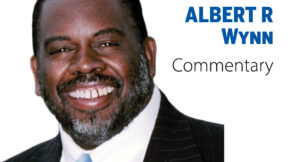
Albert R. Wynn is a former member of the U.S. House of Representatives, representing Maryland’s 4th Congressional District. While in the House, he served as a member of the Energy & Commerce Committee.