Sign In
 Free Newsletter

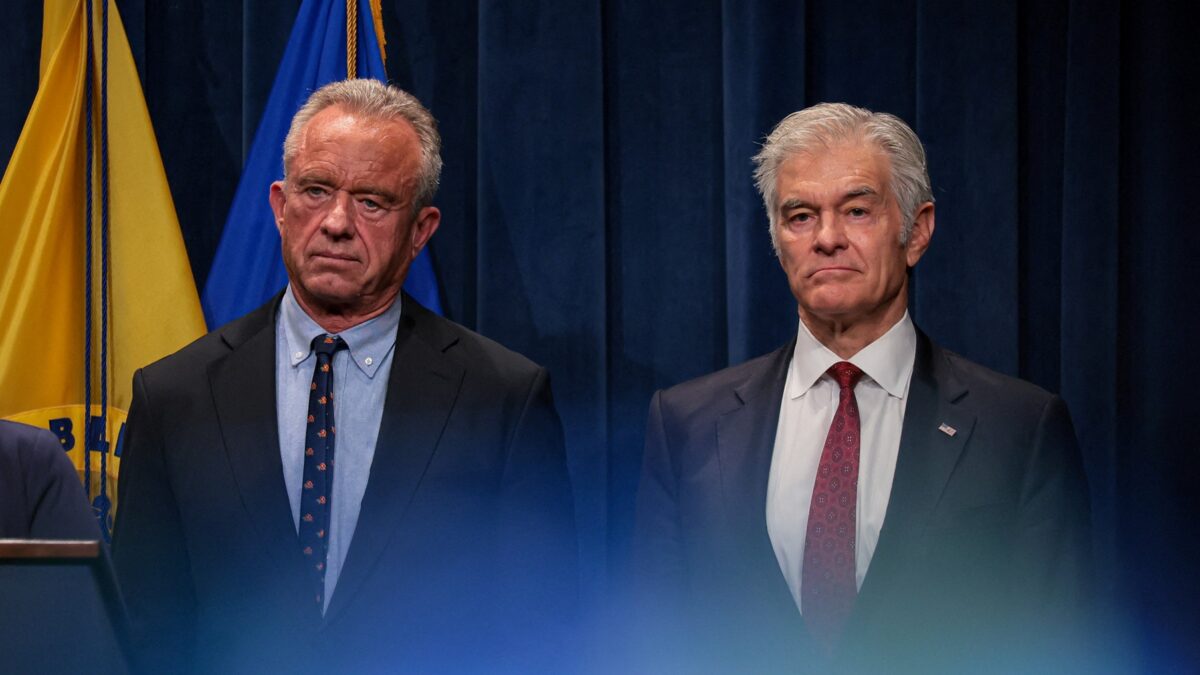
U.S. Secretary of Health and Human Services (HHS) Robert F. Kennedy Jr., left, and Center for Medicare & Medicaid Services (CMS) Administrator Dr. Mehmet Oz attend an event about nutrition education, at the U.S. Department of Health and Human Services in Washington on June 8, 2026. (REUTERS/Kylie Cooper)
MD, states sue over Trump administration’s Medicaid work requirement rule


 Listen to this article
BOSTON – A coalition of Democratic-led states, including Maryland, sued on Monday to block a Trump administration rule implementing new work requirements for Medicaid recipients, arguing it unlawfully narrows exemptions for people with serious medical conditions.
The lawsuit filed by 25 states and the District of Columbia in Boston federal court says that the rule forces medically frail people to clear unnecessary administrative hurdles to maintain government-funded health insurance coverage.
“Medicaid recipients include Marylanders managing chronic illnesses, fighting cancer, and struggling to afford the medications that keep them alive,” Maryland Attorney General Anthony Brown said in a news release. “The Trump Administration’s new rule unlawfully narrows who qualifies for the exemptions Congress created to protect seriously ill and disabled Americans, stripping their coverage not because they fail to qualify, but because the administration has rewritten the rules to exclude them. We are challenging this unlawful rule because people with serious illnesses and disabilities should not lose lifesaving medical coverage because the administration ignored what Congress wrote.”
The rule issued this month by the U.S. Centers for Medicare & Medicaid Services (CMS) implements work requirements enacted as part of President Donald Trump’s “One Big Beautiful Bill Act” tax and spending law.
Medicaid, the U.S. government health insurance program for low-income Americans, is jointly funded by the federal and state governments.
The law, which the Republican-led Congress enacted, requires adults aged 19-64, with a few exceptions, to complete a minimum of 80 hours of work or community engagement activities per month or be enrolled in an education program at least half time to qualify for Medicaid.
CMS earlier this month issued an interim rule designed to provide guidance to states on how to implement the work requirements.
The lawsuit said that Congress provided broad exemptions to One Big Beautiful Bill Act’s work requirements that exclude people from having to comply with them if they are “medically frail or otherwise have special medical needs.”
Yet the states say the rule CMS adopted narrowed those protections by requiring people with significant medical conditions to establish that it “significantly impairs” his or her ability to work.
“The Trump Administration’s attempt to impose new, burdensome requirements on Medicaid recipients threatens access to healthcare for our most vulnerable residents and families,” Massachusetts Attorney General Andrea Joy Campbell said in a statement.
CMS, which is part of the U.S. Department of Health and Human Services, did not respond to a request for comment on the lawsuit.
The states argue that CMS’ rule unlawfully narrows Congress’s protections for medically frail Medicaid recipients; violates the Administrative Procedure Act; and imposes conditions on spending that violate the U.S. Constitution.
While the work requirement takes effect January 1, states are required to notify Medicaid recipients of the changes by August 31, which the states contend gives them insufficient time to adjust their implementation plans and warrants blocking the rule from being enforced.
In addition to Maryland, the lawsuit was filed by the attorneys general of Arizona, California, Colorado, Connecticut, Delaware, the District of Columbia, Hawaii, Illinois, Maine, Massachusetts, Michigan, Minnesota, Nevada, New Jersey, New Mexico, New York, North Carolina, Oregon, Rhode Island, Vermont, Virginia, Washington and Wisconsin, as well as the governors of Kentucky and Pennsylvania.
Reporting by Nate Raymond in Boston; editing by Sanjeev Miglani.