Sign In
 Free Newsletter

Q&A: Incoming MSBA President Natasha Dartigue


 Listen to this article
Key takeaways:
- Natasha Dartigue to succeed Marisa Trasatti as MSBA president
- Dartigue advocates criminal justice reform with Attorney General Anthony Brown
- MSBA launches AI certification and bar leadership training programs
- Maryland appellate court rules carrying handgun is presumptively legal
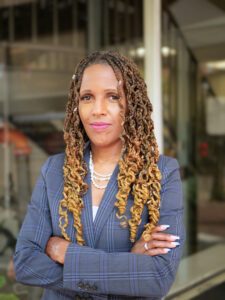
Maryland Public Defender Natasha Dartigue is set to take over as president of the Maryland State Bar Association at the end of the week.
After serving as president-elect of the MSBA for the past year, Dartigue is set to take the reins from Marisa Trasatti on Friday at the organization’s annual conference in Ocean City.
The New York native has spent her entire career at the OPD — which represents the vast majority of criminal defendants in state courts — after graduating from the Howard University School of Law in 1995. She has led the office for four years.
Dartigue has been a prominent advocate for criminal justice reform. She and Maryland Attorney General Anthony Brown worked together to recommend changes to reduce mass incarceration and racial disparities. The collaboration played a role in this year’s passage of a law limiting the number of offenses for which juveniles can automatically be charged in adult court.
Her office’s appellate division has recently won significant decisions in Maryland’s appellate courts. In the past year, the courts have reversed two Montgomery County murder convictions because of flawed jury instructions, and in at least two Fourth Amendment cases, the OPD successfully argued that police stops and searches were unreasonable.
The most notable of those came last week, when the Maryland Appellate Court ruled that carrying a handgun is presumptively legal, preventing cops from making stops just because they suspect a person is carrying. The case marked the first time since 2012 that the appellate court heard arguments en banc.
Dartigue and the OPD are also facing a defamation lawsuit brought by a former part-time staffer. A federal judge in March 2025 ordered them to publicly retract statements describing the staffer, who clerked at the OPD while attending the University of Baltimore School of Law, as a violent threat. Motions to dismiss the lawsuit have been pending for nearly a year. The Daily Record asked about the defamation case; Dartigue declined to answer because it is pending.
In an interview, Dartigue discussed the state of the MSBA, her goals for growing its membership and more. This interview has been edited and condensed for clarity.
The Daily Record: What are your goals for your year as president?
Natasha Dartigue: In my role as president-elect, I had the opportunity to get an inside view and really diagnose where we are as a bar association. And I’m excited to report that the legal profession is extremely strong, especially when we talk about raw talent and diversity. But what I’ve also seen is that we’re not always acting as one profession. My initiatives for the year are one profession, one standard and the rule of law fully realized.
Under pillar one, the “one profession” is really talking about how we can bring us together. And one way we’re doing that is by relaunching section leadership training, which will take place in June. That hopes to build that alignment across the different practice areas as well as create some real connections.
The second pillar is “one standard.” And that means treating attorneys’ wellbeing the way we treat ethics. Right now, we look at when people are struggling as being, addressing it in crisis. But we’re hoping to move back from that and treat it more as preventative care, looking at it as wellness. Because you can’t give your clients your best unless you are truly feeling your best.
The third pillar is “rule of law fully realized,” and the way we’re going to bring that to life is by producing our first annual advocacy impact report this fall. That will allow members to see, in concrete ways, what the bar association has actually done for them.
TDR: What are some of the challenges facing the organization?
ND: One of the challenges is in terms of membership. How do we continue to grow our members, but also how are we making sure that we’re meeting the needs of our current members?
In terms of growing our membership, one of the things that was introduced was enterprise membership (for government and nonprofit legal offices). We’re looking to expand that to other entities, such as large firms. In terms of retaining members: For our younger members, launching Bar Leadership 101 (which) essentially gives people the knowledge and the tools (for) getting into state bar leadership.
We’re also launching artificial intelligence certification in the summer. MSBA will be the lead in terms of bringing those insights and information about technology to our members.
TDR: Where does the MSBA stand on whether continuing legal education should be required?
ND: MSBA has taken a neutral position as to whether or not it should be mandated, and that is an accurate reflection of our membership because our membership is divided. What is critical is that whether or not CLEs are mandated, we are the premier organization in terms of continuing legal education.
TDR: We’ve seen more and more attorneys facing discipline for the improper use of AI. Do you intend to revisit the MSBA’s guidelines on AI usage?
ND: We are launching the MSBA AI certification this summer and expanding the work of the legal technology task force. The AI certification will position MSBA as a credentialing body, so to speak, for responsible use of AI in Maryland. This certification will help provide the tools so that there is responsible and ethical use across the profession. It will not be promoting any particular application or tool, but it is really going to focus on the ethical and proper use of these tools that continue to evolve and impact our profession.
TDR: The MSBA had negative net income in eight of the 10 years ending with fiscal year 2024, according to its annual Form 990 tax filings. How big of a problem is that, and how do you address it?
ND (in a written response after the interview):
Like every bar association that built its revenue model around in-person events, MSBA absorbed a real financial hit when COVID shut down the Legal Summit, the CLE seminars and the section programming that drove our program service revenue.
When COVID transformed how lawyers learn, connect and engage professionally, MSBA chose to invest in its future rather than retreat from change. We expanded digital offerings, invested in technology and reimagined legacy programs to meet our members’ evolving needs and expectations in a hybrid world. Those investments took time to mature, but they are producing results. In its most recent Form 990 (for fiscal year July 1, 2025 – June 30, 2026), MSBA reported approximately $36,000 in positive revenue and an increase in net assets of approximately $138,000. I am inheriting an organization that emerged from that challenge stronger, more resilient and better positioned for the future than it was before.