Sign In
 Free Newsletter

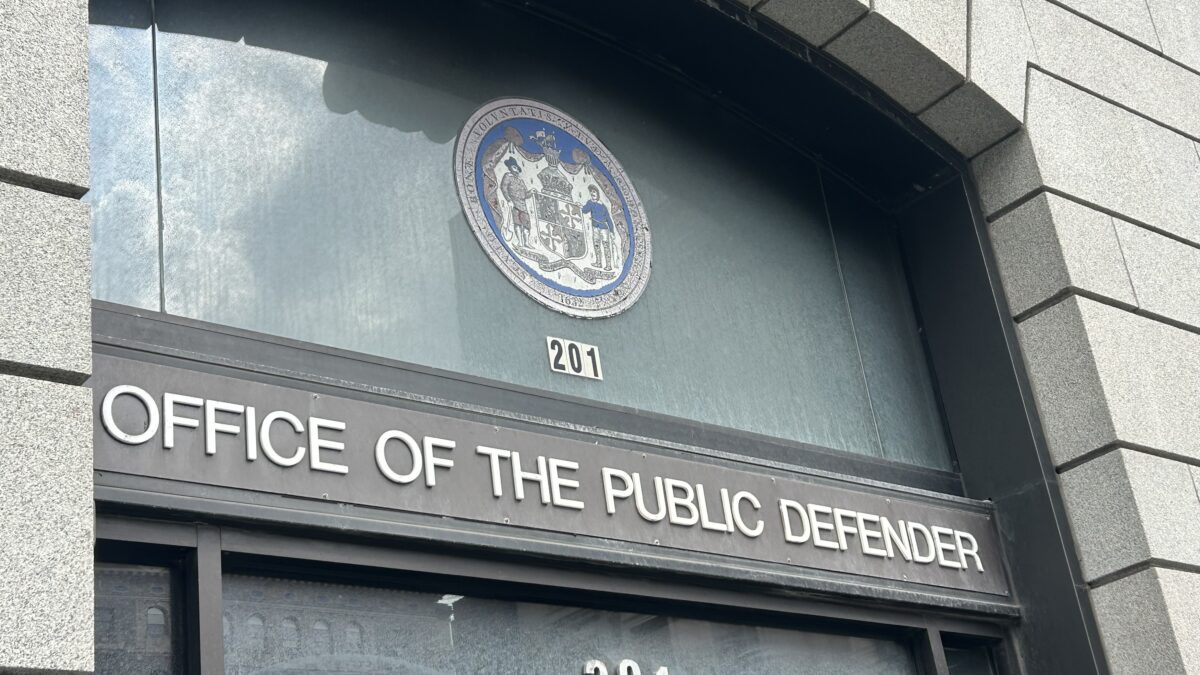
The Office of the Public Defender in Baltimore City. (Hannah Gaskill/The Daily Record)
MD public defender’s office didn’t comply with $623K youth justice grant, audit finds


Key takeaways:
- Maryland OPD awarded $622,883 for juvenile justice mental health program
- OPD served fewer than 10 participants under original grant period despite 150 target
- Initial mental health partner lacked required vetting
- Audit found unsupported and inconsistent performance reporting
The Maryland public defender‘s office failed to meet the goals of a federal youth justice grant through lack of participants, unapproved healthcare partnerships and unsupported performance metrics, an audit found.
“… we concluded that MD OPD neither met the grant’s fundamental requirements nor the expected goal of the award, and we questioned the total $622,883 awarded and drawn down grant funds,” an audit released Wednesday by the U.S. Department of Justice Office of the Inspector General reads.
The grant was for the Office of the Public Defender to participate in the DOJ’s Juvenile Justice Mental Health Collaboration Program, which seeks to improve outcomes for children with co-occurring mental illness and substance abuse who come into contact with the juvenile justice system.
Targeting children in Somerset and Wicomico counties, the grant program issued the Maryland agency $622,833 from October 2020 through September 2025.
The audit recommends that the DOJ’s Office of Justice Programs, which awarded the grant, remedy the unallowable costs connected to noncompliance with the program’s parameters.
“Consistent with the nature of these findings and applicable grant administration principles, MD OPD respectfully requests that any financial remedy be limited to questioned costs directly attributable to the identified compliance deficiencies, rather than applied to the entirety of the grant award,” Keith Lottridge, deputy public defender under Natasha Dartigue, wrote in a response letter.
According to the audit, the program required partnership between a juvenile justice and mental health agency that could provide substance-abuse services that could serve up to 150 participants annually.
The agency initially tapped to act as partner, which was not named in the report, did not provide those services. Still, the public defender’s office spent $461,890 in grant funding, serving “no more than 10” participants under the original grant period ending September 2023, the audit reads.
In May 2023, the Office of Justice Programs reduced the required number of annual participants from 150 to 30 after Dartigue’s office reported it had “received fewer court referrals than anticipated and the progress reports that preceded the request cited challenges related to the COVID-19 pandemic, the barriers of a rural area, and lower arrest rates among juveniles,” auditors wrote.
The grant was extended by two years, during which the public defender’s office spent $160,993.
The partnership with the initial mental health provider ended in 2023 and was not renewed. A new one wasn’t found, and the public defender’s office instead referred participants to agencies not vetted or approved by the DOJ.
The audit also found that the office was both under- and over-reporting performance metrics with no supporting evidence.
Per the U.S. Department of Justice Grants Financial Guide, recipients were to ensure that auditable documentation was available to support the data collected for every performance measure described in a grant application.
The report stated that OPD provided spreadsheets, but the inspector general’s office found “blank fields and inconsistencies, indicating both under and overreporting of progress.”
According to the audit, an OPD official interviewed said that the agency compiled its performance metrics “based on verbal communication from the public defense attorney and detailed case notes.”
In his letter, Lottridge wrote that the office “acknowledges the administrative deficiencies identified in the report” and has since revised its policies and procedures related to performance reporting, subaward monitoring, budget monitoring, matching-cost tracking and financial reporting.
“While administrative compliance is an essential component of grant management, the administrative deficiencies identified by OIG did not affect MD OPD’s capacity to fulfill the objectives of the award,” he replied. “The grant’s programmatic objectives were achieved.”
After the inspector general presented its concerns, the Office of Justice Programs monitored six grants administered to Dartigue’s office, including the Eastern Shore program, and identified similar issues that the audit states it is currently working to correct.
“MD OPD takes its stewardship of public funds seriously and has used the audit process to strengthen its grant administration systems while continuing to deliver high-quality services to its clients and communities,” Lottridge wrote. “MD OPD welcomes continued engagement with OIG to ensure full compliance going forward.”