Sign In
 Free Newsletter


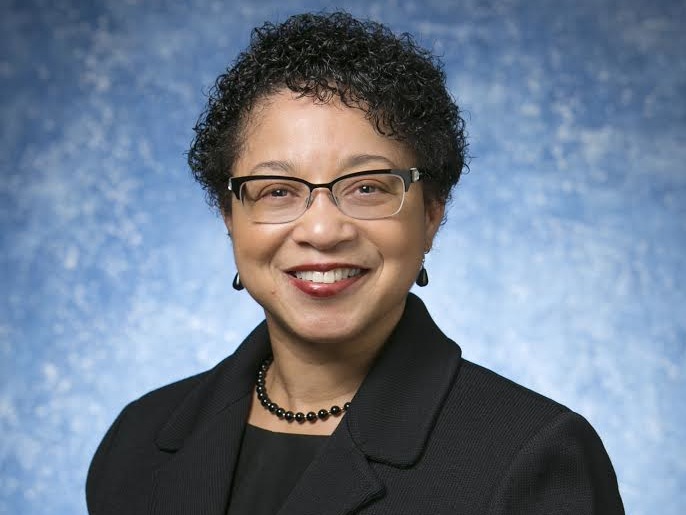
Administrators and advocates for the Maryland Institute College of Art had hoped to establish a new Bachelor of Design program focused on interior design. (file photo)
MICA becomes latest school to have new program denied following claim of duplication


 Listen to this article
Key Takeaways:
- MICA‘s interior design degree denied due to split commission vote
- Morgan State claimed program duplicated its existing offering
- Attorney general guidance requires majority of all members to approve
- Vote raises broader questions on fairness and program approval reform
An allegation of program duplication and a split vote among higher education officials during a meeting in which several commissioners were absent have halted a Baltimore art institute’s proposal to establish a new undergraduate program.
Administrators and advocates for the Maryland Institute College of Art had hoped to establish a new Bachelor of Design program focused on interior design. Without a valid vote of approval from a state commission, however, they don’t appear to have any recourse.
“While we’re thankful to all of the members of the commission who supported our proposal, the result is obviously disappointing,” MICA President Cecilia McCormick said in a statement Thursday. “With such a strong workforce need for interior designers — a need that we understood to be the primary rationale for affirming academic programs — the absence of MICA in offering this degree is short-sighted and detrimental to the growth of Maryland’s workforce.”
Following a nearly two-and-a-half-hour hearing, a majority of the state higher education officials present for a meeting Wednesday voted in MICA’s favor, though the school still needed two additional votes to move forward with its program.
After MICA proposed its new program in December, administrators at Morgan State University, one of Maryland’s historically Black institutions, objected and alleged that the program too closely aligned with one their school was already offering.
In March, Higher Education Secretary Sanjay Rai ruled in Morgan State’s favor and denied approval for MICA’s program.
MICA appealed, forwarding the matter to the 12-member Maryland Higher Education Commission, which establishes statewide policies for public and private colleges and universities.
In the weeks preceding the commission’s vote, Morgan State President David Wilson wrote to commission members that MICA’s proposal prompted concerns that his institution “could lose potential or existing students” with a similar program nearby receiving state support.
Morgan State administrators said they were concerned that an additional design program in the area would slow the momentum that has been building in their School of Architecture and Planning.
Meanwhile, MICA’s top administrators and advocates wrote that their program differed from Morgan State’s in “significant and meaningful ways” and contended that MICA’s status as the state’s only degree-granting college of art and design make it “well-suited to contribute to the design workforce in ways that complement, rather than duplicate, other programs.”
The commission voted 5-3 against Rai’s initial decision during a meeting Wednesday, with a majority of those present feeling that MICA should be permitted to establish its interior design program.
But under 2023 guidance from the attorney general’s office, such decisions from the commission require a majority vote of all members, not just a majority of those present.
To establish the program, MICA would have needed seven commission members to vote against the secretary’s initial ruling.
“It’s deeply frustrating that MICA’s appeal appears to have turned on attendance,” Matt Power, president of the Maryland Independent College and University Association, said in a statement Thursday. “It’s hard to feel good about a process where missing commissioners may have influenced the outcome more than those who actually showed up and engaged.”
The state’s program approval process in 2023 came under scrutiny from the attorney general and from one of the state’s historically Black institutions and its allies in the legislature. They questioned whether the process was aligning with a 2021 settlement in which the state agreed to pay $577 million to end a 15-year lawsuit alleging the state underfunded its four HBCUs for decades.
Lawmakers reformed the process in 2024. Among the changes they passed was a requirement that the commission hold public deliberations and votes when deciding on new academic programs, including those facing allegations of program duplication.
The commission used to deliberate and vote on such cases in closed-door meetings and then send a decision letter to the schools involved.
After the commission voted in closed session with just seven members present to approve a contested Towson University program, the attorney general’s office said the vote was “of no effect” and issued guidance stating that a formal action requires approval from a majority of commission members, not just a majority of those present.
Towson, which was facing claims of program duplication from Morgan State University, an HBCU, later withdrew its proposal.
Weeks later, commission members met in closed session for a “re-do” vote on a contested Stevenson University program facing duplication claims from the University of Maryland, Eastern Shore, an HBCU, and the University of Maryland, Baltimore.
The attorney general’s guidance prompted the commission to scrap its previous vote in April, in which the decision didn’t include a vote from a majority of members.
The commission denied Stevenson approval for its program in both its initial vote and its revote.
Only a fraction of new program proposals receive an objection from a competing school, and just a handful of contested programs go to a commission vote, according to the Department of Legislative Services.
(This story has been updated to include a statement from MICA President Cecilia McCormick.)