Sign In
 Free Newsletter


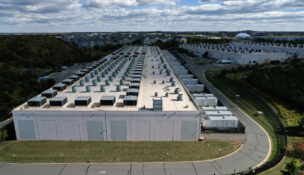
The Department of Homeland Security and U.S. Immigration and Customs Enforcement bought this warehouse, shown on Jan. 28, 2026, at 16220 Wright Road near Williamsport. (USA TODAY Network via Reuters Connect)
Pause on Western MD ICE warehouse construction extended to mid-April


 Listen to this article
Key takeaways:
- Maryland U.S. District Judge Brendan Hurson extended the temporary restraining order on ICE‘s Western Maryland detention center construction until April 16.
- Attorney General Anthony Brown sued ICE and DHS alleging violations of the National Environmental Policy Act and Administrative Procedure Act.
- ICE purchased the Williamsport warehouse for over $100 million and awarded a $113 million construction contract to KVG LLC.
- The judge expects to rule on the preliminary injunction motion during the week of April 13.
U.S. Immigration and Customs Enforcement will have to wait until at least mid-April to resume construction on the enormous Western Maryland warehouse it intends to convert into an immigrant detention facility.
Maryland U.S. District Judge Brendan Hurson on Thursday extended until April 16 the two-week temporary restraining order he issued on March 11.
In the meantime, the Maryland Attorney General‘s Office will file a motion for a preliminary injunction, which the federal government will oppose. Hurson wrote that he expects to rule on that motion at or soon after a not-yet-scheduled hearing during the week of April 13.
Maryland Attorney General Anthony Brown last month sued ICE and the Department of Homeland Security over the planned facility, saying the federal government had ignored the National Environmental Policy Act and the Administrative Procedure Act in its efforts to quickly convert the warehouse into a detention center capable of holding 1,500 people.
Hurson wrote in his March 11 order that, “Defendants do not appear to have taken a ‘hard look’ at the potential environmental consequences of their plans for the Williamsport Warehouse.”
ICE in January bought the warehouse in Williamsport, near Hagerstown, for more than $100 million, thanks to a historic funding boost approved by Congress. Earlier this month, it awarded a $113 million construction contract to KVG LLC, a defense contractor that has never been awarded a federal contract for immigration detention, The Washington Post reported.
The Washington County location is one of many the Trump administration has purchased around the country as part of its mass-deportation plans. That purchase, as well as news of multiple ICE contracts for office space in Maryland, have fueled speculation that ICE plans to intensify its activities in the state.
Immigrant advocates note that ICE has already ramped up arrests, even though neither Baltimore nor the Washington, D.C., suburbs have faced a surge similar to those in Minneapolis, Chicago and other cities.
In the lawsuit, Brown alleged that the Trump administration violated requirements that the government evaluate environmental impacts, consider alternatives, advise affected state and federal agencies, and offer opportunities for public comment before taking major actions.
Brown also alleged the government violated the APA by providing no explanation for the decision, not considering alternatives and failing to follow its own prior practice of environmental reviews for similar detention centers.
Maryland has no long-term immigrant detention capacity. In 2021, the General Assembly stopped local jurisdictions from renting out jail space to ICE, which had been a large revenue source for some counties.
A limited number of detainees have been held in “hold rooms” at the George H. Fallon Federal Building in downtown Baltimore, which are designed for stays less than a day long but where some have been held for more than a week in allegedly inhumane conditions. After a period of time, detainees are sent to other states, usually in the South or Southwest. Maryland U.S. District Judge Julie Rubin earlier this month ordered ICE to limit overcrowding in the hold rooms, allowing the agency to detain a maximum of 56 people at a time.